 Back
ch 38 pt 2 The Mammalian Endocrine System: Structures and Functions
Study Guide - Smart Notes
 Tailored notes based on your materials, expanded with key definitions, examples, and context.
The Mammalian Endocrine System
Overview of Major Endocrine Glands
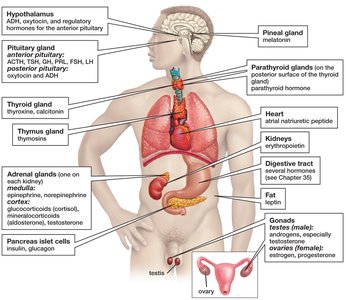
The mammalian endocrine system consists of glands and organs that secrete hormones directly into the bloodstream, regulating a wide range of physiological processes. The major endocrine glands include the hypothalamus–pituitary complex, thyroid gland, pancreas, sex organs (testes and ovaries), adrenal glands, pineal gland, parathyroid glands, thymus, heart, kidneys, digestive tract, and fat cells.
Hypothalamus–Pituitary Complex: Central regulators of hormone release.
Thyroid Gland: Controls metabolism and calcium balance.
Pancreas: Regulates blood glucose and aids digestion.
Sex Organs: Produce sex hormones for reproduction and development.
Adrenal Glands: Manage stress responses and metabolism.
Pineal Gland: Regulates sleep cycles.
Parathyroid Glands: Control calcium levels.
Thymus: Supports immune function.
Heart, Kidneys, Digestive Tract, Fat Cells: Secrete hormones with specialized functions.
Hormones and Their Functions
Hormones are chemical messengers classified as peptides, steroids, or amino acid derivatives. Each hormone has a specific function, often targeting distant organs.
Peptide Hormones: Short chains of amino acids (e.g., insulin, FSH).
Steroid Hormones: Derived from cholesterol (e.g., testosterone, estrogen).
Amino Acid Derivatives: Modified amino acids (e.g., thyroxine, melatonin).
Key Hormones and Their Functions
Endocrine Gland | Hormone | Type | Principal Function |
|---|---|---|---|
Hypothalamus | Releasing/Inhibiting Hormones | Peptide | Regulate anterior pituitary hormone release |
Anterior Pituitary | FSH, LH, TSH, ACTH, PRL, GH | Peptide | Stimulate growth, reproduction, metabolism |
Posterior Pituitary | ADH, Oxytocin | Peptide | Water balance, uterine contraction, milk ejection |
Thyroid | Thyroxine, Calcitonin | Amino acid derivative, Peptide | Metabolism, calcium regulation |
Parathyroid | Parathyroid hormone | Peptide | Increase blood calcium |
Pancreas | Insulin, Glucagon | Peptide | Regulate blood glucose |
Testes | Testosterone | Steroid | Male development, sperm production |
Ovaries | Estrogen, Progesterone | Steroid | Female development, egg maturation |
Adrenal Cortex | Glucocorticoids, Mineralocorticoids | Steroid | Metabolism, salt balance |
Adrenal Medulla | Epinephrine, Norepinephrine | Amino acid derivative | Stress response |
Pineal | Melatonin | Amino acid derivative | Sleep cycles |
Thymus | Thymosin | Peptide | Immune cell maturation |
Heart | ANP | Peptide | Blood pressure regulation |
Kidneys | Erythropoietin | Peptide | Red blood cell synthesis |
Digestive Tract | Secretin, Gastrin, etc. | Peptide | Digestive regulation |
Fat Cells | Leptin | Peptide | Appetite regulation |
The Hypothalamus–Pituitary System
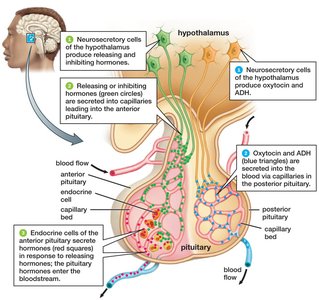
The hypothalamus and pituitary gland form a central regulatory system for hormone release. Neurosecretory cells in the hypothalamus produce releasing and inhibiting hormones, which control the anterior pituitary. The posterior pituitary stores and releases hormones produced by the hypothalamus.
Anterior Pituitary: Releases hormones in response to hypothalamic signals.
Posterior Pituitary: Stores and releases ADH and oxytocin.
Neurosecretory Cells: Specialized neurons that synthesize and release hormones.
Thyroid Disorders: Goiter and Hypothyroidism
Hypothyroidism can result from an iodine-deficient diet, leading to reduced thyroxine production. The body compensates by enlarging the thyroid gland, resulting in a condition called goiter.
Goiter: Visible swelling of the thyroid gland due to increased cell number.
Iodine Deficiency: Preventable cause of hypothyroidism.
Thyroxine: Essential for metabolism and growth.

Pancreas: Digestive and Endocrine Functions
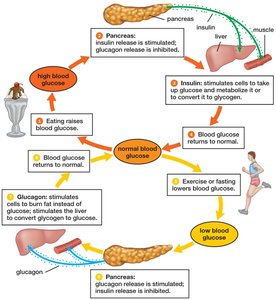
The pancreas serves both digestive and endocrine roles. Its endocrine portion consists of islet cells that produce insulin and glucagon, which regulate blood glucose levels.
Insulin: Lowers blood glucose by promoting uptake and storage.
Glucagon: Raises blood glucose by stimulating glycogen breakdown.
Islet Cells: Specialized clusters within the pancreas.
Diabetes Mellitus
Diabetes is a disorder of insulin regulation. Type 1 diabetes is an autoimmune disease destroying insulin-secreting cells, while Type 2 diabetes involves insulin resistance.
Type 1 Diabetes: Insulin deficiency due to immune destruction of islet cells.
Type 2 Diabetes: Insulin resistance, often associated with lifestyle factors.
Symptoms: High blood glucose, increased thirst, frequent urination.
Sex Hormones and Puberty
Puberty is initiated by increased secretion of releasing hormones from the hypothalamus, stimulating the anterior pituitary to release LH and FSH. These hormones trigger the production of sex hormones in the testes and ovaries.
Testosterone: Promotes male secondary sexual characteristics and sperm production.
Estrogen: Stimulates female secondary sexual characteristics and egg maturation.
Progesterone: Prepares the uterus for pregnancy.
Summary Table: Sex Hormones
Hormone | Source | Function |
|---|---|---|
Testosterone | Testes | Male development, sperm production |
Estrogen | Ovaries | Female development, egg maturation |
Progesterone | Ovaries | Uterine lining preparation |
Additional info:
Hormones act through specific receptors and often use feedback mechanisms to maintain homeostasis.
Endocrine disorders can result from hormone excess, deficiency, or resistance.
