 Back
BackThe Molecules of Life: Structure and Function of Biological Macromolecules
Study Guide - Smart Notes
 Tailored notes based on your materials, expanded with key definitions, examples, and context.
The Molecules of Life
Introduction
Living organisms are composed of a vast array of molecules, many of which are carbon-based. These molecules, known as organic compounds, are essential for the structure and function of cells. This chapter explores the chemistry of carbon, the diversity of organic molecules, and the four major classes of biological macromolecules: carbohydrates, lipids, proteins, and nucleic acids.
Biology and Society: Lactose Intolerance
Lactose and Lactose Intolerance
Lactose is the main sugar found in dairy products.
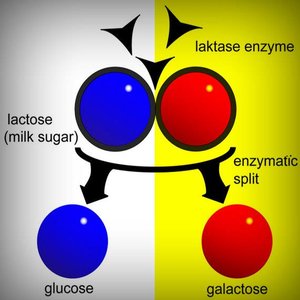
Lactose intolerance is the inability to properly digest lactose due to insufficient production of the enzyme lactase.
Normally, lactose is broken down and absorbed in the small intestine. In lactose-intolerant individuals, undigested lactose is metabolized by bacteria in the large intestine, causing gas and discomfort.
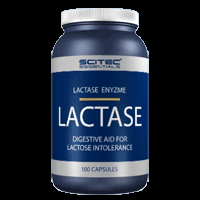
Lactose intolerance can be managed by avoiding lactose-containing foods or by taking lactase enzyme supplements.
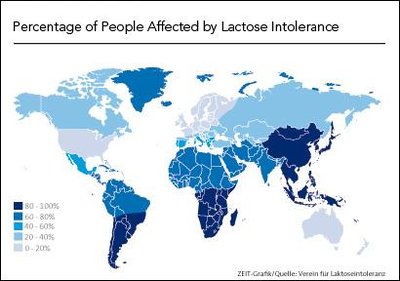
Genetic Basis: Most lactose-intolerant people have a normal lactase gene, but mutations near the gene can affect its expression. Lactose tolerance has evolved in populations with a history of dairy consumption.
Organic Compounds and Carbon Chemistry
Properties of Carbon
A cell is mostly water; the rest consists mainly of carbon-based molecules.
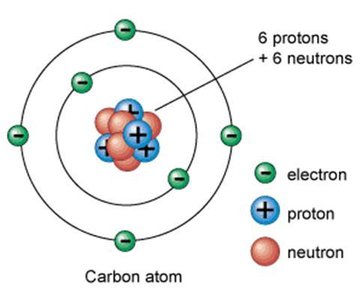
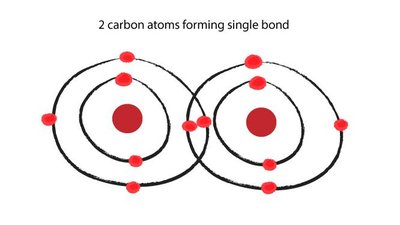
Carbon atoms have four electrons in their outer shell, allowing them to form up to four covalent bonds with other atoms.
This versatility enables carbon to form large, complex, and diverse molecules necessary for life.
Carbon Skeletons
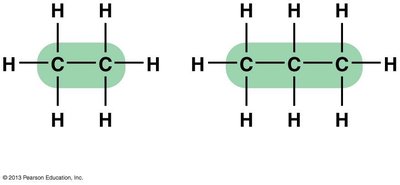
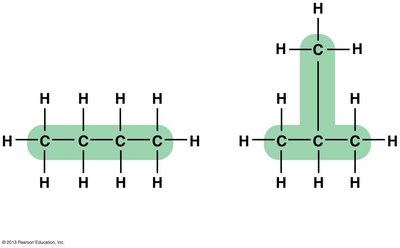
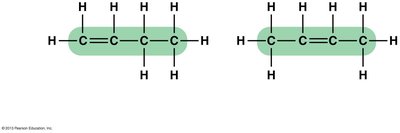
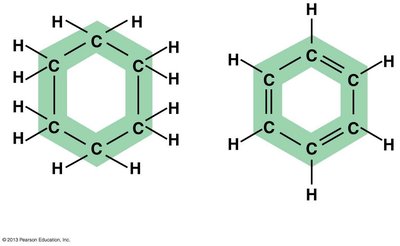
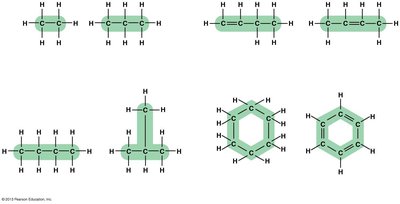
Carbon skeletons can vary in length, branching, and the presence of double bonds or rings.
The simplest organic compounds are hydrocarbons, containing only carbon and hydrogen.
Methane (CH4) is the simplest hydrocarbon.
Functional Groups
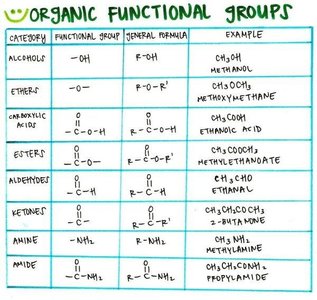
Functional groups are groups of atoms that participate in chemical reactions and give organic molecules specific properties.
Common functional groups include hydroxyl (-OH) and carboxyl (-COOH).
Macromolecules: Polymers and Monomers
Polymers and Monomers
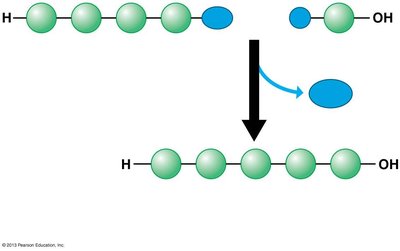
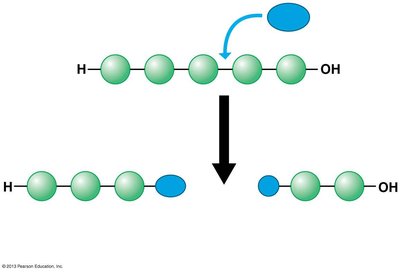
Most biological macromolecules are polymers, made by linking together smaller units called monomers.
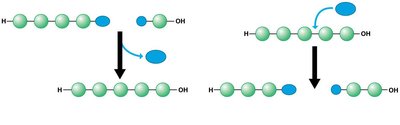
A dehydration reaction links monomers together by removing a molecule of water.
Hydrolysis breaks polymers into monomers by adding water, reversing the dehydration reaction.
Categories of Large Biological Molecules
Carbohydrates: Sugars and polymers of sugars
Lipids: Hydrophobic molecules including fats and steroids
Proteins: Polymers of amino acids with diverse functions
Nucleic acids: DNA and RNA, which store and transmit genetic information
Carbohydrates
Monosaccharides
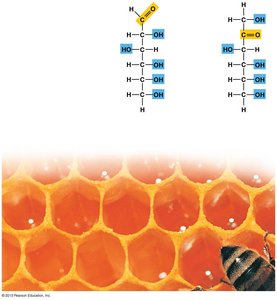
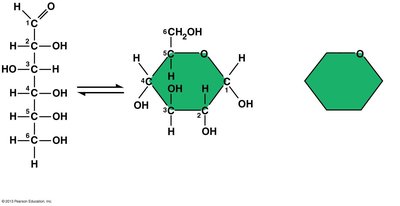
Monosaccharides are simple sugars and the monomers of carbohydrates (e.g., glucose, fructose).
They are the main fuels for cellular work and often form ring structures in water.
Glucose and fructose are isomers (same formula, different structure).
Disaccharides
Disaccharides are double sugars formed by joining two monosaccharides via a dehydration reaction (e.g., lactose, maltose, sucrose).
Lactose is found in milk and is broken down by the enzyme lactase into glucose and galactose.
Polysaccharides
Polysaccharides are complex carbohydrates made of long chains of monosaccharides (e.g., starch, glycogen, cellulose).
Starch is used by plants for energy storage; glycogen is used by animals; cellulose forms plant cell walls and is the most abundant organic compound on Earth.
Lipids
Fats and Oils
Lipids are hydrophobic molecules, including fats (triglycerides) and oils.
A typical fat consists of a glycerol molecule joined to three fatty acids by dehydration reactions.
Fats are used for energy storage, cushioning, and insulation.
Saturated fats have no double bonds and are solid at room temperature; unsaturated fats have one or more double bonds and are liquid at room temperature.
Steroids
Steroids have a structure of four fused rings and include cholesterol and hormones such as estrogen and testosterone.
Cholesterol is a key component of cell membranes and a precursor for other steroids.
Proteins
Structure and Function
Proteins are polymers of amino acids and perform most cellular functions, including catalysis (enzymes), structure, transport, and signaling.
Each protein has a unique sequence of amino acids (primary structure), which determines its shape and function.
Protein structure has four levels: primary, secondary (alpha helix, beta sheet), tertiary (3D folding), and quaternary (multiple polypeptides).
Denaturation (loss of shape) can occur due to changes in temperature or pH, affecting protein function.
Nucleic Acids
DNA and RNA
Nucleic acids (DNA and RNA) store and transmit genetic information.
DNA is composed of two strands forming a double helix; RNA is usually single-stranded.
The monomers of nucleic acids are nucleotides, each consisting of a five-carbon sugar, a phosphate group, and a nitrogenous base (A, T, G, C for DNA; A, U, G, C for RNA).
Base pairing: A pairs with T (or U in RNA), G pairs with C.
Summary Table: Major Biological Molecules
Category | Functions | Components | Examples |
|---|---|---|---|
Carbohydrates | Dietary energy; storage; plant structure | Monosaccharides, disaccharides, polysaccharides | Glucose, fructose, lactose, sucrose, starch, cellulose |
Lipids | Long-term energy storage (fats); hormones (steroids) | Fatty acids, glycerol, steroid rings | Triglycerides, cholesterol, testosterone, estrogen |
Proteins | Enzymes, structure, storage, contraction, transport, etc. | Amino acids | Lactase, hemoglobin, collagen, actin, myosin |
Nucleic acids | Information storage | Nucleotides | DNA, RNA |
Conclusion
The diversity and complexity of life are rooted in the chemistry of carbon and the structure of biological macromolecules. Understanding these molecules is fundamental to the study of biology, as they form the basis for cellular structure, function, and heredity.
