 Back
The Scientific Method and Experimental Design in Biology
Study Guide - Smart Notes
 Tailored notes based on your materials, expanded with key definitions, examples, and context.
The Scientific Method
Overview of the Scientific Method
The scientific method is a systematic approach used by scientists to investigate natural phenomena, answer questions, and solve problems. It involves a series of steps that ensure objectivity and reproducibility in scientific research. - Research Question: The process begins with identifying a problem or question to be studied. - Hypothesis: A testable statement or prediction is formulated based on prior knowledge and research. - Experiment: Procedures are designed to test the hypothesis under controlled conditions. - Results/Draw Conclusions: Data is collected and analyzed to determine whether the hypothesis is supported or not. - Report Results: Findings are shared with the scientific community for review and further investigation. 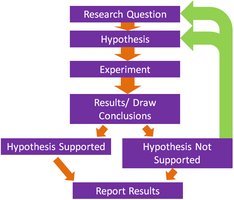
Steps of the Scientific Method
Each step in the scientific method is essential for ensuring the reliability and validity of scientific investigations. - Observation: Gathering information about the natural world. - Research: Reviewing existing literature and studies related to the problem. - Hypothesis: Proposing a possible explanation or solution. - Experimentation: Testing the hypothesis through controlled experiments. - Data Collection: Recording and organizing results. - Conclusion: Interpreting the data to accept or reject the hypothesis. - Publication: Sharing results for peer review and replication. 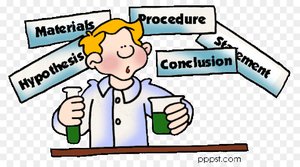
Experimental Design: Controls and Variables
Control vs. Variable
Proper experimental design is crucial for drawing valid conclusions. Experiments must include controls and variables to isolate the effects of the tested factor. - Control: The group or condition that does not receive the experimental treatment. It serves as a baseline for comparison. - Variable: Any factor, trait, or condition that can change. 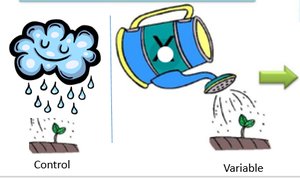
Types of Variables
- Independent Variable: The variable that the experimenter manipulates. Only one independent variable should be tested at a time for a valid experiment. - Dependent Variable: The outcome measured in the experiment, which is expected to change in response to the independent variable. 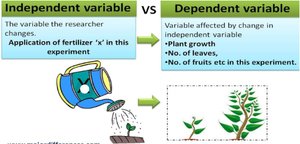
Example: Plant Growth Experiment
Consider an experiment to test whether organic fertilizer affects plant growth. - Problem: Plants in a garden are not growing well. - Hypothesis: The soil lacks nutrients; organic fertilizer will make plants grow taller. - Control: Plants watered with rainwater only. - Variable: Plants watered with organic fertilizer. - Independent Variable: Application of organic fertilizer. - Dependent Variable: Plant growth (height, number of leaves, etc.). 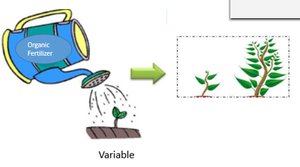
Importance of a Valid Experiment
- Only one independent variable should be tested at a time. - Multiple variables make it impossible to determine which factor caused the observed effect. Example: If both fertilizer and watering frequency are changed, the experiment is invalid because the effect cannot be attributed to a single variable.
Historical Experiments: Abiogenesis vs. Biogenesis
Abiogenesis Theory
Abiogenesis is the idea that life can arise from non-living matter. Historically, it was believed that flies spontaneously appeared from decaying meat.
Redi's Experiment
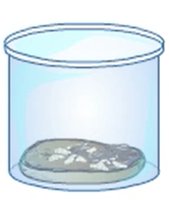
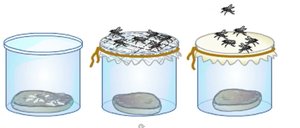
Francesco Redi designed experiments to disprove abiogenesis by showing that maggots only appeared when flies could access the meat. - Control: Open container with meat (flies can touch meat, maggots appear). - Experimental: Container with lid or cheesecloth (flies cannot touch meat, no maggots appear). 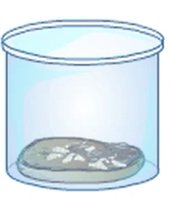
Needham vs. Spallanzani
- Needham: Boiled broth, left open, organisms appeared (supporting abiogenesis). - Spallanzani: Boiled broth, sealed, no organisms appeared (supporting biogenesis). - Criticism: Lack of air in Spallanzani's experiment was argued to prevent life. 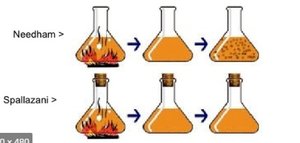
Pasteur's Experiment
Louis Pasteur used swan-neck flasks to show that life does not spontaneously arise. - Both containers were boiled to kill all organisms. - Only the flask exposed to dust (containing bacteria) developed life.
Theories and Laws in Science
Scientific Laws
Scientific laws are concise, mathematical statements that describe how nature behaves under certain conditions. - Definition: A law predicts what happens, but does not explain why. - Examples: Newton's law of gravity, Mendel's law of independent assortment. 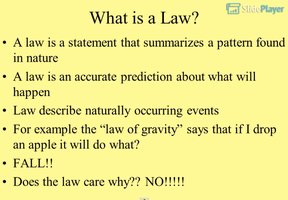
Scientific Theories
Scientific theories are well-tested explanations for a set of observations or experimental results. - Definition: A theory proposes why something happens. - Examples: Theory of evolution, theory of biogenesis, cell theory. 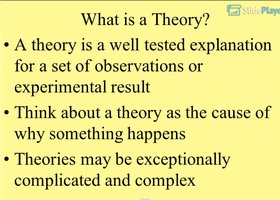
The Process of Science
Nature of Scientific Inquiry
The process of science is repetitive, nonlinear, and collaborative. Scientists often revisit earlier steps, refine hypotheses, and work together to advance knowledge. Additional info: Scientific inquiry is not always a straight path; it involves feedback, revision, and peer review to ensure accuracy and reliability.
