What happens to an electron in an atom when it absorbs energy according to the Bohr model?
When an electron absorbs energy in the Bohr model, it moves from a lower energy shell to a higher energy shell, entering an excited state.
Who proposed the concept of electron energy shells in the atomic model?
Niels Bohr proposed the concept of electron energy shells in the atomic model.
What is the relationship between shell number and the distance between shells in the Bohr model?
As the shell number increases, the distance between shells decreases. This means higher shell transitions require less energy than lower shell transitions.
What particles are found in the nucleus of an atom according to the Bohr model?
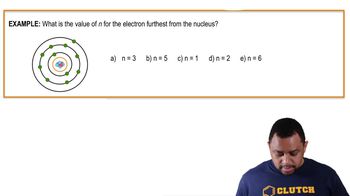
The nucleus contains protons, which are positively charged, and neutrons, which are neutral. Electrons orbit the nucleus in shells.
How many electrons are present in the first shell in the Bohr model example given in the transcript?
The first shell contains 2 electrons in the example. These electrons are closest to the nucleus.
What happens to an electron after it emits energy in the Bohr model?
After emitting energy, the electron falls back to its original shell, called the ground state. This process is called emission.
What is the role of a photon in the absorption process described in the Bohr model?
A photon provides energy to an electron, allowing it to move to a higher energy shell. This transition is called absorption.
How does the energy required for an electron to move between shells change as the shell number increases?
The energy required decreases as the shell number increases. This is because the distance between higher-numbered shells is smaller.
What is meant by the 'excited state' of an electron in the Bohr model?
The excited state refers to an electron occupying a higher energy shell after absorbing energy. It is not the electron's original or ground state.
What is the relationship between the distance an electron travels and the energy needed for its transition in the Bohr model?
The greater the distance an electron travels between shells, the more energy is required for the transition. This is especially true for transitions between lower-numbered shells.
 Back
Back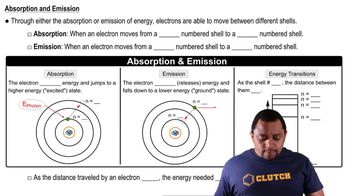
 03:29
03:29