Pearson+ LogoPearson+ Logo

Chemical Properties quiz #1 Flashcards

Back
Chemical Properties quiz #1
Control buttons has been changed to "navigation" mode.
1/13
  • When a science fair volcano bubbles and fizzes, what type of change is taking place and what does this indicate about the chemical properties involved?

    A science fair volcano bubbling and fizzing is undergoing a chemical change, as indicated by the formation of bubbles. This shows that a chemical reaction is occurring, demonstrating the chemical property of reactivity, where the reactants are transformed into new products.
  • What is the difference between reactants and products in a chemical reaction?

    Reactants are the starting materials before a chemical reaction, while products are the new substances formed after the reaction.
  • How does a chemical change affect the identity of a substance?

    A chemical change alters the composition and identity of a substance, resulting in the formation of a new substance.
  • What does the symbol of a flame represent when discussing chemical properties?

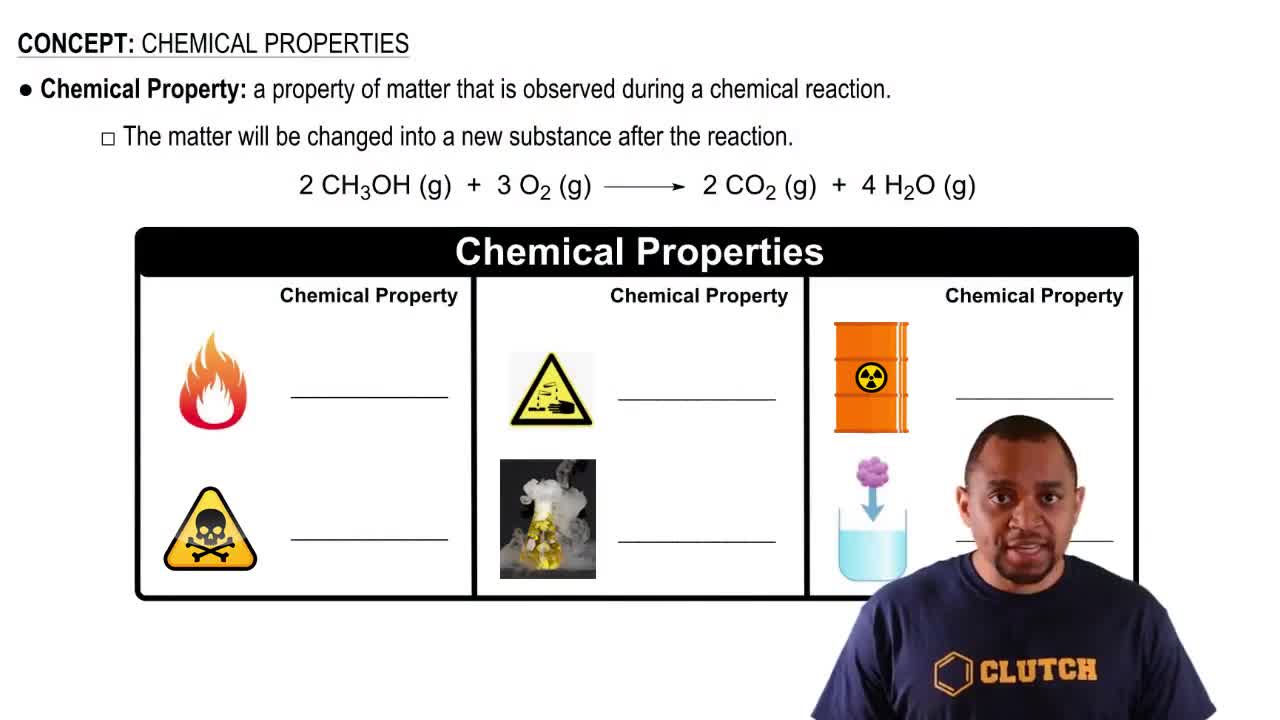
    The flame symbol represents flammability, which is a chemical property describing how easily a substance can catch fire.
  • What does the skull and bones symbol indicate about a chemical property?

    The skull and bones symbol indicates toxicity, meaning the substance can harm or be poisonous to living organisms.
  • What chemical property is demonstrated when a liquid breaks down materials it contacts?

    This demonstrates corrosiveness, a chemical property describing a substance's ability to break down or damage other materials.
  • What visual change might indicate that a chemical reaction is occurring in a beaker?

    The formation of bubbles or a color change can indicate that a chemical reaction is taking place, showing reactivity.
  • What does the radioactive symbol represent in terms of chemical properties?

    The radioactive symbol represents radioactivity, which is a chemical property describing a substance's ability to emit radiation.
  • How is solubility defined as a chemical property?

    Solubility is the ability of a solid to dissolve in a liquid, affecting how the solid interacts with the solvent.
  • Why are chemical properties only observed during chemical reactions?

    Chemical properties are only observed during chemical reactions because they involve changes in the substance's composition and identity.
  • Which element is considered the least reactive based on its chemical properties?

    The least reactive elements are typically the noble gases, such as helium, neon, and argon, because they have a stable electron configuration and do not easily undergo chemical reactions.
  • What determines the chemical properties of an atom?

    The chemical properties of an atom are determined by its ability to undergo chemical reactions, which is influenced by its electron configuration and how it interacts with other substances.
  • Which element has the highest electronegativity?

    Fluorine has the highest electronegativity of all elements, meaning it has the strongest tendency to attract electrons in a chemical bond.