What type of acid is H2SO3, and how is it classified based on its composition?
H2SO3 is an oxyacid because it contains hydrogen and a polyatomic ion (sulfite) that includes oxygen. Oxyacids are covalent compounds with hydrogen bonded to a polyatomic ion containing oxygen.
What is the definition of a covalent compound in the context of acids?
A covalent compound contains only nonmetals bonded together. In acids, this means the compound is made up of hydrogen and other nonmetals.
Why is acetic acid considered an exception to the general structure of acids?
Acetic acid can be written with the hydrogen ion at the end of the formula, as CH3COOH. This differs from most acids, which start with hydrogen in their formula.
What is the charge of the hydrogen ion commonly found in acids?
The hydrogen ion has a charge of plus one (H+). It is also referred to as the hydronium ion.
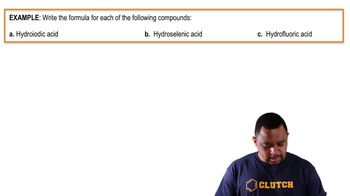
How do you determine the formula for a binary acid using hydrogen and a nonmetal?
Combine the hydrogen ion (H+) with a nonmetal anion, ensuring their charges balance to form a neutral compound. For example, H+ and I- combine to make HI.
What naming rule applies to binary acids containing sulfur or phosphorus?
For sulfur, use the entire name 'sulfur' in the acid name, and for phosphorus, use 'phosphor' instead of just the base name. These are exceptions to the usual base name rule.
What is the suffix used when naming binary acids?
The suffix '-ic acid' is added to the base name of the nonmetal. This completes the name of the binary acid.
What is the key difference between binary acids and oxyacids?
Binary acids contain hydrogen and a nonmetal without oxygen, while oxyacids contain hydrogen and a polyatomic ion that includes oxygen. This distinction affects both their composition and naming rules.
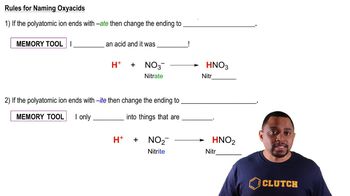
What happens to the ending of a polyatomic ion when naming an oxyacid if the ion ends in '-ate'?
The '-ate' ending is changed to '-ic acid' in the acid's name. For example, nitrate becomes nitric acid.
What mnemonic can help you remember how to name oxyacids with '-ite' polyatomic ions?
The mnemonic is 'I only bite into things that are delicious,' reminding you that '-ite' changes to '-ous acid.' For example, nitrite becomes nitrous acid.
 Back
Back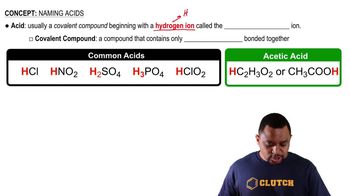
 02:15
02:15