Pearson+ LogoPearson+ Logo

Solubility Rules quiz #1 Flashcards

Back
Solubility Rules quiz #1
Control buttons has been changed to "navigation" mode.
1/10
  • According to solubility rules, which types of ionic compounds are generally insoluble in water?

    Ionic compounds containing carbonate, chromate, phosphate, or sulfide ions are generally insoluble in water, except when combined with Group 1A elements or ammonium. Oxides and hydroxides are also generally insoluble, except when combined with calcium, barium, or strontium.
  • Based on solubility rules, which types of ionic compounds are generally soluble in water?

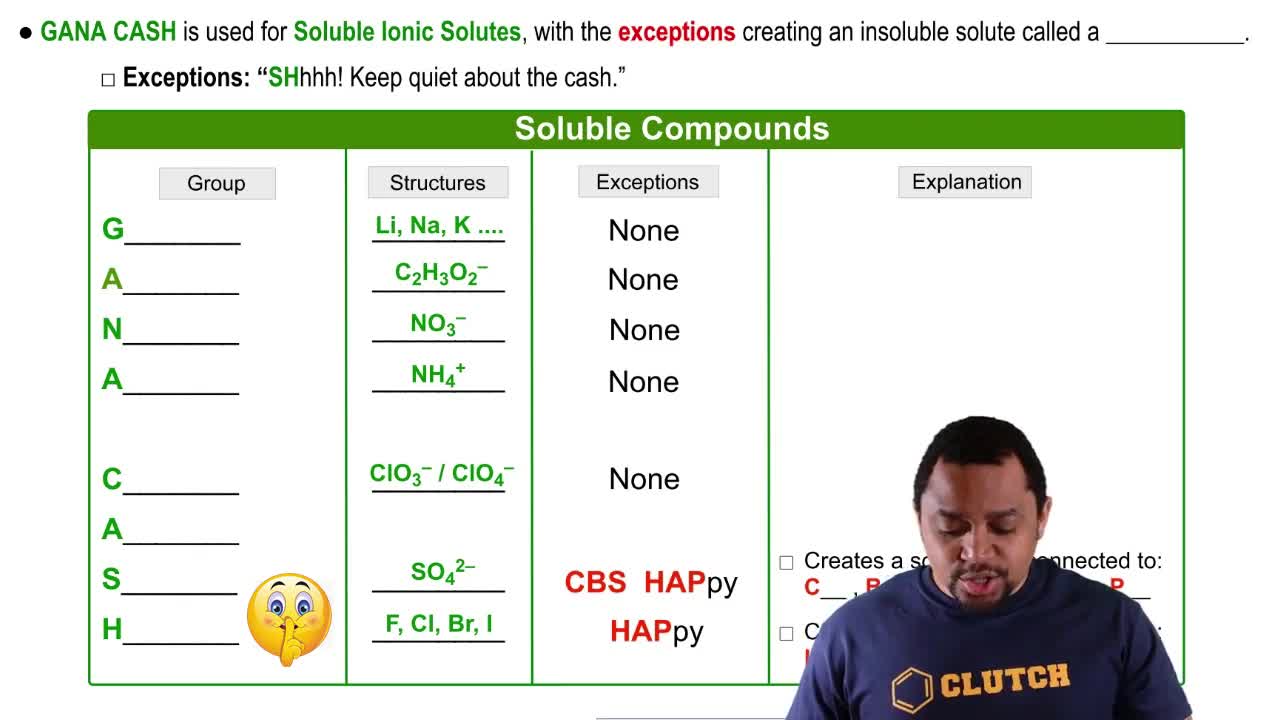
    Ionic compounds containing Group 1A elements, acetate, nitrate, ammonium, chlorate, or perchlorate ions are generally soluble in water. Sulfates and halogens are also usually soluble, except when combined with certain metals such as silver, lead, or mercury.
  • What happens to aluminum bromide when it is placed in water?

    Aluminum bromide dissociates into one aluminum ion and three bromide ions in water. These ions become surrounded by water molecules and are considered aqueous.
  • How does water interact with ions formed from soluble compounds?

    Water surrounds the ions formed from soluble compounds, making them aqueous. This process is called hydration.
  • What is a precipitate in the context of solubility rules?

    A precipitate is a solid formed when an insoluble compound results from mixing ions in solution. It occurs when exceptions to solubility rules are met.
  • Which mnemonic helps remember the exceptions for sulfate solubility?

    The mnemonic 'CBS HAPI' helps remember the exceptions for sulfate solubility. Sulfates combined with calcium, barium, strontium, silver, or lead form precipitates.
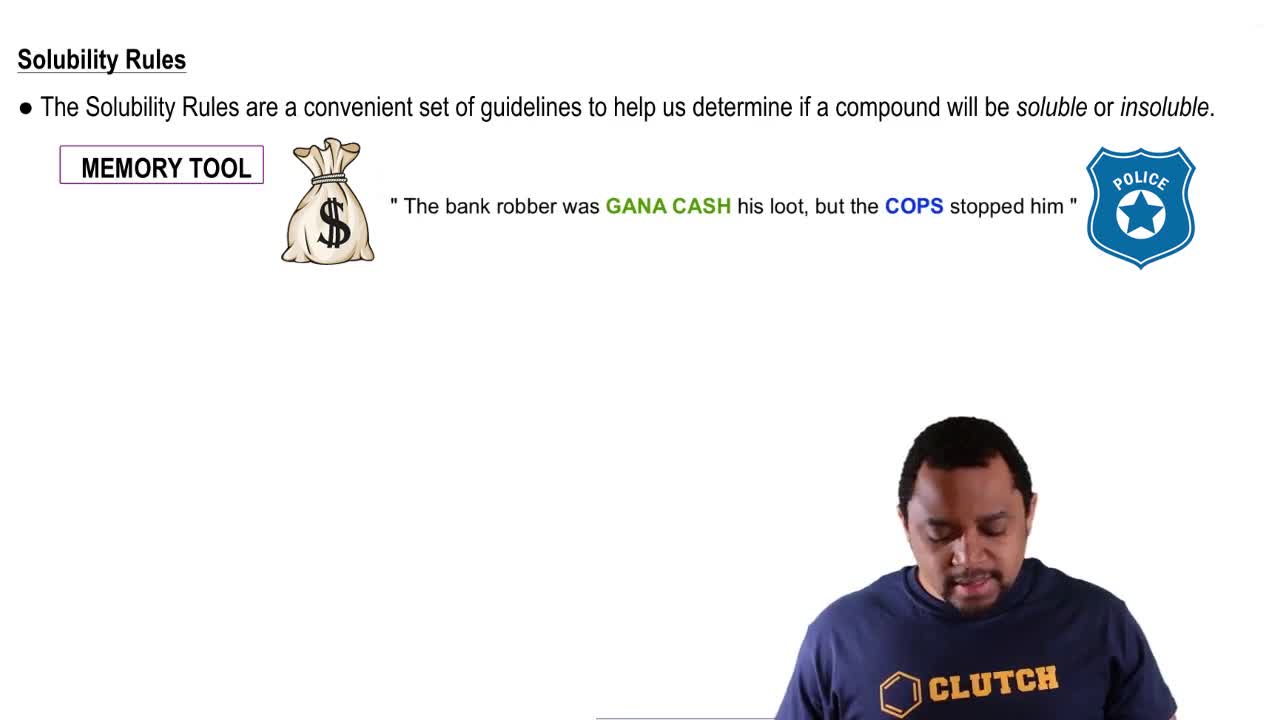
  • What does the 'COPS' mnemonic stand for in solubility rules?

    COPS stands for carbonate, chromate, oxide, phosphate, and sulfide ions. These are generally insoluble except for specific exceptions.
  • Which ions are always soluble with no exceptions according to the 'Gonna Cash' mnemonic?

    Group 1A elements, acetate, nitrate, ammonium, chlorate, and perchlorate ions are always soluble. They do not have exceptions in the solubility rules.
  • What is the exception for the solubility of oxides and hydroxides?

    Oxides and hydroxides are soluble when combined with calcium, barium, or strontium. Otherwise, they are generally insoluble.
  • How can you predict if an ionic compound will be soluble or insoluble in water?

    You can use the 'Gonna Cash' and 'COPS' mnemonics to apply solubility rules and their exceptions. These guidelines help determine whether a compound will dissolve or form a precipitate.