 Back
BackCH.2:Atoms, Molecules, and the Foundations of Chemical Laws
Study Guide - Smart Notes
 Tailored notes based on your materials, expanded with key definitions, examples, and context.
Atoms and Scientific Laws
Law of Conservation of Mass
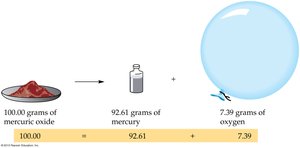
The law of conservation of mass states that matter is neither created nor destroyed during a chemical reaction. This means the total mass of the products equals the total mass of the reactants. This principle is fundamental to understanding chemical reactions and stoichiometry.
Key Point: The mass of reactants and products in a closed system remains constant.
Example: Decomposition of mercuric oxide: 100.00 grams of mercuric oxide yields 92.61 grams of mercury and 7.39 grams of oxygen.
Law of Definite Proportions
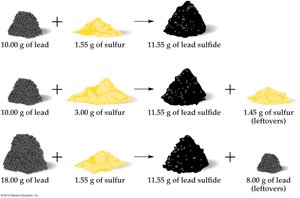
The law of definite proportions states that a chemical compound always contains the same elements in the same ratio by mass, regardless of the sample size or source.
Key Point: The composition of a compound is fixed and does not vary.
Example: Lead sulfide always forms from lead and sulfur in a fixed ratio, with excess reactants left over if the proportions are not exact.
Law of Multiple Proportions
The law of multiple proportions states that elements can combine in more than one ratio to form different compounds. Each ratio corresponds to a distinct compound with unique properties.
Key Point: When two elements form more than one compound, the ratios of the masses of the second element that combine with a fixed mass of the first element are simple whole numbers.
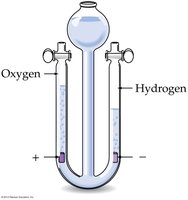
Example: Hydrogen and oxygen can form both water (H2O) and hydrogen peroxide (H2O2).
Dalton's Atomic Theory
Foundational Principles
John Dalton proposed the atomic theory to explain the laws of chemical combination. His theory laid the groundwork for modern chemistry.
Key Point: Matter is composed of small, indivisible particles called atoms.
Key Point: Atoms of a given element are identical in mass and properties, but differ from atoms of other elements.
Key Point: Compounds are formed by the combination of atoms in fixed ratios.
Key Point: Chemical reactions involve the rearrangement of atoms; atoms are not created or destroyed.
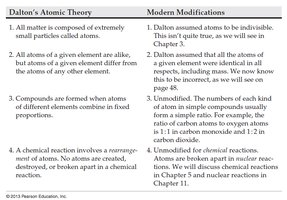
Dalton's Atomic Theory | Modern Modifications |
|---|---|
All matter is composed of extremely small particles called atoms. | Dalton assumed atoms to be indivisible. This is true, as we will see in Chapter 3. |
All atoms of a given element are alike, but atoms of a given element differ from the atoms of any other element. | Dalton assumed all atoms of a given element were identical in all respects, including mass. We now know this is not true due to isotopes. |
Compounds are formed when atoms of different elements combine in fixed proportions. | Unmodified. The numbers of each kind of atom in simple compounds usually form a simple ratio. |
A chemical reaction involves a rearrangement of atoms. No atoms are created, destroyed, or broken apart in a chemical reaction. | Unmodified for chemical reactions. Atoms are created or destroyed in nuclear reactions. |
Molecules and Chemical Composition
Molecules and Compounds
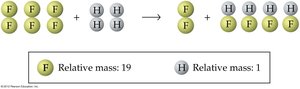
A molecule is a group of chemically bonded atoms in an exact proportion. Compounds are substances formed from two or more elements in fixed ratios.
Key Point: The ratio of atoms in a molecule determines the chemical formula and properties of the compound.
Example: Hydrogen fluoride (HF) forms when 1 atom of hydrogen combines with 1 atom of fluorine.
The Mole and Avogadro's Number
Definition and Importance
The mole is a fundamental unit in chemistry representing a specific number of particles (atoms, molecules, etc.). Avogadro's number is the number of particles in one mole, defined as 6.022 × 10²³.
Key Point: 1 mole of any substance contains 6.022 × 10²³ particles.
Example: 1 mole of sodium contains 6.022 × 10²³ atoms of Na.

Mole Relationships and Calculations
The mole concept allows conversion between the number of particles and mass using Avogadro's number and molar mass.
Key Point: The relationship between number of particles, moles, and mass is central to chemical calculations.
Formula:

Molar Mass and Calculations
Definition and Use
Molar mass (MM) is the mass in grams of one mole of a substance. For elements, the molar mass is numerically equal to the atomic mass (in amu), but expressed in grams per mole (g/mol).
Key Point: Molar mass allows conversion between mass and moles for any substance.
Example Table:
Element
Avg. Atomic Mass (amu)
Molar Mass (g/mol)
Sodium, Na
22.9898
22.9898
Aluminum, Al
26.9815
26.9815
Gold, Au
196.9665
196.9665
Formula for compounds: Example:
The Periodic Table
Mendeleev's Contribution
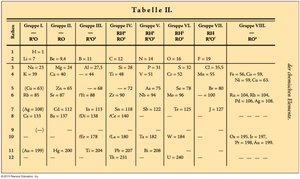
Dmitri Mendeleev organized elements based on their properties and increasing atomic mass, creating the first periodic table. He left gaps for elements yet to be discovered, demonstrating the predictive power of the table.
Key Point: The periodic table organizes elements by increasing atomic mass and similar properties.
Example: Mendeleev's original table included gaps for undiscovered elements.
Atomic Mass Units and Isotopes
Atomic mass unit (amu) is the average atomic weight of all atoms of an element. Not all atoms of an element are identical; isotopes are different forms of the same element with varying masses.
Key Point: Isotopes cause the atomic mass of elements to be non-integer values.
Additional info: Isotopes and their significance will be discussed in detail in Chapter 3.
