 Back
BackCh.12 Chemical Bonding: Structured Study Notes
Study Guide - Smart Notes
 Tailored notes based on your materials, expanded with key definitions, examples, and context.
Chemical Bonding
Ionic Bonding
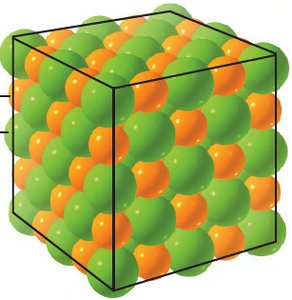
Ionic bonding is a fundamental concept in chemistry, describing the attractive force that holds ions together in a compound. This occurs when atoms transfer electrons to achieve a stable electron configuration, similar to that of noble gases.
Key Point 1: Ionic bonds form between metals (which lose electrons to become cations) and nonmetals (which gain electrons to become anions).
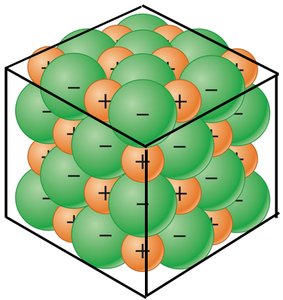
Key Point 2: The resulting ionic compound is held together by electrostatic attraction between oppositely charged ions.
Example: Sodium chloride (NaCl) is a classic example of an ionic compound, formed from Na+ and Cl– ions.
Ionic Compound Properties
The properties of ionic compounds are determined by the strength of the ionic bonds.
Key Point 1: Ionic compounds are typically solid at room temperature.
Key Point 2: They have high melting and boiling points due to strong electrostatic forces.
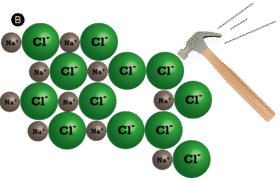
Key Point 3: Ionic solids are brittle and can break when force is applied.
Key Point 4: They conduct electricity when dissolved in water, but not in solid form.
Example: Potassium bromide (KBr) has similar properties to sodium chloride.
Periodic Trends: Ionic Radius
Ionic Radius
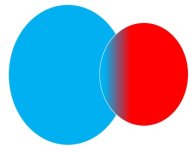
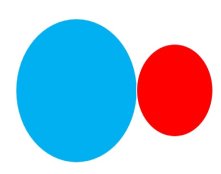
The ionic radius is the distance from the nucleus of an ion to its outermost electron shell. It changes depending on whether an atom loses or gains electrons.
Key Point 1: Losing electrons (forming cations) decreases ionic radius.
Key Point 2: Gaining electrons (forming anions) increases ionic radius.
Example: Li+ is smaller than Li, O2– is larger than O.
Covalent Bonding
Covalent Bonds
Covalent bonding involves the sharing of valence electrons between nonmetal atoms to achieve a stable electron configuration.
Key Point 1: Atoms share electrons to achieve the octet rule (8 valence electrons) or duet rule (2 for hydrogen).
Key Point 2: Covalent bonds are common in molecules like H2, O2, and CH4.
Example: Water (H2O) is formed by covalent bonds between hydrogen and oxygen.
Covalent Compound Properties
Covalent compounds have distinct properties compared to ionic compounds.
Key Point 1: They can be gases, liquids, or solids at room temperature.
Key Point 2: Covalent compounds generally have low melting and boiling points.
Key Point 3: They are poor electrical conductors.
Example: Carbon dioxide (CO2) is a gas at room temperature.
Bonding Preferences
Predicting Bonds and Lone Pairs
The number of bonds and nonbonding electrons (lone pairs) around an atom can be predicted based on its group in the periodic table.
Key Point 1: Group 1A-4A: Number of bonds equals group number.
Key Point 2: Group 5A-7A: Number of bonds equals the number needed for a stable arrangement.
Example: Oxygen (Group 6A) typically forms 2 bonds and has 2 lone pairs.
Lewis Dot Structures
Lewis Dot Structures: Neutral Compounds
Lewis Dot Structures visually represent the arrangement of valence electrons in molecules, showing how atoms share or transfer electrons.
Key Point 1: Steps: Count valence electrons, place least electronegative atom in center, connect with single bonds, complete octets, place remaining electrons on central atom.
Key Point 2: Hydrogen follows the duet rule (2 electrons).
Example: NH3 and H2Se Lewis structures.
Lewis Dot Structures: Multiple Bonds
Multiple bonds (double or triple) are formed when single bonds do not satisfy the octet rule for all atoms.
Key Point 1: Single bond: 1 electron pair; double bond: 2 pairs; triple bond: 3 pairs.
Key Point 2: Bond energy increases and bond length decreases with more shared pairs.
Example: CO2 has two double bonds.
Lewis Dot Structures: Ions
Lewis Dot Structures for ions require adjusting the number of valence electrons and indicating the charge.
Key Point 1: Cations have fewer valence electrons; anions have more.
Key Point 2: Place the structure in brackets and indicate the charge.
Example: NH4+ and BCl4–.
Lewis Dot Structures: Exceptions
Some elements can have incomplete or expanded octets, or odd numbers of electrons (free radicals).
Key Point 1: Incomplete octet: Groups 2A and 3A.
Key Point 2: Expanded octet: Groups 5A-8A.
Key Point 3: Free radicals have an odd number of electrons.
Example: XeBr2 (expanded octet), NO2 (radical).
Resonance Structures
Resonance Structures
Resonance occurs when more than one valid Lewis structure can be drawn for a molecule, typically involving double bonds or lone pairs.
Key Point 1: Resonance structures are connected by double-sided arrows.
Key Point 2: The actual molecule is a resonance hybrid, a blend of all resonance forms.
Example: Carbonate ion (CO32–) and phosphate ion (PO43–).
Valence Shell Electron Pair Repulsion (VSEPR) Theory
VSEPR Theory
VSEPR theory predicts the geometry of molecules by minimizing repulsion between electron groups (bonding pairs and lone pairs) around the central atom.
Key Point 1: Electron groups include both bonding pairs and lone pairs.
Key Point 2: Lone pairs exert more repulsion than bonding pairs.
Example: NH3 has 4 electron groups (3 bonds, 1 lone pair).
Electron Geometry
Electron Geometry
Electron geometry is determined by the number of electron groups around the central atom, treating both lone pairs and bonds equally.
Key Point 1: 2 groups: linear; 3 groups: trigonal planar; 4 groups: tetrahedral.
Example: CS2 is linear, CH4 is tetrahedral.
Molecular Geometry
Molecular Geometry
Molecular geometry describes the true shape of a molecule, considering the arrangement of atoms and the effect of lone pairs.
Key Point 1: 2 electron groups: linear; 3 groups: trigonal planar or bent; 4 groups: tetrahedral, trigonal pyramidal, or bent.
Example: BCl3 is trigonal planar, NH4+ is tetrahedral.
Bond Angles
Bond Angles
Bond angles are the angles between adjacent atoms in a molecule, determined by electron group geometry and the presence of lone pairs.
Key Point 1: Ideal bond angles: 2 groups (180°), 3 groups (120°), 4 groups (109.5°).
Key Point 2: Lone pairs decrease bond angles from the ideal values.
Example: CH4 (109.5°), NH3 (107.3°).
Dipole Moment and Electronegativity
Electronegativity and Dipole Moment
Electronegativity measures an atom's ability to attract electrons. Differences in electronegativity between atoms create dipole moments and determine bond polarity.
Key Point 1: Electronegativity increases across a period and decreases down a group.
Key Point 2: A difference greater than 0.5 is considered significant for polarity.
Key Point 3: Dipole arrows point toward the more electronegative atom.
Example: H–F has a strong dipole moment due to high electronegativity difference.


Chemical Bond Classifications
The difference in electronegativity determines the type of bond:
Key Point 1: Ionic: large difference (>1.7).
Key Point 2: Polar covalent: moderate difference (0.5–1.7).
Key Point 3: Nonpolar covalent: small difference (<0.5).
Example: C–O is polar covalent, Br–Br is nonpolar covalent.
Molecular Polarity
Molecular Polarity & Perfect Shapes
Molecular polarity depends on both bond polarity and molecular shape. Perfect shapes (no lone pairs, symmetrical) are nonpolar, while asymmetrical shapes are polar.
Key Point 1: Nonpolar molecules: hydrocarbons, symmetrical molecules.
Key Point 2: Polar molecules: asymmetrical, with lone pairs or different surrounding atoms.
Example: CO2 is nonpolar, PH3 is polar.
Summary Table: Bond Types and Properties
Bond Type | Formation | Properties | Examples |
|---|---|---|---|
Ionic | Transfer of electrons | High melting/boiling, solid, conducts when dissolved | NaCl, KBr |
Covalent | Sharing of electrons | Low melting/boiling, gas/liquid/solid, poor conductor | H2O, CO2 |
Polar Covalent | Unequal sharing | Intermediate properties | H–F, C–O |
Nonpolar Covalent | Equal sharing | Low melting/boiling, nonpolar | O2, N2 |
Key Formulas
Difference in Electronegativity:
Bond Energy:
