Back
BackChapter 1: Chemistry in Our Lives – Study Notes
Study Guide - Smart Notes
 Tailored notes based on your materials, expanded with key definitions, examples, and context.
Chemistry in Our Lives
Introduction to Chemistry
Chemistry is the scientific study of matter, focusing on its composition, structure, properties, and the changes it undergoes during reactions. Chemistry is central to understanding the world around us, from the air we breathe to the products we use daily.
What is Chemistry?
Composition: What substances are made of.
Structure: How substances are arranged at the atomic or molecular level.
Properties: The characteristics and behaviors of substances.
Reactions: How substances interact and transform into new substances.
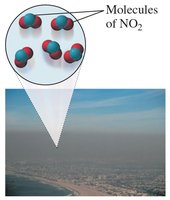
Chemistry in Everyday Life
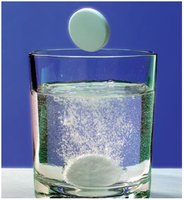
Chemistry is involved in everyday activities such as cooking food, starting a car, silver tarnishing, antacid tablets fizzing in water, plant growth, and digestion of food.
What are Chemicals?
Chemicals are substances with a definite composition and set of properties. Everything around us, including soaps, lotions, toothpaste, cosmetics, and clothes, is made of chemicals.

Branches of Chemistry
The field of chemistry is divided into several branches:
General Chemistry: Fundamental concepts and principles.
Organic Chemistry: Study of carbon-containing compounds.
Biochemistry: Chemistry of living organisms.
Geochemistry: Chemistry of the Earth.
Physical Chemistry: Physical principles underlying chemical interactions.
The Scientific Method
Thinking Like a Scientist
The scientific method is a systematic approach used by scientists to explore observations, form hypotheses, conduct experiments, and draw conclusions. This process ensures that scientific knowledge is based on evidence and reproducibility.
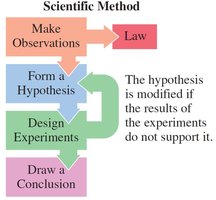
Steps of the Scientific Method
Make Observations: Gather information using the senses or instruments.
Form a Hypothesis: Propose a testable explanation for the observation.
Design Experiments: Test the hypothesis through controlled experiments.
Draw a Conclusion: Analyze results to confirm or refute the hypothesis.
Example: Everyday Scientific Thinking
Observation: Sneezing and itching after visiting a friend with a cat.
Hypothesis: You may be allergic to cats.
Experiment: Leave the house or visit another friend with a cat to test the hypothesis.
Conclusion: If symptoms return with cats, the hypothesis is supported.

Chemistry and Health: Paracelsus
Paracelsus, a Swiss physician and alchemist, was a pioneer in using chemicals and minerals as medicines. He emphasized that the dose determines whether a substance is a poison or a cure.

Studying and Learning Chemistry
Effective Study Strategies
Learning chemistry requires active engagement and effective study habits. Key strategies include:
Testing yourself with quizzes and practice problems.
Studying regularly rather than cramming.
Relating new concepts to prior knowledge.
Participating in study groups and seeking help from instructors.

Textbook Features for Learning
Learning Goals: Outline what you should learn in each section.
Sample Problems: Provide practice and application of concepts.
Review Sections: Summarize key points and skills.
Engage Questions: Encourage active thinking and self-testing.
Making a Study Plan
Successful study plans include reading before class, attending lectures, working problems, reviewing key skills, and organizing study groups.

Key Math Skills for Chemistry
Place Values
Understanding place values is essential for interpreting numbers in chemistry. Each digit's value depends on its position relative to the decimal point.
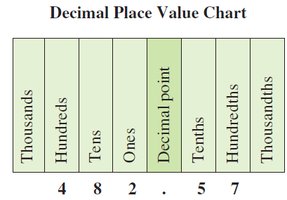
Positive and Negative Numbers
Positive numbers: Greater than zero, often written without a sign.
Negative numbers: Less than zero, written with a minus sign (−).
Multiplication/Division: Same signs yield positive; different signs yield negative results.
Addition/Subtraction: Follow rules for combining positive and negative values.
Calculating Percentages
Percentages are calculated by dividing the part by the whole and multiplying by 100%:
Solving Equations
To solve equations, perform the same operation on both sides to isolate the variable of interest. For example, to solve for :
Interpreting Graphs
Graphs are used to represent relationships between variables. For example, the volume of a gas increases with temperature (direct relationship).
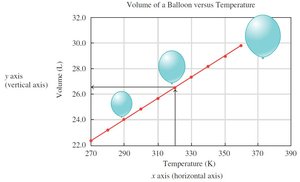
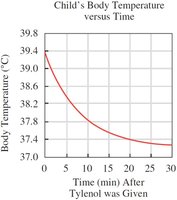
Example: Interpreting a Graph
A graph of a child's body temperature versus time after taking Tylenol shows a decrease in temperature over time.
Writing Numbers in Scientific Notation
Scientific Notation
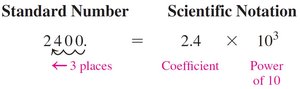
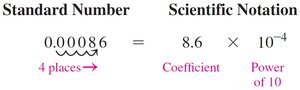
Scientific notation expresses very large or very small numbers as the product of a coefficient (between 1 and 10) and a power of 10.
Standard Number to Scientific Notation: Move the decimal to create a coefficient between 1 and 10, count the places moved, and use that as the exponent of 10.
Example:
Using Calculators for Scientific Notation
Many calculators use the EE or EXP key to enter numbers in scientific notation. The display shows the coefficient and exponent.
Number to Enter | Procedure | Calculator Display |
|---|---|---|
4 EE 6 | 4.06 or 4^06 or 4060000 | |
2.5 EE -4 | 2.5E-04 or 2.5^-04 |

Converting Scientific Notation to Standard Numbers
To convert from scientific notation to a standard number, move the decimal point according to the exponent.
Positive exponent: Move decimal to the right.
Negative exponent: Move decimal to the left.

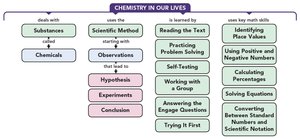
Summary Concept Map