 Back
BackChapter 15: Energy – Chemistry for Changing Times (Introductory Chemistry Study Notes)
Study Guide - Smart Notes
 Tailored notes based on your materials, expanded with key definitions, examples, and context.
Energy in Chemistry
Definition and Forms of Energy
Energy is a fundamental concept in chemistry, defined as the ability to do work or transfer heat. It is essential for all chemical and physical processes.
SI unit of energy: Joule (J). 1 J = 0.2388 cal.
SI unit of power: Watt (W). 1 W = 1 J/s.
Potential energy: Energy stored due to position or composition.
Kinetic energy: Energy of motion.
Earth’s Energy Sources
Nearly all energy on Earth originates from the sun. The distribution and utilization of this energy are crucial for sustaining life and driving chemical processes.
Solar radiation accounts for 99.97% of Earth's energy input.
Other sources include internal heat and tidal energy, but these are minor by comparison.
Source | Approximate Percentage |
|---|---|
Solar radiation | 99.97% |
Internal heat | 0.025% |
Tides | 0.002% |
Additional info: Most energy leaving Earth is in the form of reflected sunlight or infrared radiation (heat).
Energy and the Life-Support System
The Biosphere and Photosynthesis
The biosphere is the thin layer of air, water, and soil where life exists. Only a small fraction of incoming solar energy supports life, primarily through photosynthesis.
30% of solar radiation is reflected back to space.
23% powers the water cycle.
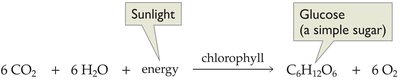
Less than 0.02% is used by green plants for photosynthesis.
Photosynthesis produces oxygen and stores energy in glucose for all animals.
Energy and Chemical Reactions
Factors Affecting Reaction Rates
The rate of a chemical reaction depends on several factors:
Temperature: Higher temperatures increase reaction rates.
Concentration of reactants: Higher concentrations lead to faster reactions.
Catalysts: Catalysts speed up reactions by lowering activation energy.
Exothermic and Endothermic Reactions
Chemical reactions involve energy changes, classified as exothermic or endothermic.
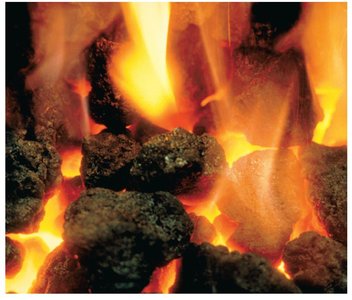
Exothermic reactions: Release heat energy to the surroundings.
Endothermic reactions: Absorb heat energy from the surroundings.

Exothermic Processes | Endothermic Processes |
|---|---|
Freezing of water | Melting of ice |
Condensation of water vapor | Evaporation of water |
Metabolism in animals | Photosynthesis in plants |
Forming chemical bonds | Breaking chemical bonds |
Discharging a battery | Charging a battery |
Example: Energy Release in Chemical Reactions
Burning 1.00 mol (16.0 g) methane releases 803 kJ of energy as heat. For 2.00 mol methane, the heat released is:
Thermodynamics in Chemistry
The First Law of Thermodynamics
Energy can be neither created nor destroyed; it can only be transformed from one form to another. This is known as the law of conservation of energy.
The Second Law of Thermodynamics and Entropy
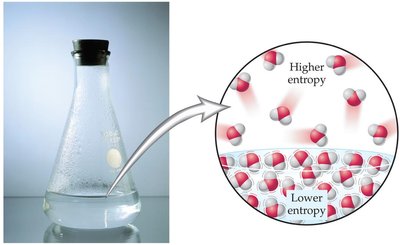
Energy flows spontaneously from hot objects to cooler objects. Entropy is a measure of the dispersal of energy, and for all spontaneous processes, the entropy of the universe increases.
Historical and Modern Uses of Energy
Early Uses of Energy
Early humans relied on plant materials and animal products for energy. Waterwheels and windmills were among the first machines to convert kinetic energy into mechanical energy.

Fossil Fuels
Fossil fuels (coal, oil, natural gas) provide over 90% of the energy consumed in modern society. Fuels are substances that release significant energy when burned (exothermic oxidation).
Coal
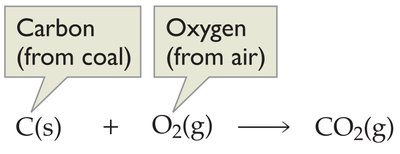
Coal is a complex mixture, primarily carbon. Its combustion is represented as:
Coal is abundant but hazardous to obtain and inconvenient to use.
Coal often contains sulfur, producing SO2 and contributing to acid rain.
Heating coal without air produces coke (used in steel production) and coal tar (source of organic compounds).
Natural Gas
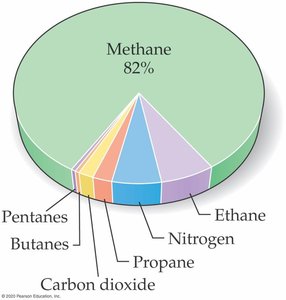
Natural gas is mainly methane (CH4) and is one of the cleanest burning fossil fuels. It is also a raw material for many industrial chemicals.
Petroleum
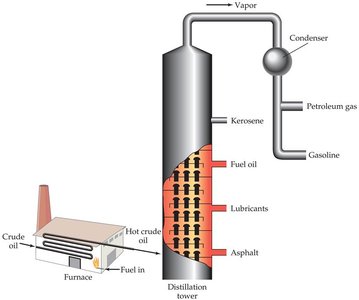
Petroleum is a complex mixture of hydrocarbons, separated into fractions by distillation. Its combustion can be represented as:
Fraction | Hydrocarbon Size | Boiling Point (°C) | Uses |
|---|---|---|---|
Gas | CH4 to C4H10 | <40 | Fuel, plastics |
Gasoline | C5H12 to C12H26 | 40–200 | Fuel, solvents |
Kerosene | C12H26 to C16H34 | 175–275 | Diesel, jet fuel |
Heating oil | C15H32 to C16H34 | 250–400 | Heating, gasoline production |
Lubricants | C17H36 and up | >300 | Lubricants |
Residue | C20H42 and up | >350 | Paraffin, asphalt |
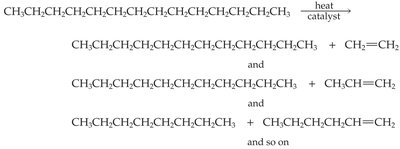
Larger fractions can be cracked into smaller, more useful molecules.
Octane Ratings of Gasoline
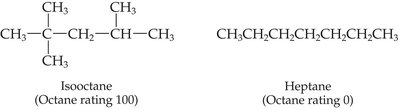
The octane rating measures a fuel's resistance to knocking in engines. Isooctane is rated 100, heptane is 0. Gasoline with an octane rating of 90 behaves like a mixture of 90% isooctane and 10% heptane.
Alternative Fuels
Engines can use various fuels, including diesel (C9–C12 hydrocarbons), biodiesel (from fats/oils), and ethanol (E85 is 85% ethanol, 15% gasoline).
Electricity and Energy Conversion
Coal Gasification and Liquefaction
Coal can be converted into gas or liquid fuels for convenience. Electricity is a highly versatile energy carrier.
Electric Power Generation
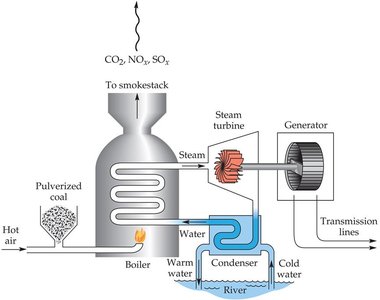
Coal-burning power plants generate electricity by converting chemical energy to heat, then to mechanical, and finally to electrical energy.
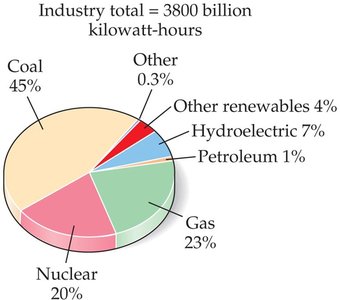
In 2003, U.S. electricity generation sources included coal (45%), gas (23%), nuclear (20%), hydroelectric (7%), and others.
Nuclear Energy
Nuclear Fission
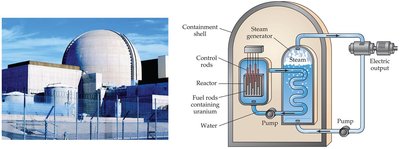
Nuclear power plants use fission reactions to produce heat, generating steam to turn turbines and produce electricity. Nuclear energy produces minimal air pollution but requires strict safety and waste management.
Country | % Electricity from Nuclear | Operating Plants | Plants Under Construction |
|---|---|---|---|
France | 73.3% | 58 | 1 |
United States | 19.4% | 104 | 5 |
Sweden | 42.7% | 10 | 0 |
Ukraine | 43.6% | 15 | 2 |
China | 2.1% | 20 | 28 |
Other countries | NA | 72 | 13 |
Renewable Energy Sources
Solar Energy
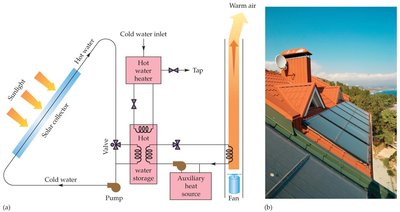
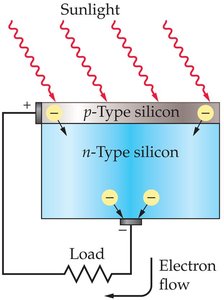
Solar energy is abundant but diffuse. It must be concentrated for practical use. Solar collectors heat water, and photovoltaic cells convert sunlight directly into electricity.
Biomass Energy
Biomass energy is derived from burning plant material or converting it to fuels like ethanol or methane. This process utilizes the energy stored by photosynthesis.

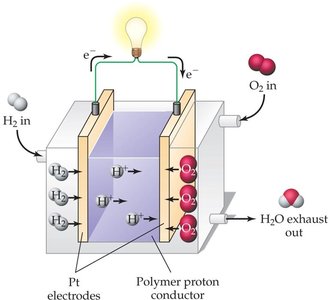
Hydrogen as a Fuel
Hydrogen can be burned cleanly or used in fuel cells to produce electricity. The reaction is:
Other Renewable Sources
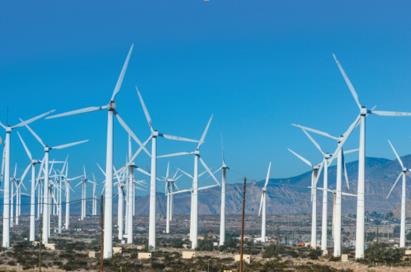
Wind: Wind turbines convert kinetic energy to electricity.
Water: Hydroelectric plants use falling water to turn turbines.
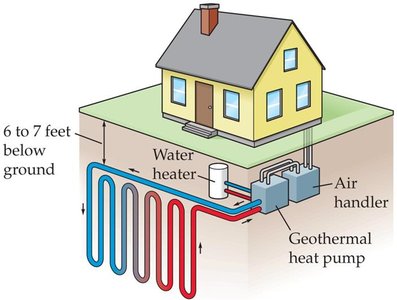
Geothermal: Uses Earth's internal heat to generate steam and electricity.
Ocean energy: Includes thermal, tidal, and wave energy conversion.
Global Energy Consumption
Trends and Challenges
Global energy demand is increasing, while many traditional sources are finite. This drives the search for sustainable and renewable energy solutions.
Country | Primary Energy Consumption per Capita (quadrillion BTU, 2011) |
|---|---|
China | 119.613 |
United States | 92.896 |
Russia | 29.625 |
India | 25.27 |
Canada | 14.361 |
Germany | 13.203 |
Brazil | 12.687 |
Saudi Arabia | 10.657 |
France | 10.261 |
United Kingdom | 8.111 |
Mexico | 7.62 |
Thailand | 5.07 |
Nigeria | 1.369 |
Guatemala | 0.239 |
Zimbabwe | 0.164 |
