 Back
BackChapter 16: Oxidation and Reduction – Introductory Chemistry Study Notes
Study Guide - Smart Notes
 Tailored notes based on your materials, expanded with key definitions, examples, and context.
Oxidation and Reduction
Introduction to Oxidation and Reduction
Oxidation and reduction (redox) reactions are fundamental chemical processes involving the transfer of electrons between substances. These reactions are essential in both natural and industrial processes, including metabolism, corrosion, and energy production.
Definitions of Oxidation and Reduction
Oxidation: Originally defined as the gain of oxygen by a substance. More fundamentally, it is the loss of electrons by an atom, ion, or molecule.
Reduction: Originally defined as the loss of oxygen. More fundamentally, it is the gain of electrons by an atom, ion, or molecule.
Oxidation and reduction always occur together; when one substance is oxidized, another is reduced.
Examples:
Slow oxidation: Rusting of iron (Fe) in the presence of oxygen.
Rapid oxidation: Combustion of natural gas (mainly methane, CH4), producing a flame.

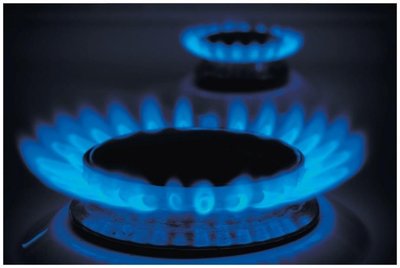
Agents in Redox Reactions
Oxidizing Agent: The substance that is reduced (gains electrons) and causes oxidation of another substance.
Reducing Agent: The substance that is oxidized (loses electrons) and causes reduction of another substance.
Example: In the reaction 2H2(g) + O2(g) → 2H2O(g), hydrogen is oxidized (reducing agent), and oxygen is reduced (oxidizing agent).
Helpful Mnemonics
OIL RIG: Oxidation Is Loss (of electrons); Reduction Is Gain (of electrons).
LEO the lion says GER: Lose Electrons Oxidation; Gain Electrons Reduction.
Summary:
Oxidation: Loss of electrons
Reduction: Gain of electrons
Oxidizing agent: Substance being reduced
Reducing agent: Substance being oxidized
Oxidation States and Electron Bookkeeping
Purpose and Assignment of Oxidation States
Oxidation states (or numbers) are used to track electron transfer in chemical reactions. They are assigned based on a set of rules and help identify which elements are oxidized or reduced in a reaction.
Oxidation state is not the same as ionic charge; even covalent compounds have assigned oxidation states.
Rules for Assigning Oxidation States
The following hierarchical rules are used to assign oxidation states:
The oxidation state of an atom in a free element is 0.
The oxidation state of a monoatomic ion is equal to its charge.
The sum of oxidation states in a neutral molecule is 0; in a polyatomic ion, it equals the ion's charge.
Group I metals in compounds: +1; Group II metals: +2.
Nonmetals in compounds (priority order):
Fluorine: -1
Hydrogen: +1 (except when bonded to metals in binary compounds, then -1)
Oxygen: -2
Group 7A (halogens): -1
Group 6A: -2
Group 5A: -3
Using Oxidation States to Identify Oxidation and Reduction
To determine which element is oxidized or reduced in a reaction, assign oxidation states to all atoms and compare their values before and after the reaction.
Example: In the reaction:

Calcium (Ca) increases from 0 to +2: Oxidized
Hydrogen (H) decreases from +1 to 0: Reduced
Oxygen remains at -2: Neither oxidized nor reduced
Everyday Chemistry: The Bleaching of Hair
Application of Redox Chemistry
Hydrogen peroxide (H2O2) is a common oxidizing agent used in hair bleaching. It oxidizes melanin, the pigment responsible for hair color, resulting in lighter hair. It also oxidizes thiol groups (–SH) in hair proteins to sulfonic acid groups (–SO3H), making hair more prone to tangling.

Balancing Redox Equations
The Half-Reaction Method
Redox reactions, especially in aqueous solutions, are often balanced using the half-reaction method. This systematic approach ensures both mass and charge are conserved.
Assign oxidation states to all atoms to identify what is oxidized and what is reduced.
Divide the reaction into two half-reactions: one for oxidation, one for reduction.
Balance each half-reaction for mass (atoms).
Balance each half-reaction for charge by adding electrons.
Multiply half-reactions by appropriate factors to equalize the number of electrons transferred.
Add the half-reactions together, canceling electrons and other species as necessary.
Verify that the equation is balanced for both mass and charge.
Example: Balancing the reaction between aluminum and silver ions:

Aluminum is oxidized from 0 to +3.
Silver is reduced from +1 to 0.
Summary Table: Steps to Balance Redox Reactions
Step | Description |
|---|---|
1 | Assign oxidation states. |
2 | Separate into two half-reactions. |
3 | Balance each half-reaction for mass. |
4 | Balance each half-reaction for charge by adding electrons. |
5 | Equalize electrons by multiplying half-reactions. |
6 | Add half-reactions together. |
7 | Verify mass and charge balance. |
Additional info: The half-reaction method is especially useful for complex redox reactions in acidic or basic solutions, where balancing hydrogen and oxygen may require adding H2O, H+, or OH− as needed.
