 Back
BackChapter 16: Oxidation and Reduction – Redox Reactions, Batteries, and Electrolysis
Study Guide - Smart Notes
 Tailored notes based on your materials, expanded with key definitions, examples, and context.
Oxidation and Reduction
Definitions and Fundamental Concepts
Oxidation and reduction are central concepts in chemistry, describing the transfer of electrons between substances. These processes are essential for understanding chemical reactions, energy production, and environmental chemistry.
Oxidation: The loss of electrons by a substance. It can also be defined as the gain of oxygen or an increase in oxidation state.
Reduction: The gain of electrons by a substance. It can also be defined as the loss of oxygen or a decrease in oxidation state.
Oxidizing agent: The substance that is reduced and causes oxidation of another substance.
Reducing agent: The substance that is oxidized and causes reduction of another substance.
Mnemonic: OIL RIG – Oxidation Is Loss (of electrons); Reduction Is Gain (of electrons).
Example: In the hydrogen–oxygen fuel cell, hydrogen is oxidized (loses electrons) and oxygen is reduced (gains electrons).
Oxidation States: Electron Bookkeeping
Assigning Oxidation States
Oxidation states are used to track electron transfer in chemical reactions. They are assigned based on a set of hierarchical rules:
The oxidation state of an atom in a free element is 0.
The oxidation state of a monoatomic ion equals its charge.
The sum of oxidation states in a neutral molecule is 0; in a polyatomic ion, it equals the ion's charge.
Group I metals: +1; Group II metals: +2.
Nonmetals are assigned oxidation states according to priority tables (e.g., oxygen usually −2, hydrogen +1).
Note: Oxidation state is not the same as ionic charge; covalent compounds also have assigned oxidation states.
Using Oxidation States to Identify Redox Processes
By comparing oxidation states before and after a reaction, chemists can identify which elements are oxidized and which are reduced.
An increase in oxidation state indicates oxidation.
A decrease in oxidation state indicates reduction.
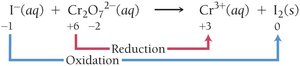
Balancing Redox Reactions
The Half-Reaction Method
Redox reactions are often balanced using the half-reaction method, especially in aqueous solutions. This method separates the overall reaction into two half-reactions: one for oxidation and one for reduction.
Assign oxidation states to all atoms.
Separate the reaction into two half-reactions.
Balance each half-reaction for mass (atoms).
Balance each half-reaction for charge by adding electrons.
Equalize the number of electrons in both half-reactions by multiplying as needed.
Add the half-reactions together, canceling electrons and other species.
Verify the equation is balanced for both mass and charge.
Balancing in Acidic Solution: Balance O by adding H2O, balance H by adding H+.
Balancing in Basic Solution: After balancing H by adding H+, neutralize H+ by adding OH− to both sides.
Redox Reactions in Everyday Life
Bleaching of Hair
Hydrogen peroxide acts as an oxidizing agent, oxidizing melanin (hair pigment) and thiol groups in hair proteins, resulting in lighter and more tangled hair.
Corrosion
Corrosion is the oxidation of metals, most commonly iron rusting. Iron oxide flakes off, exposing more iron to oxidation. Aluminum forms a protective oxide layer, preventing further corrosion.

Activity Series of Metals
Predicting Spontaneous Redox Reactions
The activity series ranks metals by their tendency to lose electrons (be oxidized). Metals higher in the series are more reactive and more easily oxidized.
Metals at the top: Most easily oxidized, most reactive.
Metals at the bottom: Least easily oxidized, least reactive (e.g., gold, silver).
Application: A metal higher in the series will spontaneously reduce ions of a metal lower in the series.
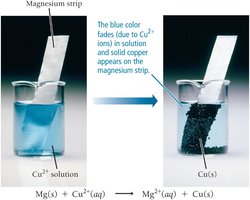
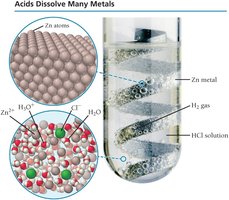
Acids Dissolving Metals
Acids dissolve metals by reducing hydrogen ions to hydrogen gas and oxidizing the metal to its ion. Metals above hydrogen in the activity series dissolve in acids.
Batteries and Electrochemical Cells
Voltaic (Galvanic) Cells
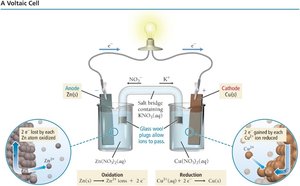
Voltaic cells generate electrical current from spontaneous redox reactions. The cell consists of two half-cells connected by a wire and a salt bridge.
Anode: Site of oxidation (negative terminal).
Cathode: Site of reduction (positive terminal).
Electrons flow from anode to cathode.
Salt bridge allows ion flow to maintain charge balance.
Electrical Voltage and Current
Voltage is the driving force for electron flow, analogous to gravity causing water to flow in a river. Higher voltage means a greater tendency for electrons to flow.
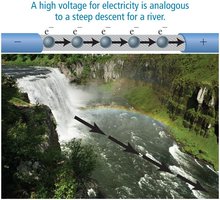
Understanding a Dead Battery
As a voltaic cell operates, reactants are depleted and products accumulate, eventually stopping the flow of electrons. Rechargeable batteries can be restored by reversing the current.
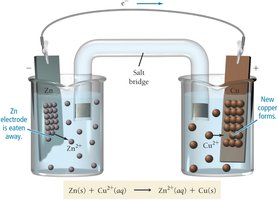
Dry-Cell Batteries
Dry-cell batteries, such as those used in flashlights, use a zinc case as the anode and a graphite rod as the cathode, separated by a moist paste. The reactions produce a voltage of about 1.5 volts.
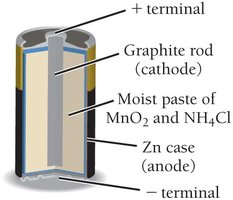
Lead-Acid Storage Batteries
Automobile batteries are lead-acid storage batteries, consisting of multiple cells connected in series to produce 12 volts. Both electrodes are immersed in sulfuric acid, and the battery can be recharged by reversing the current.
Fuel Cells
Hydrogen–Oxygen Fuel Cell
Fuel cells generate electricity by combining hydrogen and oxygen in a redox reaction. Hydrogen is oxidized at the anode, and oxygen is reduced at the cathode, producing water as the only emission.
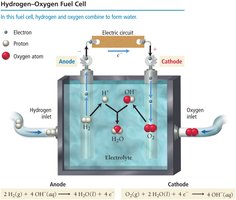
Electrolysis
Electrolytic Cells and Applications
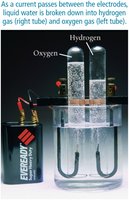
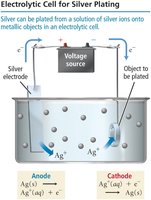
Electrolysis uses electrical current to drive nonspontaneous redox reactions. Electrolytic cells are used for processes such as water splitting, metal extraction, and metal plating.
Electrolysis of Water: Produces hydrogen and oxygen gases.
Metal Extraction: Reduces metal oxides to pure metals.
Metal Plating: Deposits a layer of metal onto another metal.
Corrosion and Its Prevention
Corrosion Mechanisms
Corrosion is the undesirable oxidation of metals, such as rusting of iron. Protective coatings, keeping metals dry, or using sacrificial anodes (e.g., zinc coating) can prevent corrosion.
Everyday Chemistry Applications
Fuel-Cell Breathalyzer
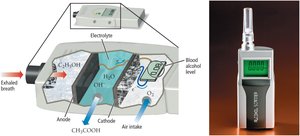
Fuel-cell breathalyzers measure blood alcohol levels by oxidizing ethyl alcohol at the anode and reducing oxygen at the cathode. The electrical current produced is proportional to the alcohol concentration.
Summary Table: Activity Series of Metals
The activity series is used to predict the spontaneity of redox reactions and the reactivity of metals.
Position | Metal | Tendency to Lose Electrons | Reactivity |
|---|---|---|---|
Top | Potassium, Sodium, Magnesium | High | Most reactive |
Middle | Zinc, Iron | Moderate | Reactive |
Bottom | Silver, Gold | Low | Least reactive |
Additional info: Table entries inferred from standard activity series for clarity.
Chemical Skills Learning Objectives
Define and identify oxidation and reduction.
Identify oxidizing agents and reducing agents.
Assign oxidation states.
Use oxidation states to identify oxidation and reduction.
Balance redox reactions.
Predict spontaneous redox reactions.
Predict whether a metal will dissolve in acid.
Describe how a voltaic cell functions.
Compare and contrast the various types of batteries.
Describe the process of electrolysis and how an electrolytic cell functions.
Describe the process of corrosion and various methods used to prevent rust.
Key Equations
General Redox Reaction:
Half-Reactions (example):
Oxidation:
Reduction:
Electrolysis of Water:
