 Back
BackChapter 5: Molecules and Compounds – Structured Study Notes
Study Guide - Smart Notes
 Tailored notes based on your materials, expanded with key definitions, examples, and context.
Molecules and Compounds
Introduction to Compounds
Compounds are substances formed from two or more elements chemically combined in fixed proportions. Their properties are distinct from the properties of the individual elements that compose them.
Example: Table sugar (sucrose) is a compound made of carbon, hydrogen, and oxygen, but its properties differ greatly from those of its constituent elements.
Example: Table salt (sodium chloride) is formed from sodium (a reactive metal) and chlorine (a poisonous gas), yet salt is safe to eat.
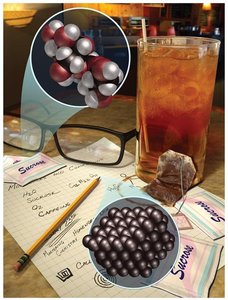
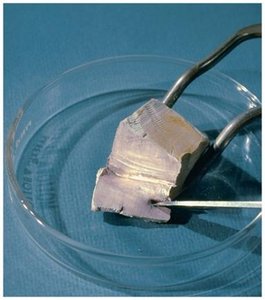
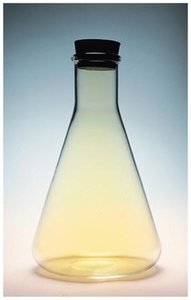
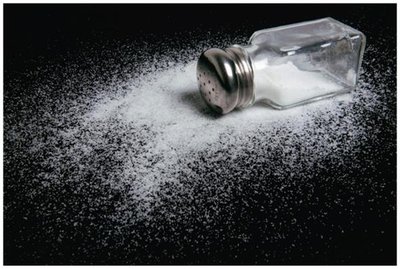
Elements, Compounds, and Mixtures
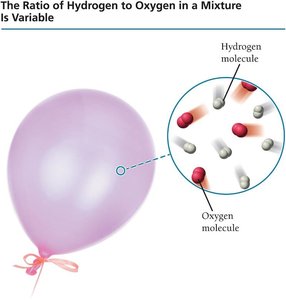
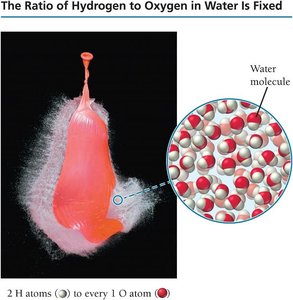
Most substances in nature are compounds, not elements. Free atoms are rare. Compounds differ from mixtures in that their elements combine in fixed, definite proportions, while mixtures combine in variable proportions.
Compound: Elements combine in fixed ratios (e.g., water always has two hydrogen atoms for every oxygen atom).
Mixture: Elements combine in variable ratios (e.g., a balloon filled with hydrogen and oxygen gas).
The Law of Constant Composition
Joseph Proust established that all samples of a given compound have the same proportions of their constituent elements. This is known as the law of constant composition.
Example: Decomposing 18.0 g of water yields 16.0 g of oxygen and 2.0 g of hydrogen, a mass ratio of 8.0:1.
Example: Decomposing 17.0 g of ammonia yields 14.0 g of nitrogen and 3.0 g of hydrogen, a mass ratio of 4.7:1.
Chemical Formulas
Representing Compounds
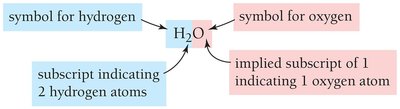
Chemical formulas indicate the elements present in a compound and the relative number of atoms of each. Subscripts show the number of atoms; a subscript of 1 is omitted.
Water: (2 hydrogen, 1 oxygen)
Table salt: (1 sodium, 1 chlorine)
Carbon dioxide: (1 carbon, 2 oxygen)
Sucrose: (12 carbon, 22 hydrogen, 11 oxygen)
Importance of Subscripts
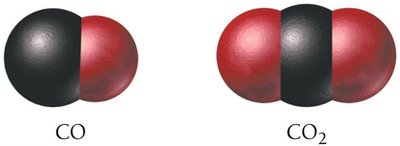
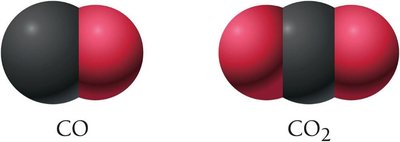
Changing a subscript in a chemical formula creates a different compound. For example, (carbon monoxide) is toxic, while (carbon dioxide) is relatively harmless.
Order of Elements in Formulas
Formulas list the most metallic element first. For compounds without metals, the more metal-like element (leftmost or lower in the periodic table) is listed first.
Example: , not
Example: , not
Polyatomic Ions
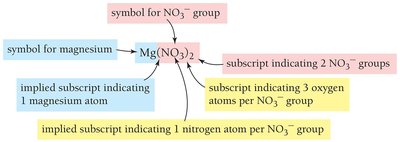
Some formulas contain groups of atoms that act as a unit, called polyatomic ions. Parentheses and subscripts indicate the number of each group.
Example: contains 1 magnesium atom, 2 nitrate groups (each with 1 nitrogen and 3 oxygen atoms).
Types of Chemical Formulas
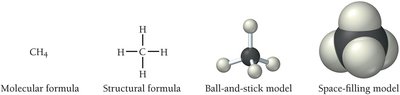
There are three main types of chemical formulas:
Empirical formula: Simplest whole-number ratio (e.g., for water).
Molecular formula: Actual number of atoms (e.g., for ethylene).
Structural formula: Shows how atoms are connected (e.g., lines for bonds).
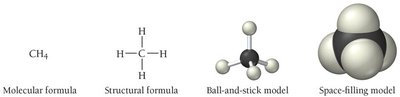
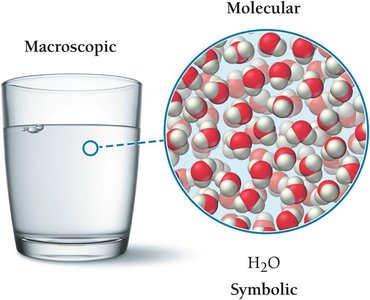
Connecting Macroscopic and Molecular Worlds
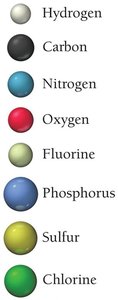
Structural formulas and molecular models help visualize the connection between the observable world and the atomic/molecular world.
Classification of Elements and Compounds
Atomic and Molecular Elements
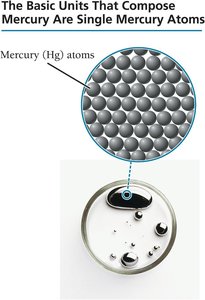
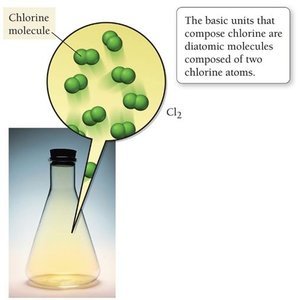
Elements can exist as single atoms (atomic elements) or as molecules (molecular elements).
Atomic elements: Most metals, e.g., mercury (Hg).
Molecular elements: Exist as diatomic molecules, e.g., chlorine ().
Diatomic Elements
Seven elements exist as diatomic molecules: hydrogen (), nitrogen (), oxygen (), fluorine (), chlorine (), bromine (), and iodine ().
Molecular and Ionic Compounds
Compounds are classified as molecular (composed of molecules, usually nonmetals) or ionic (composed of ions, usually metal and nonmetal).
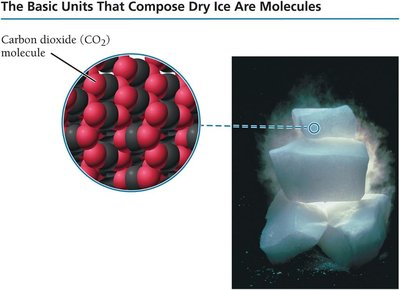
Molecular compounds: Basic units are molecules (e.g., dry ice, ).
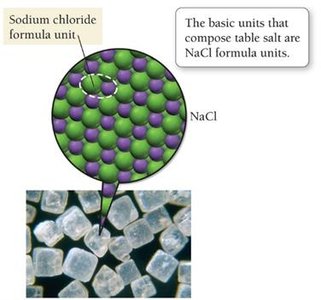
Ionic compounds: Basic units are formula units (e.g., table salt, ).
Writing Formulas for Ionic Compounds
Steps for Writing Ionic Formulas
Ionic compounds are formed from metals (cations) and nonmetals (anions). The sum of charges must be zero.
Write the symbol and charge for each ion.
Balance charges by adjusting subscripts.
Reduce subscripts to smallest whole numbers.
Check for charge neutrality.
Example: Magnesium and chlorine form .
Example: Magnesium and oxygen form .
Polyatomic Ions in Ionic Compounds
Common polyatomic ions include acetate (), carbonate (), nitrate (), sulfate (), and ammonium (). When more than one polyatomic ion is present, use parentheses and a subscript.
Example: Calcium and nitrate form .
Naming Compounds
Naming Ionic Compounds
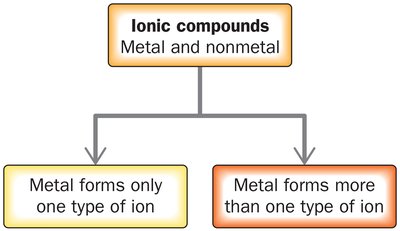
Ionic compounds are named based on the type of metal present:
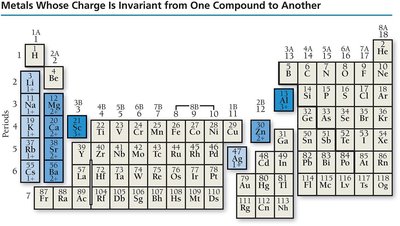
Type I: Metal forms only one type of ion (main group metals). Name is "cation name + anion name (-ide)".
Type II: Metal forms more than one type of ion (transition metals). Name is "cation name (charge in Roman numerals) + anion name (-ide)".

Common Anions
Nonmetals form anions with characteristic names: fluoride (), chloride (), bromide (), iodide (), oxide (), sulfide (), nitride ().
Naming Type II Ionic Compounds
For metals with variable charge, specify the charge in parentheses. For example, is iron(III) chloride.

Naming Ionic Compounds with Polyatomic Ions
Use the name of the polyatomic ion in the compound name. For example, is potassium nitrate; is iron(II) hydroxide.
Naming Oxyanions
Oxyanions are named based on the number of oxygen atoms:
-ate: More oxygen (e.g., nitrate )
-ite: Less oxygen (e.g., nitrite )
Prefixes hypo- (less than) and per- (more than) are used for series with more than two ions.

Polyatomic Ions in Everyday Chemistry
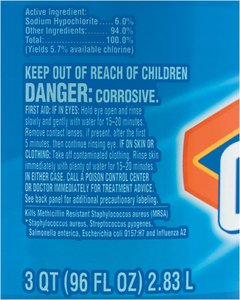
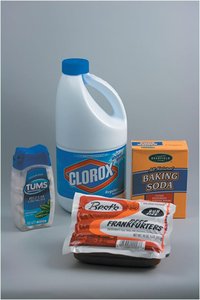
Polyatomic ions are found in common products:
Sodium hypochlorite (bleach)
Sodium bicarbonate (baking soda)
Calcium carbonate (antacids)
Sodium nitrite (food preservative)
Naming Molecular Compounds
Molecular compounds are named using prefixes to indicate the number of atoms:
mono- (1), di- (2), tri- (3), tetra- (4), penta- (5), etc.
First element is more metal-like; prefix mono- is omitted for the first element if only one atom.
Example: is carbon dioxide; is dinitrogen monoxide.

Naming Acids
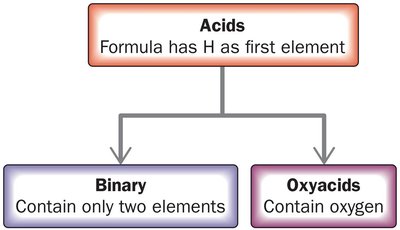
Acids are molecular compounds that release ions in water. They are classified as binary acids (hydrogen and one nonmetal) or oxyacids (hydrogen, nonmetal, and oxygen).
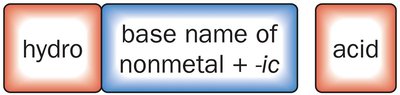
Binary acids: hydro + base name of nonmetal + ic + acid (e.g., hydrochloric acid, hydrosulfuric acid)
Oxyacids: Named based on the oxyanion present. If the oxyanion ends in -ate, the acid name ends in -ic; if it ends in -ite, the acid name ends in -ous.
Nomenclature Flowchart
A flowchart can help determine the correct naming system for a compound based on its formula.
Formula Mass
The formula mass of a compound is the sum of the atomic masses of all atoms in its chemical formula.
Example: For :
Summary Table: Common Polyatomic Ions
Name | Formula |
|---|---|
Acetate | |
Carbonate | |
Nitrate | |
Sulfate | |
Phosphate | |
Ammonium | |
Hydroxide |
Learning Objectives
Restate and apply the law of constant composition.
Write chemical formulas and determine the number of each atom.
Classify elements and compounds as atomic, molecular, ionic, or molecular.
Name binary ionic compounds (Type I and II), compounds with polyatomic ions, molecular compounds, and acids.
Calculate formula mass.
