 Back
BackChapter 6: Chemical Composition – Study Notes
Study Guide - Smart Notes
 Tailored notes based on your materials, expanded with key definitions, examples, and context.
Chapter 6: Chemical Composition
Introduction to Chemical Composition
Chemical composition refers to the types and amounts of elements that make up a substance. Understanding chemical composition is essential for quantifying substances in chemical reactions and for relating the mass of a substance to the number of particles it contains.
The Mole Concept
Definition and Importance of the Mole
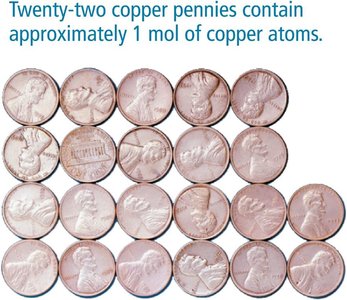
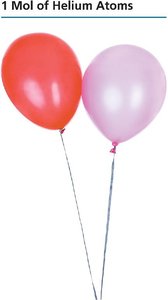
The mole (mol) is the SI unit for the amount of substance. It allows chemists to count atoms, ions, or molecules by weighing them, since these particles are too small and numerous to count individually. One mole contains Avogadro’s number of particles:
Avogadro’s Number: particles/mol
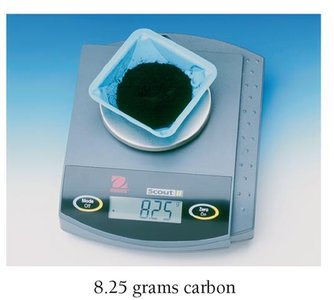
One mole of any element has a mass (in grams) equal to its atomic mass (in amu).
One mole of any compound has a mass (in grams) equal to its formula mass (in amu).
Counting by Weighing: The Analogy
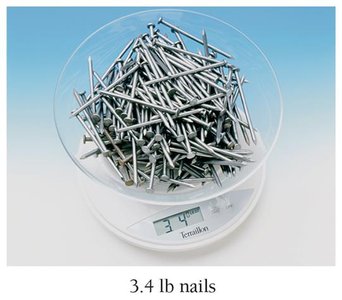
Just as hardware stores sell nails by the pound rather than individually, chemists use the mole to relate mass to number of particles. The concept of a dozen (12 items) is analogous to the mole, but the mole is much larger due to the small size of atoms.
Conversions Involving Moles
Converting Moles to Number of Atoms
To convert moles of a substance to the number of atoms, multiply by Avogadro’s number:
Formula:

Converting Number of Atoms to Moles
To convert the number of atoms to moles, divide by Avogadro’s number:
Formula:

Converting Between Grams and Moles
The molar mass of an element or compound is the mass of one mole of that substance, expressed in grams per mole (g/mol). It is numerically equal to the atomic or formula mass in amu.
Formula:
Formula:

Converting Between Grams and Number of Atoms
To find the number of atoms in a given mass of an element:
Convert grams to moles using the molar mass.
Convert moles to atoms using Avogadro’s number.

Molar Mass and Atomic Mass
Definition and Examples
The atomic mass unit (amu) is defined as one-twelfth the mass of a carbon-12 atom. The molar mass of an element is numerically equal to its atomic mass in amu but expressed in grams per mole.
Example: Copper (Cu) has an atomic mass of 63.55 amu, so its molar mass is 63.55 g/mol.
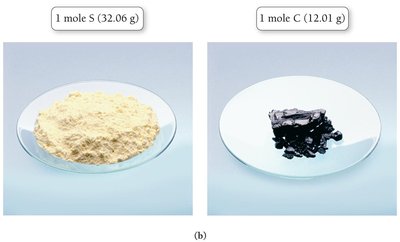
Counting Molecules by the Gram
Molar Mass of Compounds
For compounds, the molar mass is the mass of one mole of molecules (for molecular compounds) or formula units (for ionic compounds). The formula mass is the sum of the atomic masses of all atoms in the chemical formula.
Example: Water (H2O) has a molar mass of 18.02 g/mol.

Converting Between Number of Molecules and Mass
To convert between the number of molecules and the mass of a compound:
Convert molecules to moles using Avogadro’s number.
Convert moles to grams using the molar mass.

Chemical Formulas as Conversion Factors
Using Chemical Formulas
Chemical formulas provide relationships between the number of atoms of each element in a compound. These relationships can be used as conversion factors between moles of a compound and moles of a constituent element.
Example: In CO2, there are 2 moles of O atoms per 1 mole of CO2 molecules.
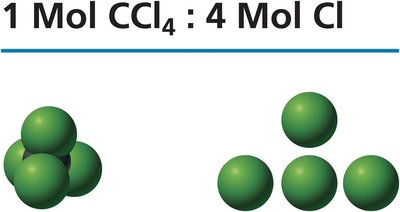
Converting Between Moles of a Compound and Moles of an Element
To find the number of moles of an element in a given amount of compound, use the ratio from the chemical formula.

Converting Between Grams of a Compound and Grams of an Element
To find the mass of a constituent element in a given mass of compound:
Convert grams of compound to moles of compound.
Convert moles of compound to moles of element (using the formula ratio).
Convert moles of element to grams of element.

Mass Percent Composition
Definition and Calculation
The mass percent composition of an element in a compound is the percentage of the compound’s total mass contributed by that element.
Formula:
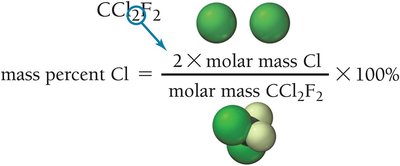
Using Mass Percent as a Conversion Factor
Mass percent can be used to convert between grams of an element and grams of a compound.
Example: If NaCl is 39% sodium by mass, then 39 g Na per 100 g NaCl.
Empirical and Molecular Formulas
Empirical Formula
The empirical formula gives the simplest whole-number ratio of atoms in a compound. The molecular formula is a whole-number multiple of the empirical formula.
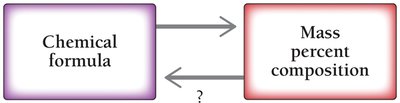
Calculating Empirical Formulas from Experimental Data
Steps to determine the empirical formula:
Write down the masses of each element in the sample.
Convert masses to moles using molar masses.
Write a pseudoformula using the mole values as subscripts.
Divide all subscripts by the smallest subscript to get whole numbers.
If necessary, multiply all subscripts by a small integer to obtain whole numbers.
Calculating Molecular Formulas
The molecular formula is determined from the empirical formula and the molar mass:
Formula:
Multiply the empirical formula subscripts by n to get the molecular formula.
Summary Table: Key Conversion Factors
Conversion | Factor/Formula |
|---|---|
Moles ↔ Number of particles | particles |
Grams ↔ Moles | |
Moles of compound ↔ Moles of element | From chemical formula (e.g., 2 mol H per 1 mol H2O) |
Grams of compound ↔ Grams of element | Use molar mass and formula ratios |
Mass percent composition |
Learning Objectives
Convert between moles and number of atoms.
Convert between grams and moles.
Convert between grams and number of atoms or molecules.
Convert between grams and moles of a compound.
Convert between mass of a compound and number of molecules.
Convert between moles of a compound and moles of a constituent element.
Convert between grams of a compound and grams of a constituent element.
Use mass percent composition as a conversion factor.
Determine mass percent composition from a chemical formula.
Determine an empirical formula from experimental data.
Calculate an empirical formula from reaction data.
Calculate a molecular formula from an empirical formula and molar mass.
