 Back
Chemical Bonding and Molecular Geometry: Study Notes for Introductory Chemistry
Study Guide - Smart Notes
 Tailored notes based on your materials, expanded with key definitions, examples, and context.
Chemical Bonding and Molecular Geometry
Valence Electrons
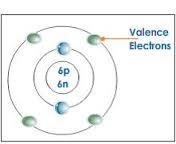
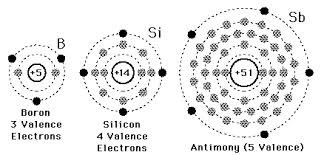
Valence electrons are the electrons located in the outermost principal energy level of an atom. These electrons play a crucial role in determining the chemical and physical properties of elements, as well as their reactivity.
Valence electrons are responsible for bonding and chemical interactions.
Core electrons are those in lower energy shells and do not participate in bonding.
Elements in the same group of the periodic table have the same number of valence electrons.
The number of valence electrons influences the Lewis dot structure and the stability of atoms.
Example: Oxygen has 6 valence electrons.
Lewis Electron-dot Structure of Elements
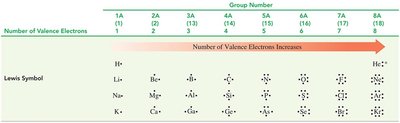
The Lewis electron-dot structure, also known as electron dot symbols, visually represents the valence electrons of an element as dots around the element's symbol.
Each dot represents a valence electron.
Dots are placed one at a time on each side before pairing.
Elements in the same group have similar Lewis dot structures.
Helium is stable with two valence electrons.

Octet Rule and Formation of Ions
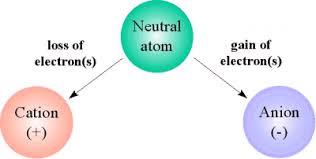
The octet rule states that atoms tend to gain, lose, or share electrons to achieve a stable configuration with eight valence electrons, similar to noble gases.
Atoms that gain electrons become anions (negatively charged).
Atoms that lose electrons become cations (positively charged).
The tendency to achieve an octet drives the formation of ions and compounds.
Ionic Charges from Group Numbers
Group numbers in the periodic table help predict the ionic charges of representative elements.
Group Number | Number of Valence Electrons |
|---|---|
1A (1) | 1 |
2A (2) | 2 |
3A (13) | 3 |
4A (14) | 4 |
5A (15) | 5 |
6A (16) | 6 |
7A (17) | 7 |
8A (18) | 8 |
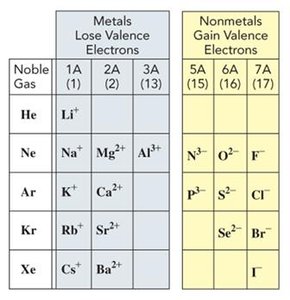
Lewis Electron-dot Structure for Monoatomic Ions
Lewis symbols for ions show the loss or gain of electrons:
Cations: No valence electrons shown (lost in formation).
Anions: Eight valence electrons shown (gained in formation).
Example: Li• becomes Li+; F• becomes [F]-.
Types of Compounds: Ionic and Covalent
Atoms form compounds to achieve stability, often by attaining eight valence electrons.
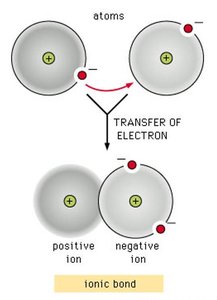
Ionic compounds: Formed by transfer of electrons between a cation (often a metal) and an anion (often a nonmetal).
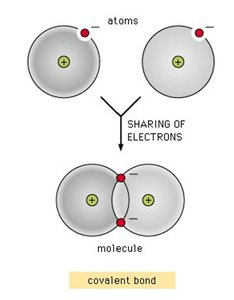
Covalent compounds: Formed by sharing electrons between nonmetals.
Predicting Chemical Formulas Using Lewis Theory
Lewis dot structures help predict the formulas of ionic compounds:
Draw Lewis symbols for each element.
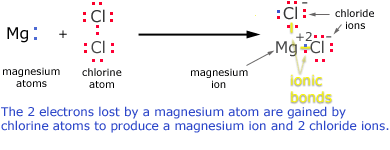
Transfer electrons from metal to nonmetal to complete octets.
Example: Magnesium and chlorine form MgCl2.


Covalent Bonds
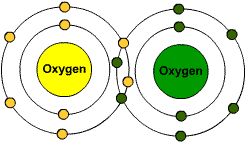
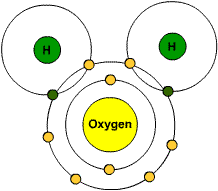
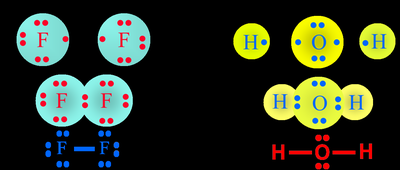
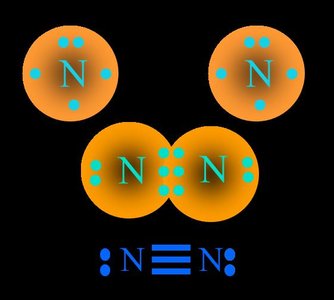
Covalent bonds are formed when two nonmetals share pairs of electrons to achieve octets.
Single covalent bond: One pair of electrons shared.
Double covalent bond: Two pairs of electrons shared.
Triple covalent bond: Three pairs of electrons shared.
Bond strength increases with the number of shared pairs.
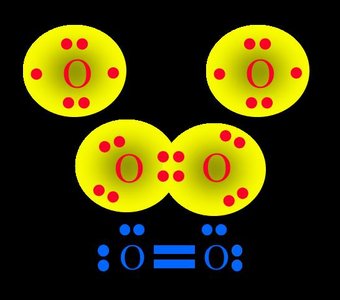
Bonding and Lone Pair Electrons
Bonding pairs: Electrons shared between atoms.
Lone pairs: Electrons not shared, belonging to one atom.
More shared electrons = stronger bond.
Predicting the Type of Bond
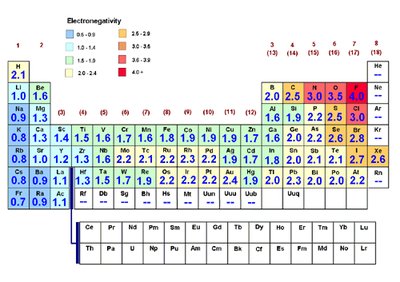
The type of bond depends on the difference in electronegativity between the two elements:
Ionic bond: Difference ≥ 2.0
Polar covalent bond: Difference 0.5–1.9
Nonpolar covalent bond: Difference 0.0–0.4
Electronegativity
Electronegativity is the tendency of an atom to attract electrons in a bond.
Increases across a period (left to right).
Decreases down a group (top to bottom).
Greater difference in electronegativity = more polar bond.
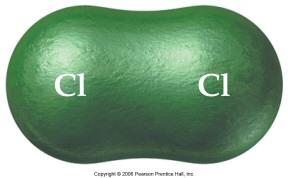
Bond Polarity and Dipole Moments
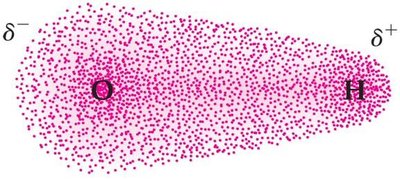
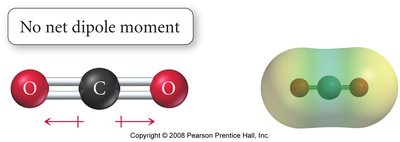
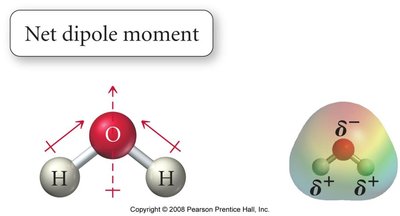
Bond polarity arises from differences in electronegativity. A dipole moment occurs when a molecule has a partial positive and partial negative end.
Nonpolar covalent: Electrons shared equally.
Polar covalent: Electrons shared unequally.
Ionic: Electrons transferred.
Polarity of Molecules
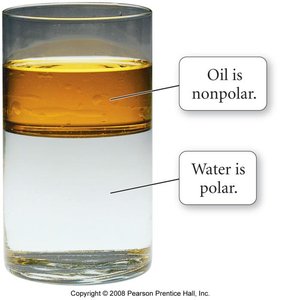
A molecule is polar if it contains polar bonds and has an unsymmetrical shape. Polarity affects solubility and intermolecular interactions.
Example: CO2 is nonpolar due to symmetry; H2O is polar due to bent shape.
Lewis Electron-dot Structure of Covalent Species
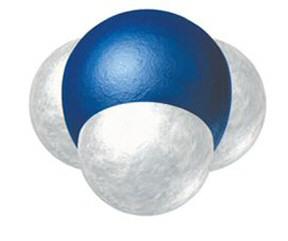
Lewis structures for covalent compounds help determine molecular polarity and shape.
Count total valence electrons.
Draw skeletal structure (central atom, usually least electronegative).
Distribute electrons to complete octets.
Assign remaining electrons to central atom if needed.
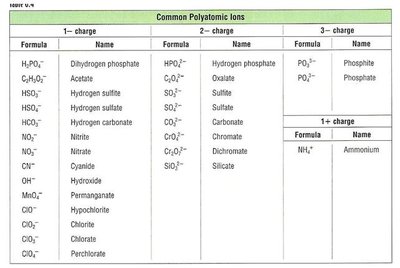
Polyatomic Ions
Polyatomic ions are charged species composed of two or more atoms covalently bonded. Their Lewis structures are drawn similarly to neutral molecules, but the total number of electrons is adjusted for the charge.
For cations: subtract electrons for each positive charge.
For anions: add electrons for each negative charge.

Exceptions to the Octet Rule
Some molecules do not follow the octet rule:
Odd-electron molecules: Have an unpaired electron (e.g., NO).
Electron-deficient molecules: Central atom has fewer than eight electrons.
Hypervalent molecules: Central atom has more than eight electrons.
Valence Shell Electron Pair Repulsion Theory (VSEPR)
VSEPR theory predicts the three-dimensional shape of molecules based on the repulsion between electron groups around the central atom.
Electron groups (lone pairs and bonds) arrange themselves to minimize repulsion.
Basic shapes: linear (180°), trigonal planar (120°), tetrahedral (109.5°).
Derivatives: bent, pyramidal, etc., depending on lone pairs.
Resonance Structures
Some molecules and ions cannot be represented by a single Lewis structure. Resonance structures are multiple valid Lewis structures for the same species, and the true structure is a hybrid of all resonance forms.
Resonance occurs when there are multiple bonds and delocalized electrons.
Example: SO3 has three resonance structures.
