 Back
Chemical Bonding I: Lewis Structures, Molecular Shapes, and Bond Properties
Study Guide - Smart Notes
 Tailored notes based on your materials, expanded with key definitions, examples, and context.
Chemical Bonding I
Introduction
This chapter explores the fundamental concepts of chemical bonding, including the differences between ionic and covalent bonds, how to draw Lewis structures, resonance, formal charge, exceptions to the octet rule, bond energies and lengths, and the Valence Shell Electron-Pair Repulsion (VSEPR) theory for predicting molecular shapes and polarity.
Electronegativity and Bond Polarity
Electronegativity
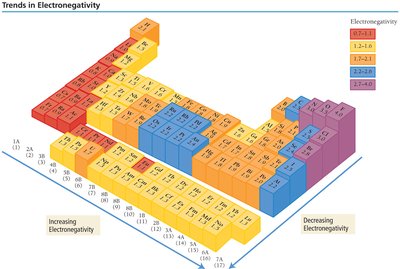
Electronegativity is the ability of an atom to attract electrons in a chemical bond. It varies across the periodic table, increasing from left to right and decreasing from top to bottom. Fluorine is the most electronegative element, assigned a value of 4.0.
Definition: Electronegativity is a measure of the tendency of an atom to attract a bonding pair of electrons.
Periodic Trend: Electronegativity increases across a period and decreases down a group.
Bond Polarity and Types
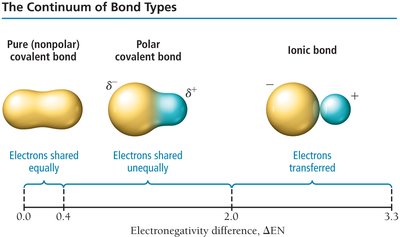
Bonds can be classified based on the difference in electronegativity (ΔEN) between the atoms involved:
Nonpolar Covalent: Electrons are shared equally (ΔEN ≈ 0).
Polar Covalent: Electrons are shared unequally (ΔEN between 0.4 and 2.0).
Ionic: Electrons are transferred (ΔEN > 2.0).
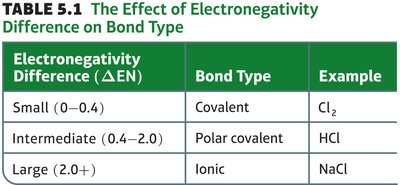
Electronegativity Difference (ΔEN) | Bond Type | Example |
|---|---|---|
Small (0–0.4) | Covalent | Cl2 |
Intermediate (0.4–2.0) | Polar covalent | HCl |
Large (2.0+) | Ionic | NaCl |
Bond Polarity and Dipole Moments
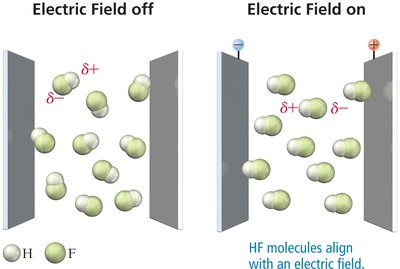
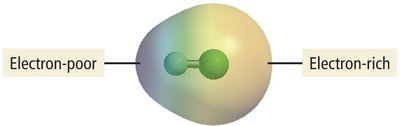
Polar covalent bonds have a dipole moment, which is a measure of the separation of charge. The dipole moment (μ) occurs when there is a difference in electronegativity between two atoms, resulting in partial positive (δ+) and partial negative (δ−) charges.
Percent Ionic Character
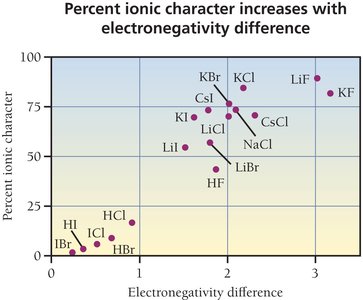
The percent ionic character of a bond increases with the electronegativity difference between the atoms.
Writing Lewis Structures for Molecules and Polyatomic Ions
Steps for Drawing Lewis Structures
Skeletal Structure: Place the least electronegative atom in the center. Hydrogen and electronegative atoms are always terminal.
Count Valence Electrons: Sum the valence electrons for all atoms, adjusting for charge if the species is an ion.
Place Electrons: Assign two electrons (a single bond) between each atom, then complete duets for hydrogen and octets for other atoms.
Octet Rule: If any atom lacks an octet, move lone pairs to form multiple bonds.
Check Electron Count: Ensure the total number of electrons matches the calculated sum.
Examples of Lewis Structures
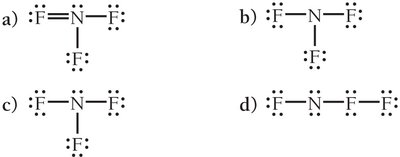
Lewis structures for SF2, HCOOH, PH3, O22−, and nitrogen trifluoride (NF3) are commonly used for practice.
Resonance Structures
Definition and Explanation
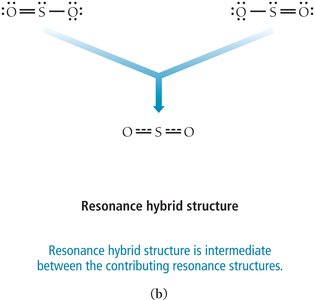
A resonance structure is one of two or more valid Lewis structures for a molecule that differ only in the arrangement of electrons. The actual molecule is a resonance hybrid, an intermediate between the contributing structures.
Resonance Hybrid: The true structure is a blend of all resonance forms.
Formal Charge
Calculating Formal Charge
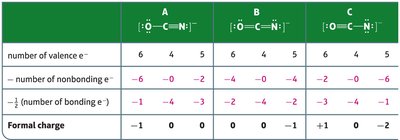
Formal charge (FC) is calculated to determine the most stable Lewis structure:
Formula:
Guidelines:
Sum of all FC in a neutral molecule = 0
Sum of all FC in an ion = charge of ion
The smaller the FC, the more stable the structure
Negative FC should reside on the more electronegative atom
Choosing the Best Lewis Structure
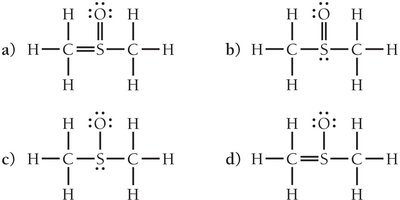
Use formal charge to select the most stable Lewis structure for molecules such as CH3SOCH3.
Exceptions to the Octet Rule
Types of Exceptions
Odd Electron Species: Molecules with an odd number of electrons (free radicals), e.g., ClO.
Incomplete Octets: Atoms such as B in BF3 may have fewer than eight electrons.
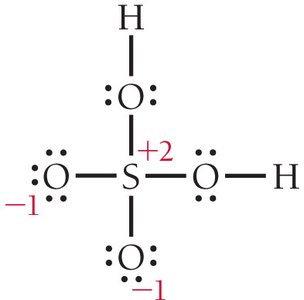
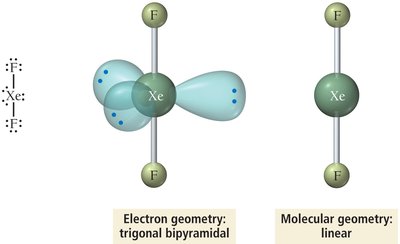
Expanded Octets: Elements in the third period and beyond can have more than eight electrons, e.g., AsF5, SF6, XeF2.
Bond Energies and Bond Lengths
Bond Energy
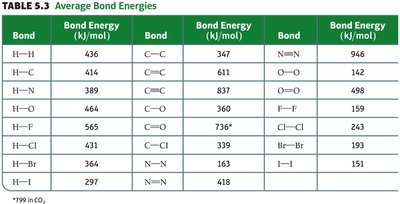
Bond energy is the energy required to break one mole of a bond in the gas phase. Stronger bonds require more energy to break.
Example: HCl bond energy = 431 kJ/mol; HF bond energy = 565 kJ/mol.
Bond | Bond Energy (kJ/mol) |
|---|---|
H–H | 436 |
H–F | 565 |
H–Cl | 431 |
H–Br | 364 |
H–I | 297 |
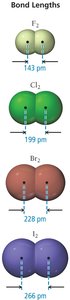
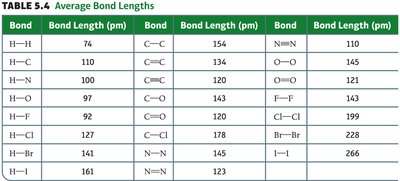
Bond Length
Bond length is the distance between the nuclei of two bonded atoms. Generally, shorter bonds are stronger.
Bond | Bond Length (pm) |
|---|---|
H–H | 74 |
H–F | 92 |
H–Cl | 127 |
H–Br | 141 |
H–I | 161 |
Valence Shell Electron-Pair Repulsion (VSEPR) Theory
Basic Principles
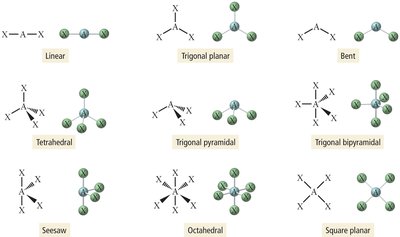
VSEPR theory states that electron groups (lone pairs, single, double, or triple bonds) around a central atom repel each other and arrange themselves to minimize repulsion. The number of electron groups determines the molecular shape.
2 groups: Linear
3 groups: Trigonal planar
4 groups: Tetrahedral
5 groups: Trigonal bipyramidal
6 groups: Octahedral
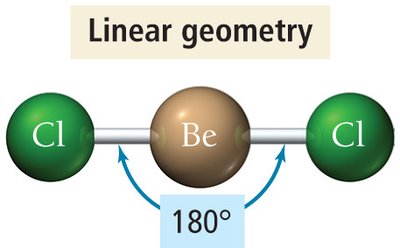
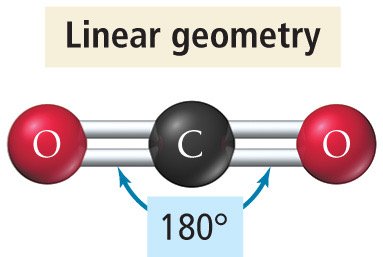
Linear Geometry
Linear geometry occurs when there are two electron groups around the central atom, resulting in a bond angle of 180°.
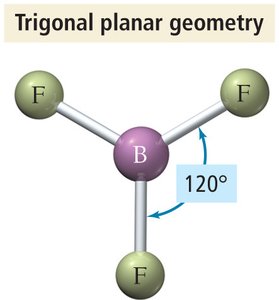
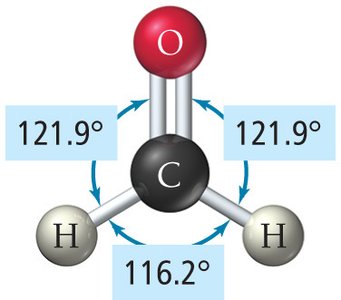
Trigonal Planar Geometry
Three electron groups around the central atom form a trigonal planar geometry with bond angles of 120°.
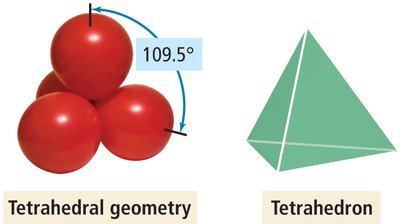
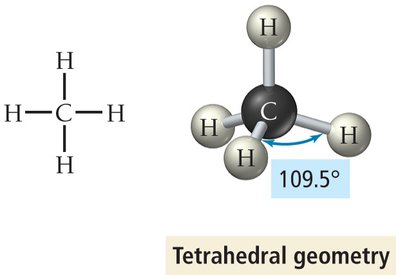
Tetrahedral Geometry
Four electron groups form a tetrahedral geometry with bond angles of 109.5°.
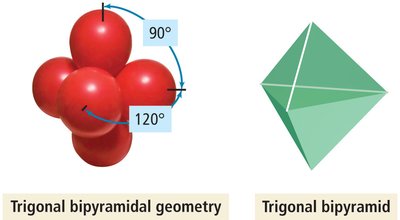
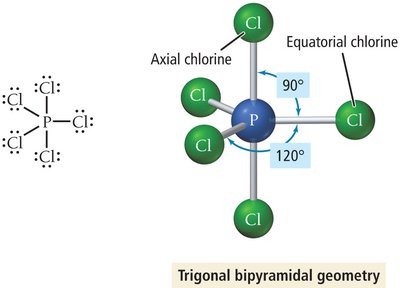
Trigonal Bipyramidal Geometry
Five electron groups form a trigonal bipyramidal geometry with bond angles of 90° and 120°.

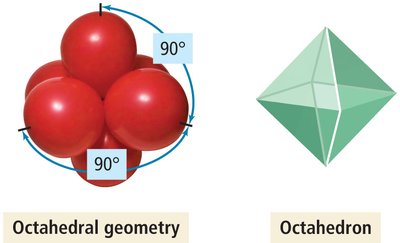
Octahedral Geometry
Six electron groups form an octahedral geometry with bond angles of 90°.
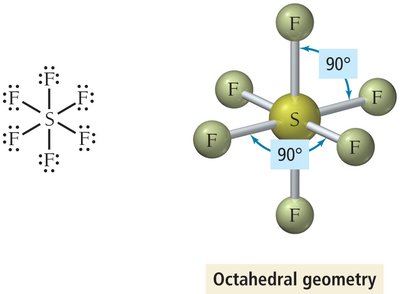
VSEPR Theory: The Effect of Lone Pairs
Lone Pairs and Molecular Geometry
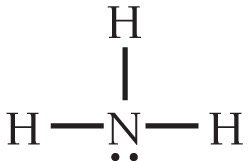
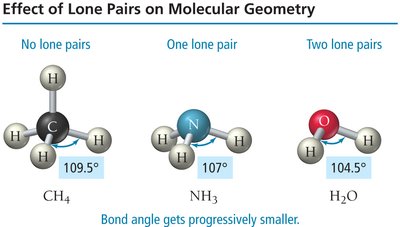
Lone pairs affect molecular geometry by reducing bond angles. For example, in tetrahedral electron geometry:
4 bonding pairs: tetrahedral (CH4)
3 bonding pairs, 1 lone pair: trigonal pyramidal (NH3)
2 bonding pairs, 2 lone pairs: bent (H2O)
Expanded Octets and Molecular Geometry
For molecules with five or six electron groups, lone pairs can lead to geometries such as see-saw, T-shaped, square pyramidal, and square planar.
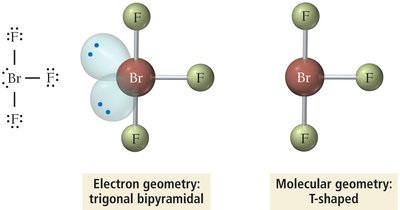
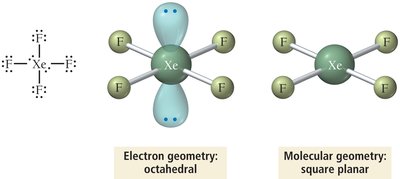
VSEPR Theory: Predicting Molecular Geometries
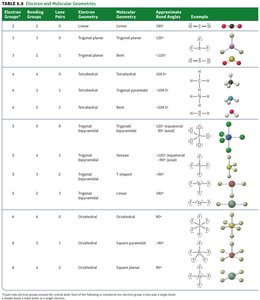
Summary Table of Geometries
The following table summarizes electron groups, lone pairs, electron geometry, molecular geometry, bond angles, and examples:
Molecular Shape and Polarity
Polarity of Molecules
The polarity of a molecule depends on the presence of polar bonds and the molecular shape. If the dipoles do not cancel, the molecule is polar and has a net dipole moment.
Diatomic molecules: If the bond is polar, the molecule is polar.
Adding Dipoles: Vector addition of bond dipoles determines overall molecular polarity.
Practice: Determining Polarity
Determine whether the following molecules are polar or nonpolar:
CH2F2
SiCl4
SeCl6
SF2
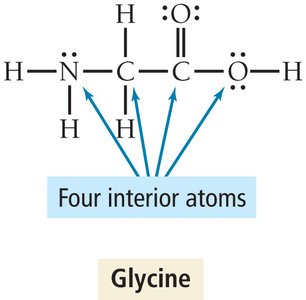
Example: Glycine
Assign a geometry to each interior atom in glycine, a simple amino acid.
Conclusion
This chapter provides a comprehensive overview of chemical bonding, including how to draw and interpret Lewis structures, understand resonance and formal charge, recognize exceptions to the octet rule, and predict molecular shapes and polarity using VSEPR theory. Mastery of these concepts is essential for understanding the structure and properties of molecules in chemistry.
