 Back
Chemical Bonding I: Lewis Structures, Molecular Shapes, and Bond Properties
Study Guide - Smart Notes
 Tailored notes based on your materials, expanded with key definitions, examples, and context.
Chemical Bonding: Types and Properties
Ionic vs. Covalent Bonds
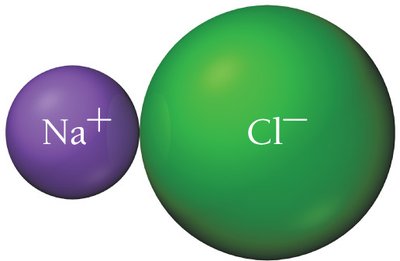
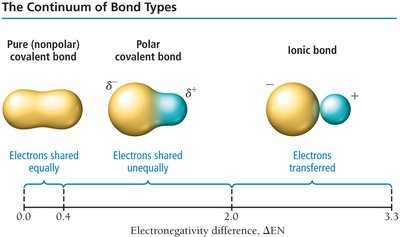
Chemical bonds are the forces that hold atoms together in compounds. The two primary types are ionic bonds and covalent bonds. Ionic bonds involve the transfer of electrons from one atom to another, resulting in the formation of ions, while covalent bonds involve the sharing of electrons between atoms.
Ionic Bond: Formed between metals and nonmetals; electrons are transferred, creating positive and negative ions.
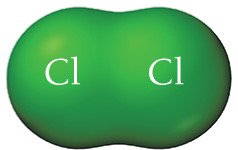
Covalent Bond: Formed between nonmetals; electrons are shared between atoms.
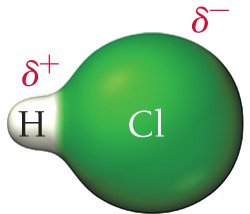
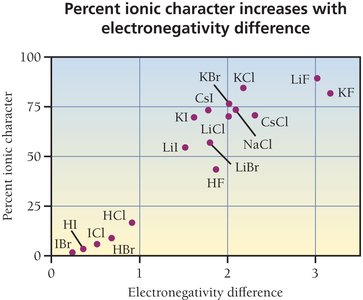
Polar Covalent Bond: Electrons are shared unequally, resulting in partial charges.
Example: NaCl is ionic, HCl is polar covalent, Cl2 is nonpolar covalent.
Electronegativity and Bond Polarity
Electronegativity is the ability of an atom to attract electrons in a chemical bond. The difference in electronegativity (ΔEN) between two atoms determines the bond type and polarity.
Bond Polarity: A bond is polar if the atoms have different electronegativities, causing unequal sharing of electrons.
Dipole Moment (μ): Occurs when there is a separation of charge in a molecule.
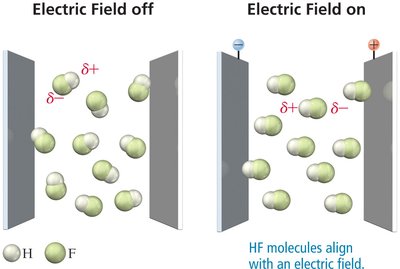
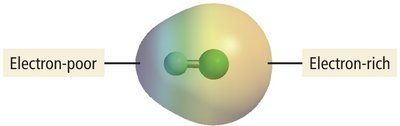
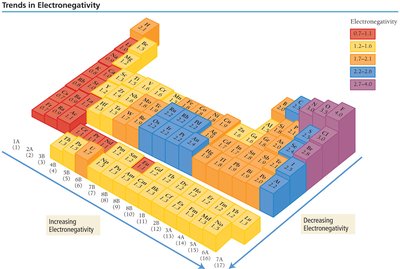
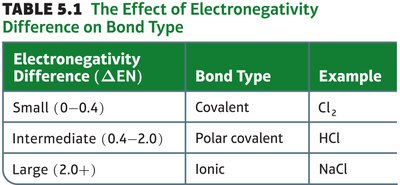
Table: Effect of Electronegativity Difference on Bond Type
Electronegativity Difference (ΔEN) | Bond Type | Example |
|---|---|---|
Small (0–0.4) | Covalent | Cl2 |
Intermediate (0.4–2.0) | Polar covalent | HCl |
Large (2.0+) | Ionic | NaCl |
Lewis Structures and Resonance
Drawing Lewis Structures
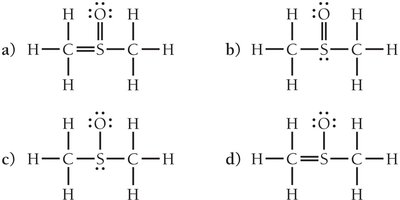
Lewis structures represent the arrangement of electrons in molecules and ions. They help predict molecular shape, bond order, and formal charge.
Draw the skeletal structure (hydrogen and electronegative atoms are terminal).
Count total valence electrons (adjust for charge).
Place electrons: 2 between each atom, complete duets for H and octets for others.
If any atom lacks an octet, move a lone pair to a bonding pair.
Check electron count.
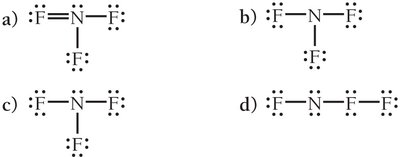
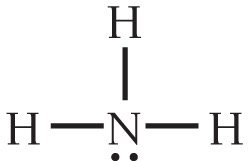
Example: Nitrogen trifluoride (NF3)
Resonance Structures
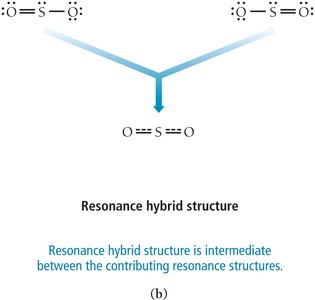
Resonance structures are multiple valid Lewis structures for a molecule with the same skeletal formula but different electron arrangements. The actual molecule is a resonance hybrid, intermediate between the contributing structures.
Resonance increases stability by delocalizing electrons.
Resonance is common in polyatomic ions like NO3-.
Formal Charge
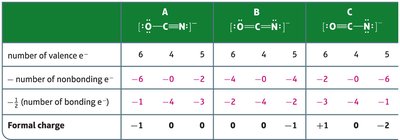
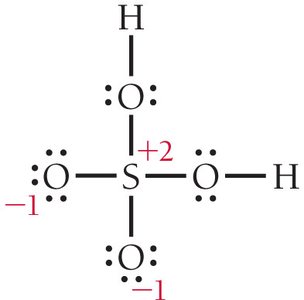
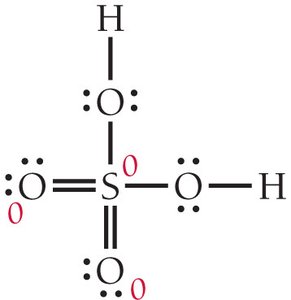
Formal charge is the charge an atom would have if all bonding electrons were shared equally. It helps identify the most stable Lewis structure.
Formula:
The sum of formal charges in a neutral molecule is zero; in an ion, it equals the ion's charge.
Structures with smaller formal charges are preferred.
Negative formal charge should reside on the more electronegative atom.
Exceptions to the Octet Rule
Odd Electron Species, Incomplete, and Expanded Octets
Some molecules do not follow the octet rule:
Odd electron species: Free radicals with unpaired electrons (e.g., ClO).
Incomplete octets: Elements like B and Be may have fewer than 8 electrons (e.g., BF3).
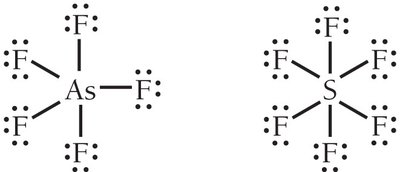
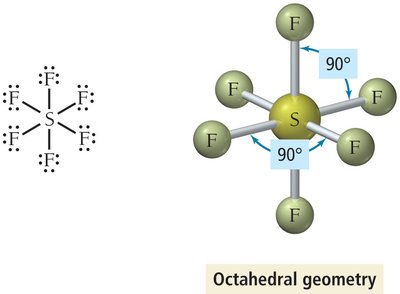
Expanded octets: Third period and below can hold more than 8 electrons (e.g., SF6, AsF5).
Bond Energies and Bond Lengths
Bond Energy
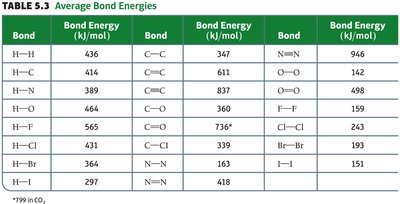
Bond energy is the energy required to break one mole of a bond in the gas phase. Stronger bonds require more energy to break.
Bond energy is measured in kJ/mol.
Shorter bonds are generally stronger.
Table: Average Bond Energies
Bond | Bond Energy (kJ/mol) |
|---|---|
H–H | 436 |
C–C | 347 |
N≡N | 946 |
H–F | 565 |
H–Cl | 431 |
H–Br | 364 |
Bond Length
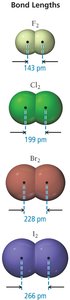
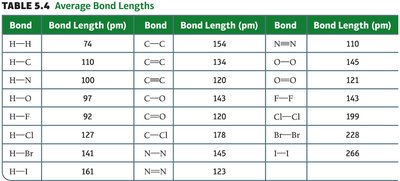
Bond length is the distance between the nuclei of two bonded atoms. It is measured in picometers (pm).
Bond length decreases as bond order increases (single > double > triple).
Shorter bonds are stronger.
Table: Average Bond Lengths
Bond | Bond Length (pm) |
|---|---|
H–H | 74 |
C–C | 154 |
N≡N | 110 |
H–F | 92 |
H–Cl | 127 |
H–Br | 141 |
Valence Shell Electron-Pair Repulsion (VSEPR) Theory
VSEPR Theory and Molecular Shapes
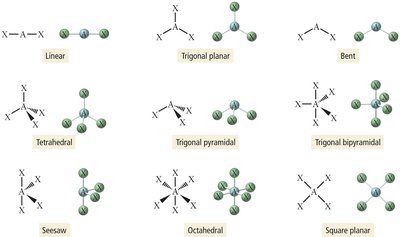
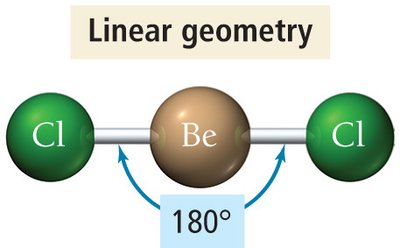
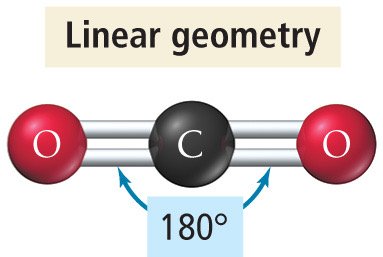
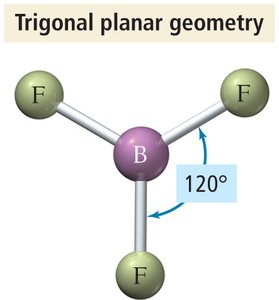
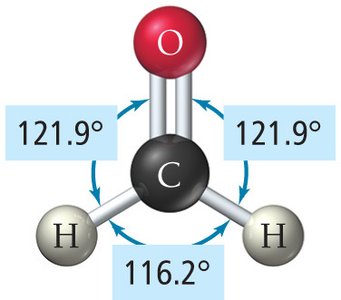
VSEPR theory states that electron groups around a central atom repel each other, resulting in specific molecular shapes. The number of electron groups determines the geometry.
2 groups: Linear (180°)
3 groups: Trigonal planar (120°)
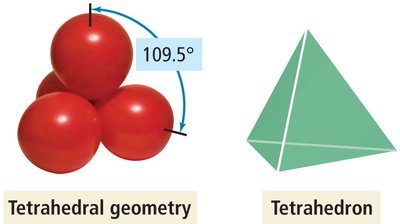
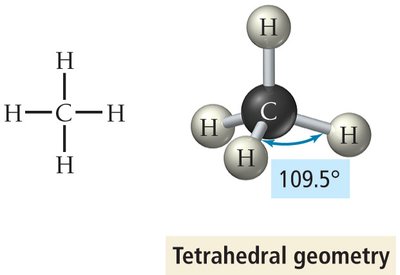
4 groups: Tetrahedral (109.5°)
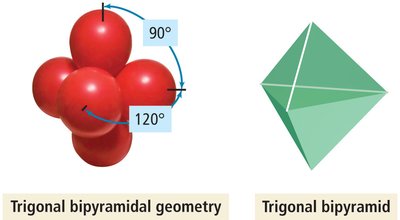
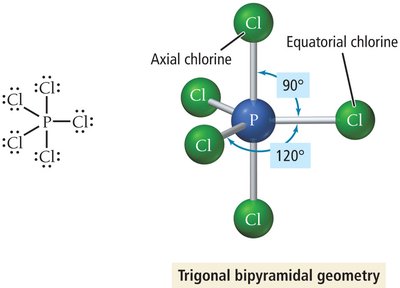
5 groups: Trigonal bipyramidal (90°, 120°)
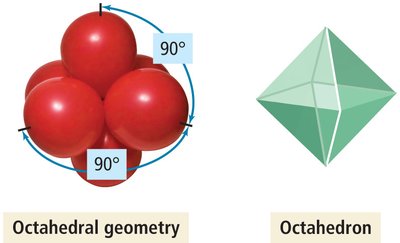
6 groups: Octahedral (90°)

Effect of Lone Pairs on Molecular Geometry
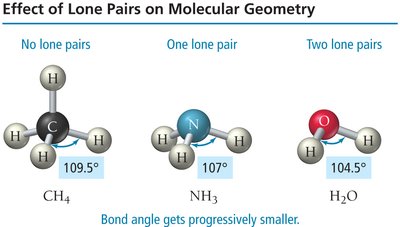
Lone pairs occupy more space than bonding pairs, causing bond angles to decrease. The molecular geometry is determined by the arrangement of atoms, not lone pairs.
4 electron groups: Tetrahedral electron geometry
3 bonding pairs, 1 lone pair: Trigonal pyramidal (e.g., NH3)
2 bonding pairs, 2 lone pairs: Bent (e.g., H2O)
Expanded Octets and Molecular Geometry
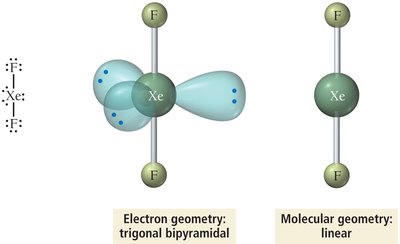
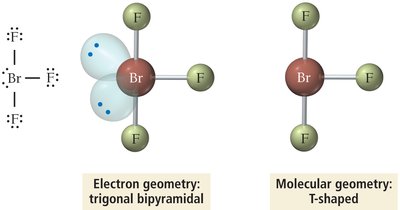
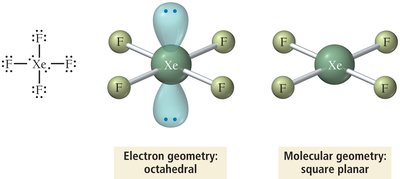
Atoms in the third period and below can have expanded octets, leading to more complex geometries.
5 electron groups: Trigonal bipyramidal, see-saw, T-shaped, linear
6 electron groups: Octahedral, square pyramidal, square planar
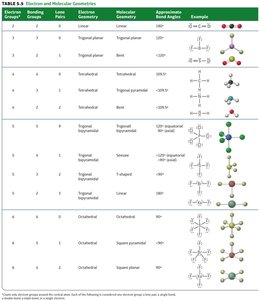
Summary Table: Electron and Molecular Geometries
Electron Groups | Bonding Groups | Lone Pairs | Electron Geometry | Molecular Geometry | Approximate Bond Angles | Example |
|---|---|---|---|---|---|---|
2 | 2 | 0 | Linear | Linear | 180° | CO2 |
3 | 3 | 0 | Trigonal planar | Trigonal planar | 120° | BF3 |
4 | 4 | 0 | Tetrahedral | Tetrahedral | 109.5° | CH4 |
4 | 3 | 1 | Tetrahedral | Trigonal pyramidal | 107° | NH3 |
4 | 2 | 2 | Tetrahedral | Bent | 104.5° | H2O |
5 | 5 | 0 | Trigonal bipyramidal | Trigonal bipyramidal | 90°, 120° | PCl5 |
6 | 6 | 0 | Octahedral | Octahedral | 90° | SF6 |
Molecular Shape and Polarity
Polarity of Molecules
The polarity of a molecule depends on the polarity of its bonds and its shape. A molecule is polar if it has a net dipole moment.
Diatomic molecules: If the bond is polar, the molecule is polar.
Polyatomic molecules: The shape determines whether dipoles add up to a net dipole.
Example: CH2F2 is polar, SiCl4 is nonpolar.
Practice and Applications
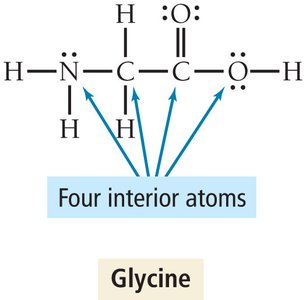
Assigning Geometry to Interior Atoms
For larger molecules, assign a geometry to each interior atom based on the number of electron groups and bonding pairs.
Use VSEPR theory for each atom.
Consider lone pairs and bonding pairs.
Summary
This chapter covers the fundamentals of chemical bonding, including ionic and covalent bonds, electronegativity, Lewis structures, resonance, formal charge, exceptions to the octet rule, bond energies and lengths, VSEPR theory, and molecular polarity. Mastery of these concepts is essential for understanding molecular structure and reactivity in chemistry.
