 Back
Chemical Bonding II: Valence Bond Theory & Molecular Orbital Theory
Study Guide - Smart Notes
 Tailored notes based on your materials, expanded with key definitions, examples, and context.
Chemical Bonding II: Valence Bond Theory & Molecular Orbital Theory
Learning Goals and Overview
This chapter explores advanced models of chemical bonding, focusing on valence bond theory and molecular orbital theory. Students will learn how atomic orbitals combine, how hybridization predicts molecular geometry, and how molecular orbitals explain bond order, stability, and magnetism.
Valence Bond Theory: Describes bonds as overlaps of atomic orbitals.
Molecular Orbital Theory: Explains bonding using orbitals that span the entire molecule.
Hybridization: Mathematical mixing of atomic orbitals to form new hybrid orbitals.
Bond Types: Sigma (σ) and pi (π) bonds, their formation and properties.
Bond Order: Indicates bond strength, length, and stability.
Valence Bond Theory
Hybridization and Orbital Conservation
Hybridization is the process by which atomic orbitals mix to form new hybrid orbitals, which better represent the electron distribution in molecules. The number of orbitals is conserved: the number of atomic orbitals mixed equals the number of hybrid orbitals formed.
Hybrid Orbitals: sp, sp2, sp3, sp3d, sp3d2
Conservation Rule: If X atomic orbitals are mixed, Y hybrid orbitals are formed, and Z atomic orbitals remain, where X = Y + Z.
Hybridization increases with the number of bonds formed.
Lone pairs can occupy hybrid orbitals.
Bonding in H2S and CH4
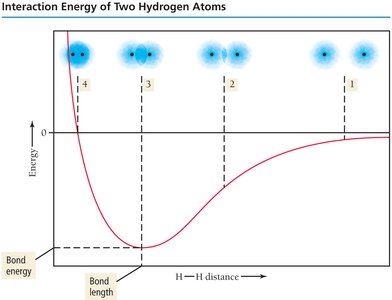
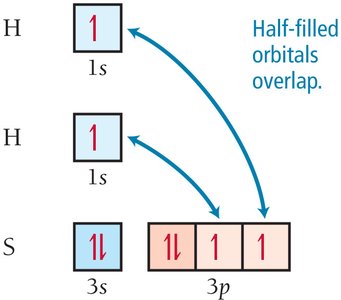
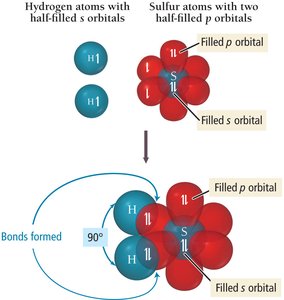
Valence bond theory explains the bonding in molecules like H2S and CH4 by considering the overlap of half-filled orbitals.
H2S: Sulfur uses its 3s and 3p orbitals to overlap with hydrogen's 1s orbitals.
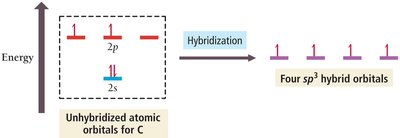
CH4: Carbon's 2s and 2p orbitals hybridize to form four sp3 orbitals, each forming a bond with hydrogen.
Hybridization and Molecular Geometry
Hybridization predicts the geometry of molecules by determining the arrangement of electron groups around the central atom. The VSEPR model helps identify the shape, which guides the choice of hybrid orbitals.
sp3 Hybridization: Tetrahedral geometry, bond angles ~109.5°.
sp2 Hybridization: Trigonal planar geometry, bond angles ~120°.
sp Hybridization: Linear geometry, bond angles 180°.
sp3d Hybridization: Trigonal bipyramidal geometry.
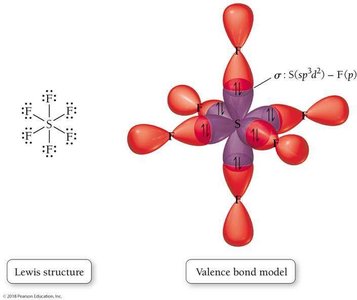
sp3d2 Hybridization: Octahedral geometry.
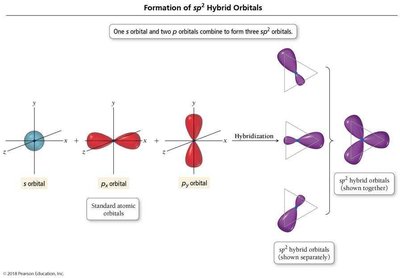
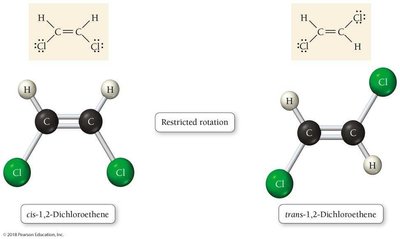
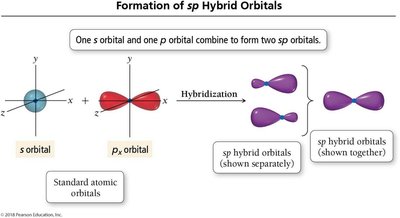
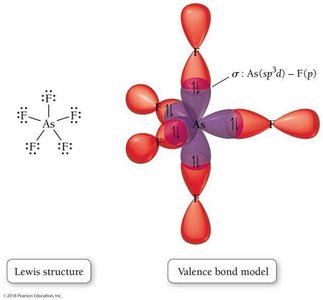
Formation of Hybrid Orbitals
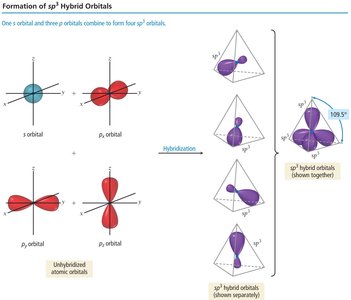
Hybrid orbitals are formed by combining s and p orbitals (and sometimes d orbitals) from the same atom. This process allows for greater orbital overlap, resulting in stronger bonds.
sp3: One s and three p orbitals combine to form four equivalent sp3 orbitals.
sp2: One s and two p orbitals combine to form three sp2 orbitals.
sp: One s and one p orbital combine to form two sp orbitals.
Hybridization Table
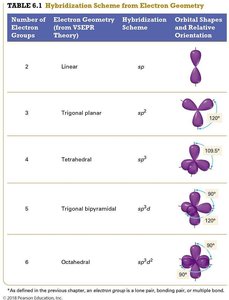
The following table summarizes the relationship between electron group number, geometry, and hybridization scheme:
Number of Electron Groups | Electron Geometry | Hybridization Scheme | Orbital Shapes and Angles |
|---|---|---|---|
2 | Linear | sp | 180° |
3 | Trigonal planar | sp2 | 120° |
4 | Tetrahedral | sp3 | 109.5° |
5 | Trigonal bipyramidal | sp3d | 90°, 120° |
6 | Octahedral | sp3d2 | 90° |
Sigma (σ) and Pi (π) Bonds
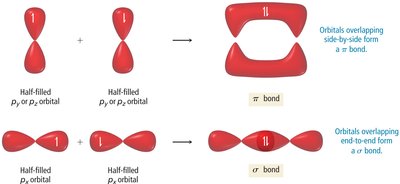
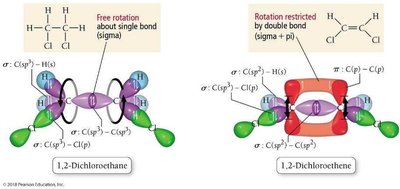
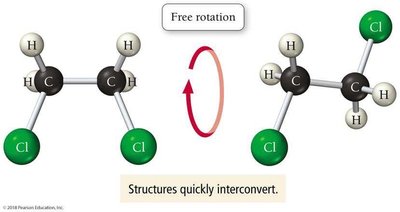
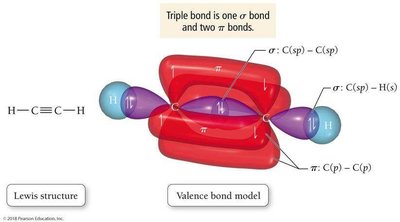
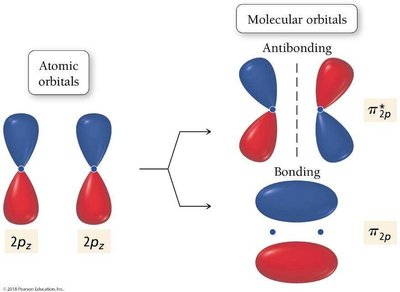
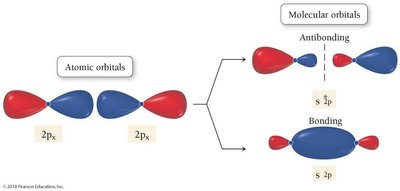
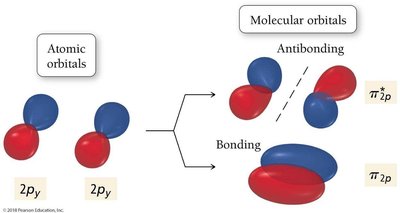
Sigma bonds are formed by end-to-end overlap of orbitals, while pi bonds are formed by side-to-side overlap of p orbitals. Sigma bonds allow free rotation, but pi bonds restrict rotation, leading to isomerism.
Sigma (σ) Bond: Stronger, allows free rotation.
Pi (π) Bond: Weaker, restricts rotation.
Double Bond: One sigma and one pi bond.
Triple Bond: One sigma and two pi bonds.
Molecular Orbital Theory
Concept and Formation of Molecular Orbitals
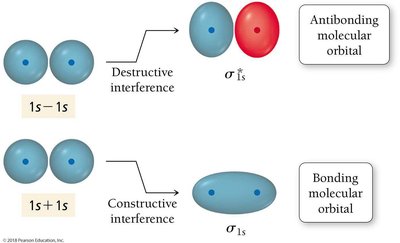
Molecular orbital (MO) theory describes bonding as the combination of atomic orbitals from different atoms to form molecular orbitals that extend over the entire molecule. The number of molecular orbitals equals the number of atomic orbitals combined.
Bonding Orbitals: Lower energy, electrons stabilize the molecule.
Antibonding Orbitals: Higher energy, electrons destabilize the molecule.
Linear Combination of Atomic Orbitals (LCAO): Mathematical method for constructing MOs.
Molecular Orbital Diagrams for Diatomic Molecules
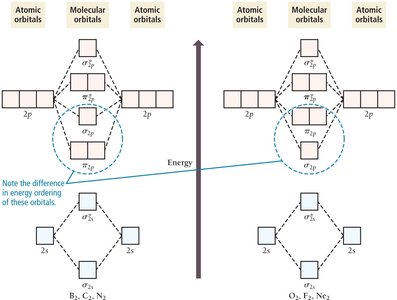
MO diagrams show the energy levels and occupancy of molecular orbitals for diatomic molecules. The bond order is calculated as:
Bond Order Formula:
Bond Order & Stability: Bond order > 0 indicates a stable bond.
Paramagnetism: Unpaired electrons in MOs cause paramagnetism.
Diamagnetism: All electrons paired in MOs cause diamagnetism.
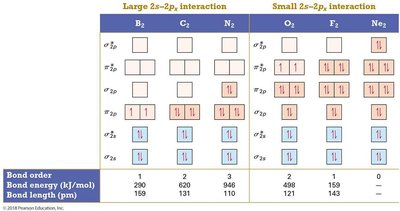
Comparison of Bonding Models
The three main bonding models each provide unique insights:
Lewis Model: Bonds are shared or transferred electrons, represented as dots.
Valence Bond Theory: Bonds are overlaps of half-filled atomic orbitals.
Molecular Orbital Theory: Bonds form when electrons occupy molecular orbitals, lowering their energy.
Applications and Examples
Bonding in Benzene and Ozone
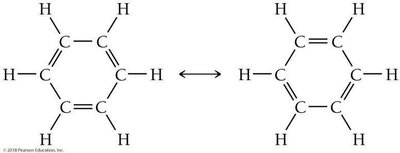
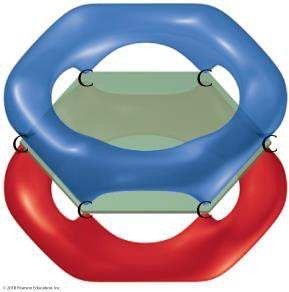
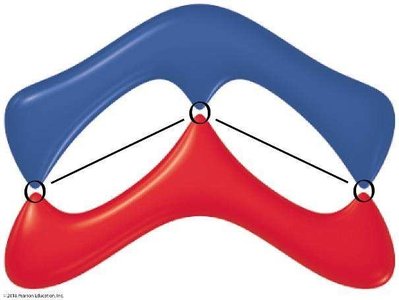
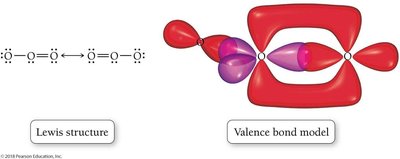
Delocalized π molecular orbitals explain the stability and unique properties of molecules like benzene (C6H6) and ozone (O3).
Benzene: π electrons are delocalized over the ring, leading to resonance and extra stability.
Ozone: π electrons are delocalized over three oxygen atoms.
Summary Table: Hybridization and Geometry
Electron Groups | Geometry | Hybridization | Angles |
|---|---|---|---|
2 | Linear | sp | 180° |
3 | Trigonal planar | sp2 | 120° |
4 | Tetrahedral | sp3 | 109.5° |
5 | Trigonal bipyramidal | sp3d | 90°, 120° |
6 | Octahedral | sp3d2 | 90° |
Practice Problems
Determine the hybridization of each interior atom in a molecule.
Draw MO energy diagrams and predict bond order for diatomic molecules with different numbers of valence electrons.
Identify whether a molecule is paramagnetic or diamagnetic based on its MO diagram.
Additional info: This guide expands on brief points from the original notes, providing definitions, examples, and context for each concept. All images included directly reinforce the explanations and are referenced in the text.
