 Back
Chemical Bonding II: Valence Bond Theory & Molecular Orbital Theory (CHEM 130 Chapter 6 Study Guide)
Study Guide - Smart Notes
 Tailored notes based on your materials, expanded with key definitions, examples, and context.
Chemical Bonding II: Valence Bond Theory & Molecular Orbital Theory
Learning Goals and Overview
This chapter explores advanced models of chemical bonding, focusing on valence bond theory and molecular orbital theory. Students will learn how atomic orbitals combine, how hybridization predicts molecular geometry, and how molecular orbital diagrams explain bond order, stability, and magnetism.
Valence Bond Theory: Describes bonds as overlaps of atomic orbitals.
Molecular Orbital Theory: Explains bonding using orbitals that span the entire molecule.
Hybridization: Mathematical mixing of atomic orbitals to form hybrid orbitals.
Bond Types: Sigma (σ) and pi (π) bonds, their formation and properties.
Bond Order: Indicates bond strength, length, and stability.
Valence Bond Theory
Atomic Orbital Overlap and Bond Formation
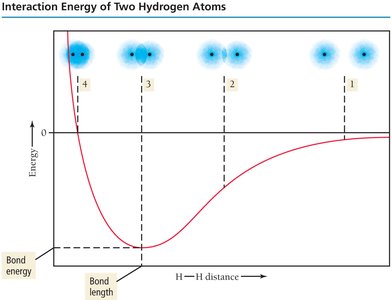
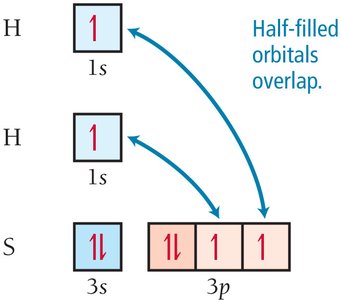
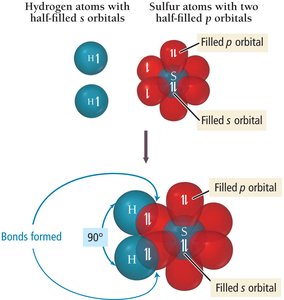
Valence bond theory explains chemical bonding as the overlap of half-filled atomic orbitals from different atoms, resulting in a covalent bond. The strength and directionality of the bond depend on the extent and orientation of the overlap.
Half-filled orbitals: Only orbitals with one electron can overlap to form bonds.
Bond energy: The energy released when a bond forms is related to the degree of overlap.
Bond length: The optimal distance between nuclei where the energy is minimized.
Example: Formation of H2S and CH4 molecules.
Hybridization of Atomic Orbitals
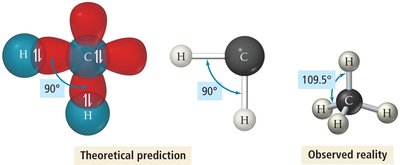
Hybridization is the process by which atomic orbitals mix to form new hybrid orbitals, which better explain the observed shapes and bond angles in molecules. The number of hybrid orbitals formed equals the number of atomic orbitals mixed.
Types of hybrid orbitals: sp, sp2, sp3, sp3d, sp3d2
Conservation of orbitals: The total number of orbitals remains constant.
VSEPR theory: Used to predict which orbitals combine based on electron geometry.
Lone pairs: Can occupy hybrid orbitals.

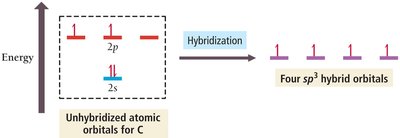
sp3 Hybridization
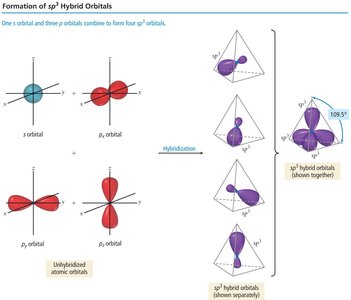
sp3 hybridization occurs when one s orbital and three p orbitals mix to form four equivalent sp3 hybrid orbitals. This explains the tetrahedral geometry and bond angles in molecules like methane (CH4).
Geometry: Tetrahedral, bond angles of 109.5°.
Example: CH4 (methane).
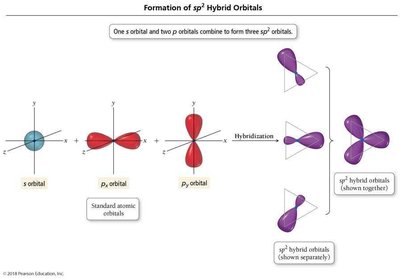
sp2 and sp Hybridization
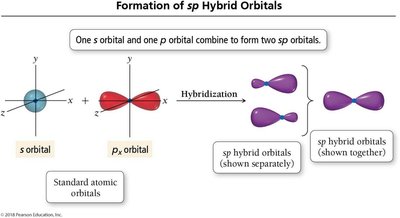
sp2 hybridization involves mixing one s and two p orbitals to form three sp2 hybrid orbitals, resulting in trigonal planar geometry. sp hybridization mixes one s and one p orbital to form two sp hybrid orbitals, resulting in linear geometry.
sp2: Trigonal planar, bond angles of 120° (e.g., BH3, H2CO).
sp: Linear, bond angles of 180° (e.g., C2H2, CO2).
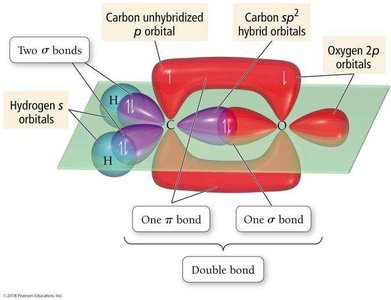
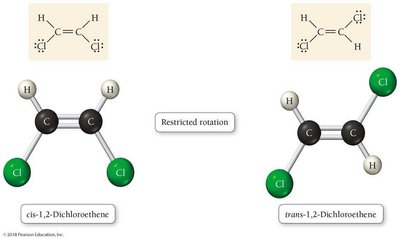
Bond Types: Sigma (σ) and Pi (π) Bonds
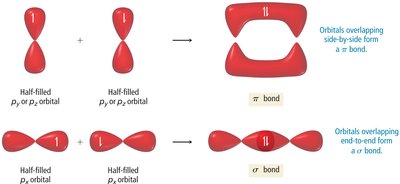
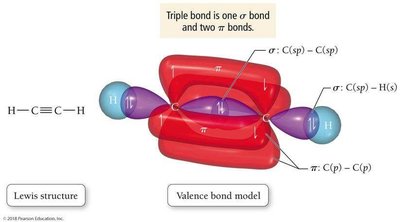
Valence bond theory distinguishes between sigma and pi bonds based on the type of orbital overlap. Sigma bonds result from end-to-end overlap, while pi bonds result from side-to-side overlap of p orbitals.
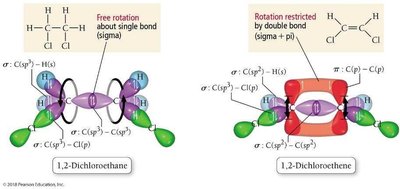
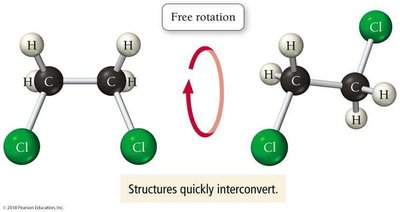
Sigma (σ) bond: Stronger, allows free rotation, formed by end-to-end overlap.
Pi (π) bond: Weaker, restricts rotation, formed by side-to-side overlap.
Double bond: One σ and one π bond.
Triple bond: One σ and two π bonds.
Hybridization in Expanded Octets
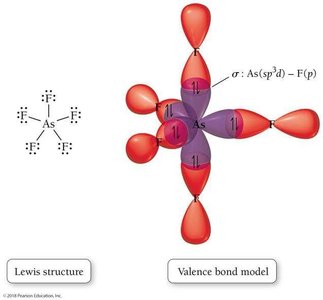
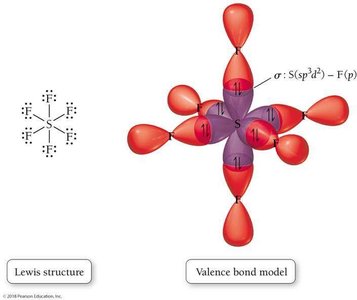
Atoms with more than four electron groups can undergo sp3d or sp3d2 hybridization, resulting in trigonal bipyramidal or octahedral geometries, respectively.
sp3d: Five hybrid orbitals, trigonal bipyramidal geometry.
sp3d2: Six hybrid orbitals, octahedral geometry.
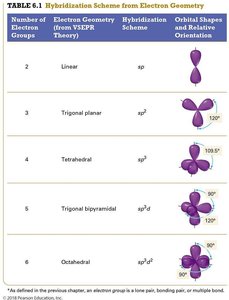
Hybridization Table
The following table summarizes the relationship between electron group number, geometry, hybridization scheme, and orbital shapes.
Number of Electron Groups | Electron Geometry | Hybridization Scheme | Orbital Shapes and Relative Orientation |
|---|---|---|---|
2 | Linear | sp | 180° |
3 | Trigonal planar | sp2 | 120° |
4 | Tetrahedral | sp3 | 109.5° |
5 | Trigonal bipyramidal | sp3d | 90°, 120° |
6 | Octahedral | sp3d2 | 90° |
Molecular Orbital Theory
Formation of Molecular Orbitals
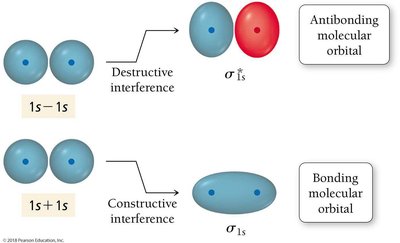
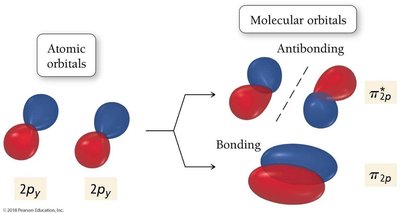
Molecular orbital (MO) theory describes bonding as the combination of atomic orbitals from different atoms to form molecular orbitals that extend over the entire molecule. The number of molecular orbitals equals the number of atomic orbitals combined.
Bonding orbital: Lower energy, constructive interference.
Antibonding orbital: Higher energy, destructive interference.
Delocalization: Molecular orbitals are spread across the molecule.
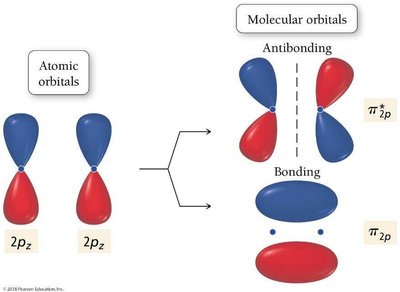
MO Diagrams for Diatomic Molecules
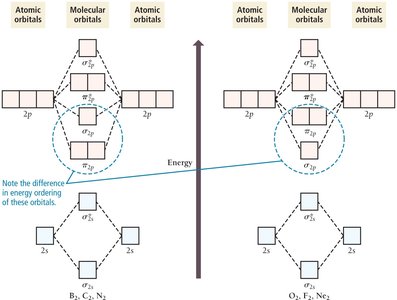
MO diagrams show the energy levels and occupancy of molecular orbitals for diatomic molecules. The bond order is calculated as half the difference between the number of electrons in bonding and antibonding orbitals.
Bond order formula:
Bond order & stability: Bond order > 0 indicates a stable bond.
Paramagnetism: Unpaired electrons in MOs cause paramagnetism.
Diamagnetism: All electrons paired in MOs cause diamagnetism.
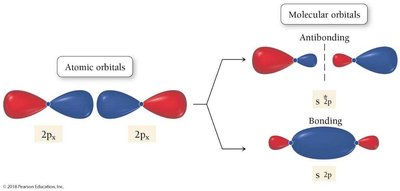
Period 2 Homonuclear Diatomic Molecules
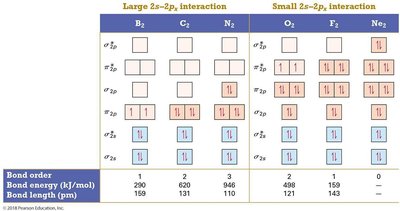
For molecules like B2, C2, N2, O2, F2, and Ne2, MO diagrams show the energy ordering and electron filling. The bond order, bond energy, and bond length can be compared across these molecules.
Energy ordering: For B, C, N: σ2p is higher than π2p; for O, F, Ne: σ2p is lower.
Bond energy: Increases with bond order.
Bond length: Decreases with bond order.
Examples: Benzene and Ozone
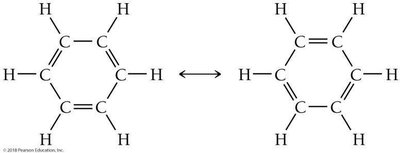
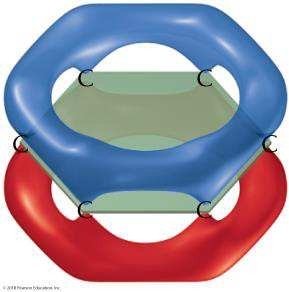
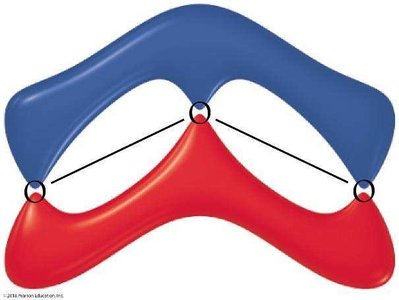
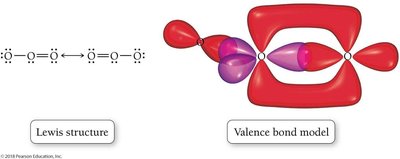
Some molecules, like benzene (C6H6) and ozone (O3), exhibit delocalized π molecular orbitals, which contribute to their unique stability and reactivity.
Benzene: Delocalized π electrons over six carbon atoms.
Ozone: Delocalized π electrons over three oxygen atoms.
Summary: Bonding Models Compared
Lewis Model, Valence Bond Theory, and Molecular Orbital Theory
Three major models are used to describe chemical bonding:
Lewis Model: Bonds are represented as shared or transferred electrons (dots).
Valence Bond Theory: Bonds are formed by overlap of half-filled atomic orbitals.
Molecular Orbital Theory: Electrons occupy molecular orbitals that span the molecule, lowering their energy.
Each model provides unique insights into molecular structure, stability, and properties.
Practice Problems
Hybridization and Bonding Schemes
Students should be able to determine the hybridization of atoms in molecules, draw orbital energy-level diagrams, and predict molecular properties using valence bond and molecular orbital theory.
Example: Write a hybridization and bonding scheme for CO2.
Example: Draw MO energy diagrams and predict bond order for diatomic molecules with varying numbers of valence electrons.
Key Terms and Concepts
Hybridization
Valence Bond Theory
Molecular Orbital Theory
Sigma (σ) Bond
Pi (π) Bond
Bond Order
Paramagnetism
Diamagnetism
