 Back
BackChemical Energetics: Why Reactions Happen
Study Guide - Smart Notes
 Tailored notes based on your materials, expanded with key definitions, examples, and context.
Chemical Energetics
Spontaneity in Chemical Reactions
Chemical reactions can be classified based on whether they occur spontaneously or require external energy input. A spontaneous reaction is one that happens without any apparent external cause, often as soon as reactants come into contact. Some reactions are not spontaneous and require an initial input of energy, known as activation energy, to begin.
Spontaneous reactions: Occur naturally without external intervention.
Non-spontaneous reactions: Require energy (often heat) to start.
Activation energy: The minimum energy needed to initiate a reaction.
Energy Changes in Chemical Reactions
Reactions are categorized by how they exchange energy with their surroundings. Most reactions release energy, while some absorb it.
Exothermic reactions: Give out energy to the surroundings. The energy released is greater than the energy required to start the reaction.
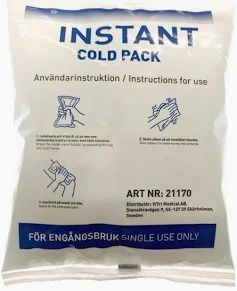
Endothermic reactions: Absorb energy from the surroundings, resulting in a cooling effect. These are less common and include examples like cold packs used for sports injuries.
Example: Instant cold packs are a practical application of endothermic reactions, where chemicals inside the pack absorb heat from the surroundings, causing the pack to feel cold.
The Three Pillars of Energetics
Chemical energetics is governed by three main concepts: exothermicity, endothermicity, and stability. These pillars explain why reactions occur and how energy is transferred.
Exothermic: Most common; energy is released to surroundings.
Endothermic: Less common; energy is absorbed from surroundings.
Stability: Nature favors lower energy states, which are more stable.
Bond Making and Breaking
All chemical reactions involve the breaking and forming of bonds between atoms. The energy balance between these processes determines whether a reaction is exothermic or endothermic.
Bond breaking: Requires energy input; this process is endothermic.
Bond making: Releases energy; this process is exothermic.
Energy balance: If more energy is needed to break bonds than is released when new bonds form, the reaction is endothermic. If less energy is needed to break bonds than is released, the reaction is exothermic.


The Goal of Stability
Chemical reactions are driven by the tendency of molecules to achieve greater stability, which corresponds to a lower energy state. This is a fundamental principle in chemistry and explains why reactions occur.
Lower energy state: Preferred by nature; more stable molecules.
Ground state: The lowest possible energy state for a molecule.
Energy rearrangement: Reactions occur to reach this stable state.
Energy of Reactants and Products: Enthalpy
The internal energy of molecules is called enthalpy (symbol H). The change in enthalpy during a reaction is denoted as ΔH and determines whether the reaction is exothermic or endothermic.
Exothermic reaction: Reactants have more energy than products; ΔH is negative; surroundings heat up.
Endothermic reaction: Reactants have less energy than products; ΔH is positive; surroundings cool down.
Reaction Type | Energy Comparison | Delta H (ΔH) | Surroundings |
|---|---|---|---|
Exothermic | Reactants > Products | Negative (-) | Heats Up |
Endothermic | Reactants < Products | Positive (+) | Cools Down |
Formula:
The Entropy Paradox
According to the Second Law of Thermodynamics, entropy (a measure of disorder or randomness) always increases with time. This explains why endothermic reactions are less common: their products are less stable (higher energy) than the reactants.
Entropy: Thermodynamic quantity representing disorder.
Second Law of Thermodynamics: Entropy increases over time.
Endothermic reactions: Occur when increased entropy compensates for decreased stability.
Additional info: Entropy is a key concept in understanding why some reactions occur even when they are endothermic, but detailed understanding is not required at this level.
