 Back
BackChemical Kinetics and Chemical Equilibrium: Visual Study Guide
Study Guide - Smart Notes
 Tailored notes based on your materials, expanded with key definitions, examples, and context.
Chemical Kinetics
Measuring Reaction Rates
Chemical kinetics is the study of how fast chemical reactions occur and the factors that affect these rates. The rate of a reaction is typically measured as the change in concentration of a reactant or product per unit time.
Definition: Rate = change in concentration / change in time
Units: Molarity per second (M/s)
Experimental Methods: Reaction rates can be measured using various techniques, such as monitoring pressure changes, spectrophotometry, or gas chromatography.
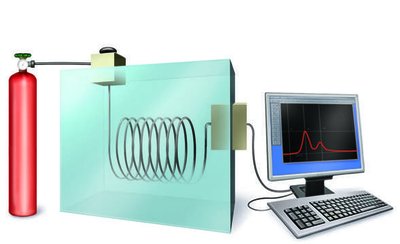
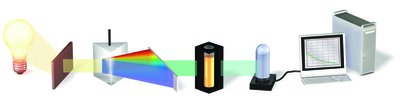
Visualizing Reaction Progress
Reaction progress can be visualized using molecular models or concentration vs. time graphs. The rate of a reaction can be fast or slow, and the concentration of reactants decreases while products increase over time.
Fast reactions: Rapid decrease in reactant concentration.
Slow reactions: Gradual decrease in reactant concentration.
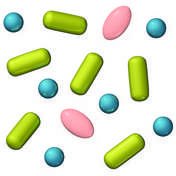
Reaction Order and Rate Laws
The rate law expresses the relationship between the rate of a reaction and the concentration of its reactants. The general form is:
General Rate Law:
Zero Order: Rate is independent of [A].
First Order: Rate is directly proportional to [A].
Second Order: Rate is proportional to [A]2.

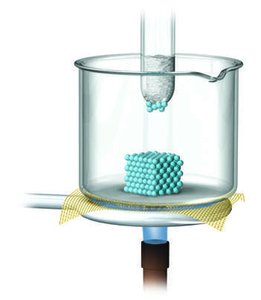
Determining Reaction Order
Reaction order is determined experimentally, often using the method of initial rates. By comparing how the initial rate changes with varying concentrations, the order with respect to each reactant can be deduced.
Chemical Equilibrium
The Concept of Dynamic Equilibrium
In a reversible reaction, dynamic equilibrium is reached when the rate of the forward reaction equals the rate of the reverse reaction. At this point, the concentrations of reactants and products remain constant, though not necessarily equal.
Dynamic: Both forward and reverse reactions continue to occur.
Not static: Concentrations are constant, but molecules are still reacting.

The Equilibrium Constant (K)
The equilibrium constant, K, quantifies the ratio of product to reactant concentrations at equilibrium, each raised to the power of their stoichiometric coefficients.
General Expression:
K > 1: Products favored at equilibrium.
K < 1: Reactants favored at equilibrium.

Visualizing Equilibrium Mixtures
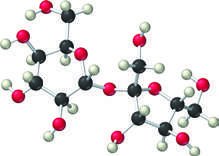
Equilibrium can be illustrated using particle diagrams, showing the relative amounts of reactants and products at equilibrium for different reactions or conditions.



Le Châtelier’s Principle
Le Châtelier’s Principle states that if a system at equilibrium is disturbed, it will shift in the direction that minimizes the disturbance. Disturbances include changes in concentration, pressure/volume, or temperature.
Adding reactant: Shifts equilibrium toward products.
Removing product: Shifts equilibrium toward products.
Increasing pressure (decreasing volume): Shifts toward side with fewer moles of gas.
Increasing temperature: Shifts in the direction that absorbs heat (endothermic direction).
Visualizing Shifts in Equilibrium
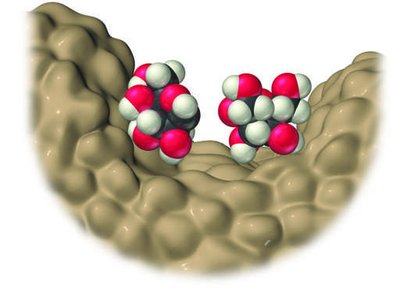
Changes in equilibrium can be visualized with molecular models showing the effect of adding or removing reactants/products, or changing conditions.


Summary Table: Key Relationships
Change | System Response |
|---|---|
Add reactant | Shifts toward products |
Remove reactant | Shifts toward reactants |
Add product | Shifts toward reactants |
Remove product | Shifts toward products |
Increase pressure (decrease volume) | Shifts toward fewer moles of gas |
Decrease pressure (increase volume) | Shifts toward more moles of gas |
Increase temperature (exothermic) | Shifts toward reactants |
Increase temperature (endothermic) | Shifts toward products |
Key Terms
Rate Law: Mathematical relationship between reaction rate and reactant concentrations.
Equilibrium Constant (K): Ratio of product to reactant concentrations at equilibrium.
Le Châtelier’s Principle: System shifts to minimize disturbances to equilibrium.
