 Back
BackChemical Reactions: Equations, Stoichiometry, and Energy Changes
Study Guide - Smart Notes
 Tailored notes based on your materials, expanded with key definitions, examples, and context.
Chapter 4: Chemical Reactions
Introduction to Chemical Reactions
Chemical reactions involve the transformation of one or more substances (reactants) into new substances (products). Understanding chemical reactions is fundamental to the study of chemistry, as it allows us to predict the outcomes of chemical changes and quantify the relationships between reactants and products.
Chemical Equations
Writing and Balancing Chemical Equations
Chemical equations represent chemical reactions using symbols and formulas. A balanced chemical equation has the same number of each type of atom on both sides, reflecting the law of conservation of mass.
Reactants: Substances present before the reaction.
Products: Substances formed as a result of the reaction.
Balancing: Adjust coefficients to ensure equal numbers of each atom on both sides.
Steps to balance equations:
Balance atoms that appear in only one compound on each side first.
Balance hydrogen and oxygen atoms after other elements.
If an element appears as a free element (e.g., O2), balance it last.
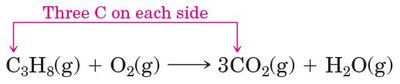
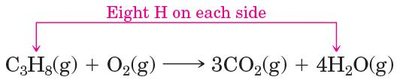
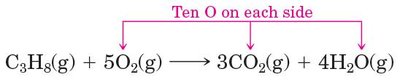
Practice: Balancing Equations
Practice balancing equations to reinforce the concept. Remember to use whole number coefficients.

Balancing Equations with Polyatomic Ions
Polyatomic ions often remain intact during reactions. Balance them as units when possible.


Reactions Between Ions in Solution
Precipitation and Solubility
Ionic compounds dissociate into ions in water. When solutions of different ionic compounds are mixed, a reaction may occur if an insoluble compound (precipitate) forms.
Precipitation reaction: Formation of an insoluble solid from soluble reactants.
If all possible ion combinations are soluble, no visible reaction occurs.
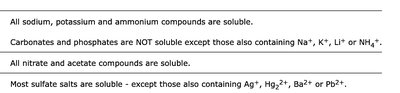
Solubility Rules
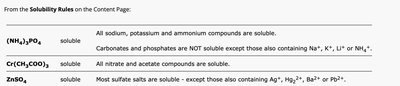
Solubility rules help predict whether a compound will dissolve in water.
Compound | Solubility | Rule |
|---|---|---|
(NH4)3PO4 | soluble | All sodium, potassium, and ammonium compounds are soluble. |
Cr(CH3COO)3 | soluble | All nitrate and acetate compounds are soluble. |
ZnSO4 | soluble | Most sulfate salts are soluble except those containing Ag+, Hg22+, Ba2+, or Pb2+. |

Net Ionic Equations
Net ionic equations show only the ions that participate in the reaction. Spectator ions, which do not change, are omitted.
Spectator ions: Ions that do not participate in the actual chemical change.
Net ionic equation: Equation showing only the reacting ions.
Oxidation-Reduction (Redox) Reactions
Definitions and Electron Transfer
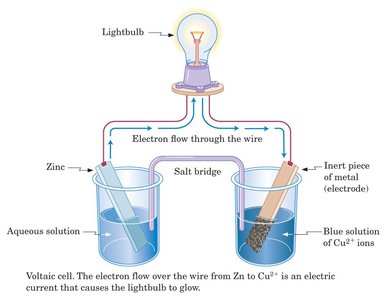
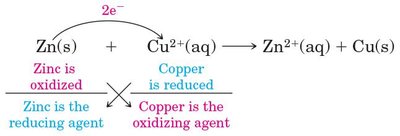
Redox reactions involve the transfer of electrons between species.
Oxidation: Loss of electrons.
Reduction: Gain of electrons.
Oxidizing agent: Substance that gains electrons (is reduced).
Reducing agent: Substance that loses electrons (is oxidized).
Alternative Definitions
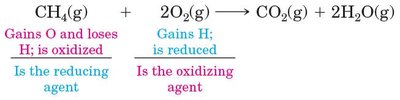
In some reactions, oxidation is defined as the gain of oxygen or loss of hydrogen, and reduction as the loss of oxygen or gain of hydrogen.
Examples of Redox Reactions
Combustion: Burning in air, producing CO2 and H2O.
Respiration: Biological oxidation of organic compounds.
Rusting: Oxidation of iron.
Bleaching: Oxidation of colored compounds.
Batteries: Redox reactions generate electrical energy.
Formula Weight, Mole, and Molar Mass
Formula Weight and Molecular Weight
The formula weight (FW) is the sum of atomic weights of all atoms in a compound's formula, expressed in atomic mass units (amu). For molecular compounds, the term molecular weight (MW) is used.
Formula weight applies to both ionic and molecular compounds.
Molecular weight is used only for molecular compounds.
The Mole and Avogadro's Number
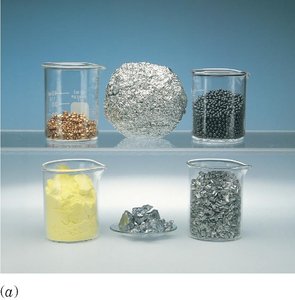
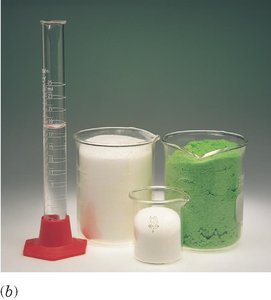
A mole (mol) is the amount of substance containing as many entities (atoms, molecules, ions) as there are atoms in exactly 12 g of carbon-12. This number is Avogadro's number: entities per mole.

Molar Mass
The molar mass is the formula weight expressed in grams per mole (g/mol). It is used to convert between mass and moles of a substance.
Example: Glucose (C6H12O6) has a molecular weight of 180 amu and a molar mass of 180 g/mol.
Conversions: Grams, Moles, and Molecules
Use molar mass as a conversion factor between grams and moles. Avogadro's number is used to convert between moles and number of molecules or atoms.
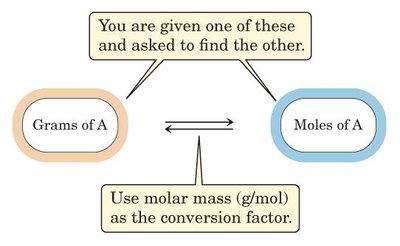
To convert grams to moles:
To convert moles to grams:
To convert moles to molecules:
Stoichiometry
Stoichiometric Calculations
Stoichiometry is the study of mass relationships in chemical reactions. It allows calculation of the amounts of reactants and products involved in a reaction.
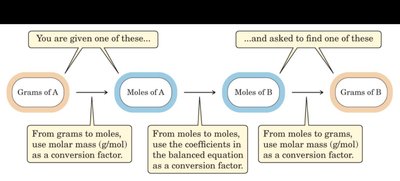
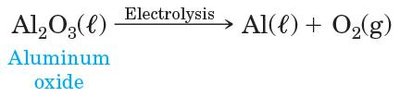
Use the coefficients from the balanced equation to relate moles of reactants and products.
Convert between grams and moles using molar mass.
Limiting Reagents and Percent Yield
Limiting Reagent
The limiting reagent is the reactant that is completely consumed first, limiting the amount of product formed. The other reactant is in excess.

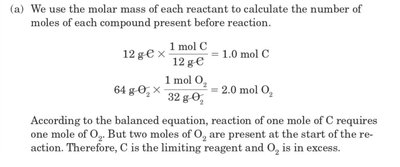
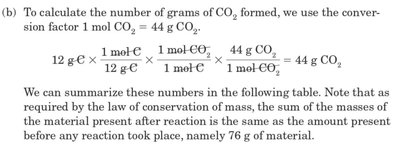
Theoretical and Percent Yield
The theoretical yield is the maximum amount of product that can be formed from the limiting reagent. The actual yield is the amount actually obtained. Percent yield is calculated as:


Energy Changes in Chemical Reactions
Heat of Reaction
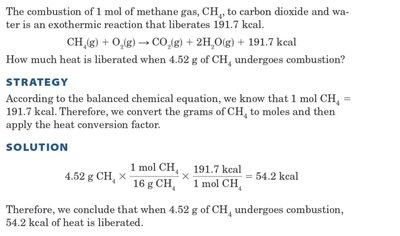
Most chemical reactions involve energy changes, usually in the form of heat. The heat of reaction is the heat given off or absorbed during a reaction.
Exothermic reaction: Releases heat.
Endothermic reaction: Absorbs heat.
Heat of combustion: Heat released during combustion; always exothermic.

Specific Heat
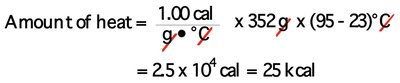
Specific heat (SH) is the amount of heat required to raise the temperature of 1.00 g of a substance by 1.00 °C. The equation relating heat, mass, specific heat, and temperature change is:
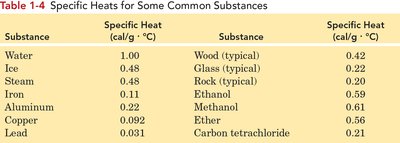
Summary Table: Specific Heats of Common Substances
Substance | Specific Heat (cal/g·°C) |
|---|---|
Water | 1.00 |
Ice | 0.48 |
Steam | 0.48 |
Iron | 0.11 |
Aluminum | 0.22 |
Copper | 0.092 |
Lead | 0.031 |
Wood (typical) | 0.42 |
Glass (typical) | 0.22 |
Rock (typical) | 0.20 |
Ethanol | 0.59 |
Methanol | 0.61 |
Ether | 0.56 |
Carbon tetrachloride | 0.21 |
Additional info: This summary covers the core concepts of chemical reactions, including balancing equations, types of reactions, stoichiometry, limiting reagents, percent yield, and energy changes, as well as the use of the mole and molar mass in quantitative chemical analysis. These topics are foundational for introductory college chemistry.
