 Back
BackChemical Warfare Agents: Classification, Mechanisms, and Nerve Agents
Study Guide - Smart Notes
 Tailored notes based on your materials, expanded with key definitions, examples, and context.
Chemical Warfare Agents
Classification of Chemical Warfare Agents
Chemical warfare agents are substances designed to cause harm or death through their toxic properties. They are classified based on their physiological effects and mechanisms of action.
Choking Agents: Attack lung tissue, causing pulmonary edema. Examples: Chlorine, Phosgene, Diphosgene.
Blood Agents: Inhibit enzymes involved in cellular respiration, similar to carbon monoxide poisoning. Examples: Cyanide, Cyanogen.
Blister Agents (Vesicants): Cause severe blistering of skin and mucous membranes. Examples: Mustards (HD, HN), Lewisite.
Nerve Agents: Highly toxic organophosphorus compounds that disrupt nervous system function. Examples: Sarin, Tabun, Soman, VX, Novichok.
Incapacitants: Cause temporary physiological or psychological effects. Examples: CN, CS, Agent BZ, Kolokol-1.
Incendiary Agents: Designed to start fires or destroy equipment. Examples: White phosphorus, Napalm, Thermite.
Nerve Agents
Overview and Classification
Nerve agents are among the most lethal chemical warfare agents, primarily affecting the nervous system by inhibiting the enzyme acetylcholinesterase. They are typically organophosphates and are divided into two main series:
G-series: First synthesized in Germany (1936–1949). Includes Tabun (GA), Sarin (GB), Soman (GD), and Cyclosarin (GF).
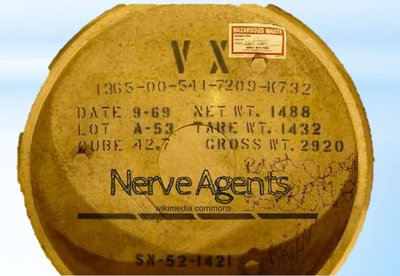
V-series: Discovered in the UK in the 1950s. Includes VX, VE, VG, and VM. These are more persistent and less volatile than G-series agents.
Physical and Chemical Properties
Volatility: G agents are volatile and non-persistent, while V agents are persistent and non-volatile.
Lethality: Extremely toxic, with low LD50 and LCt50 values (see table below).
Dispersal: Can be dispersed as aerosols, liquids, or vapors.
Agent | LCt50 (mg·min/m3) | LD50 (mg, skin) | LD50 (mg, oral) | VP (mmHg) |
|---|---|---|---|---|
Tabun | 200 | 4000 | 25–50 | 0.07 |
Sarin | 100 | 1700 | 5–20 | 2.9 |
Soman | 100 | 300 | 5–20 | 0.3 |
VX | 50 | 10 | 3–10 | 0.0007 |
Note: LCt50 is the lethal concentration-time for 50% of exposed individuals; LD50 is the lethal dose for 50% of exposed individuals; VP is vapor pressure at 25°C.
Synthesis and Binary Weapons
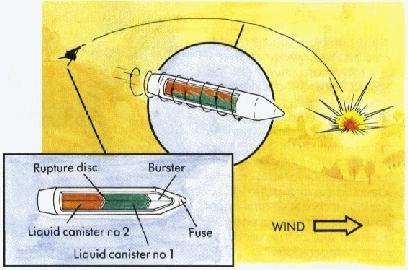
Nerve agents are complex to synthesize due to their toxicity and the restricted nature of precursor chemicals. Binary weapons contain two less-toxic precursors that mix to form the active nerve agent upon deployment, reducing risk during storage and transport.
Sarin: Methyl phosphoryl difluoride + isopropanol
Soman: Methyl phosphoryl difluoride + pinacolyl alcohol
Mechanism of Action of Nerve Agents
Normal Nerve Function
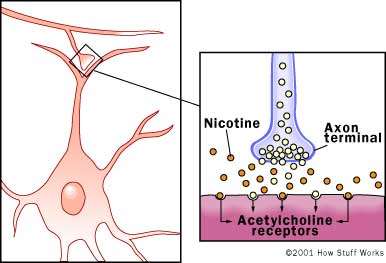
Nerve impulses are transmitted across synapses by neurotransmitters such as acetylcholine (ACh). After ACh binds to receptors on the post-synaptic membrane, it is rapidly broken down by the enzyme acetylcholinesterase (AChE), terminating the signal.
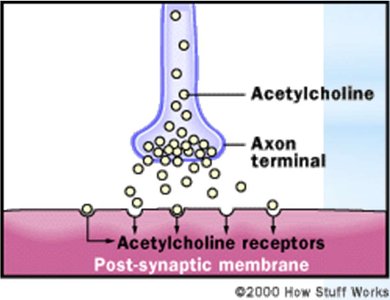
Disruption by Nerve Agents
Nerve agents inhibit AChE, preventing the breakdown of ACh. This leads to continuous stimulation of muscles, glands, and the central nervous system, resulting in overstimulation and eventual paralysis.
Indirect Inhibitors: Nerve agents bind to AChE, rendering it inactive.
Direct Inhibitors: Other toxins (e.g., nicotine, atropine) may bind to post-synaptic receptors, either mimicking or blocking ACh.

Sites of Interference
Pre-synaptic toxins: Alter neurotransmitter release (e.g., botulinum toxin).
Enzyme inhibitors: Nerve agents block AChE (indirect inhibition).
Post-synaptic toxins: Bind to receptors, affecting nerve impulse transmission (e.g., nicotine, atropine).
Symptoms of Nerve Agent Poisoning
Exposure to nerve agents affects multiple organ systems:
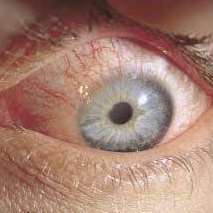
Eyes: Miosis (pinpoint pupils), pain, blurred vision
Nose/Mouth: Runny nose, excessive salivation
Pulmonary: Bronchoconstriction, cough, shortness of breath
Gastrointestinal: Nausea, vomiting, diarrhea, cramps
Muscular: Twitching, paralysis, weakness
Cardiovascular: Heart rate changes, increased blood pressure
CNS: Seizures, loss of consciousness, psychological effects


Treatment of Nerve Agent Poisoning
Therapeutic Approaches
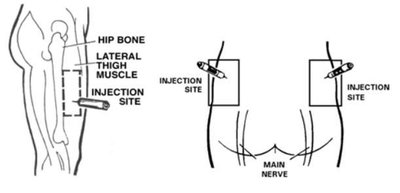
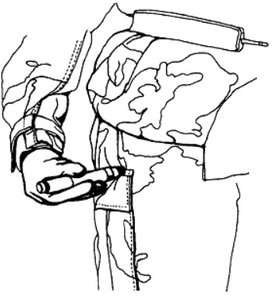
Atropine: Blocks ACh receptors, reducing overstimulation. Derived from Atropa belladonna (deadly nightshade).
Oximes (e.g., pralidoxime): Reactivate AChE by removing the nerve agent from the enzyme.
Pyridostigmine: Used as a pre-treatment to protect AChE from irreversible inhibition (especially for Soman exposure).
Diazepam: Used to control seizures.



Limitations of Therapy
Some nerve agents, such as Soman, cause rapid 'aging' of the enzyme-inhibitor complex, making oxime therapy ineffective if not administered quickly. Pre-treatment with pyridostigmine may be used in anticipation of exposure.
Specific Nerve Agents: G-Series
Tabun (GA)
Discovery: Accidentally discovered in 1936 by Gebhardt Schrader while researching pesticides.
Properties: Fruity, bitter almond odor; clear to yellowish liquid.
Antidote: Atropine, oximes.
Decontamination: Bleaching powder (calcium hypochlorite).
Synthesis: From phosphorus oxychloride, dimethyl amine, hydrogen cyanide, and ethanol.

Sarin (GB)
Discovery: Synthesized in 1938 by Schrader, Ambros, Rudiger, and Linde.
Properties: Odorless, highly toxic by skin contact or inhalation.
Antidote: Atropine, oximes.
Decontamination: Bleaching powder, water, bicarbonate, sodium hydroxide solutions.
Notable Use: Tokyo Subway attack, Iraq-Iran war.
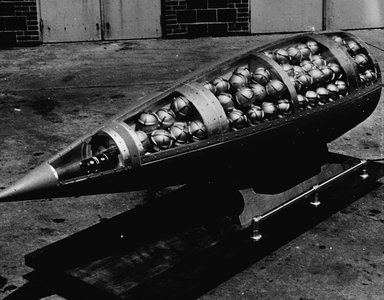
Summary Table: G-Series Nerve Agents
Agent | Year Synthesized | Odor | Antidote | Decontamination |
|---|---|---|---|---|
Tabun (GA) | 1936 | Fruity, bitter almond | Atropine, oximes | Bleaching powder |
Sarin (GB) | 1938 | Odorless | Atropine, oximes | Bleaching powder, water, base |
Soman (GD) | 1944 | Camphor-like | Atropine, oximes (limited) | Bleaching powder |
Cyclosarin (GF) | 1949 | Sweetish | Atropine, oximes | Bleaching powder |
Additional info: The study of chemical warfare agents, especially nerve agents, is relevant to introductory chemistry as it involves chemical structure, reactivity, toxicity, and the interaction of chemicals with biological systems. Understanding these agents provides insight into the importance of chemical safety, toxicology, and the ethical implications of chemical research.
