 Back
BackChemical Warfare Agents: Types, Properties, and Chemical Principles
Study Guide - Smart Notes
 Tailored notes based on your materials, expanded with key definitions, examples, and context.
Chemical Warfare Agents
Overview of Chemical Warfare Agents
Chemical warfare agents are toxic chemicals designed for use in military operations to harm, incapacitate, or kill. They are classified based on their physiological effects and chemical properties. Understanding their chemistry is essential for recognizing their mechanisms and potential countermeasures.
Choking agents: Attack lung tissue, causing pulmonary edema (e.g., chlorine, phosgene).
Blood agents: Inhibit enzymes involved in cellular respiration, similar to carbon monoxide poisoning (e.g., cyanide, cyanogen).
Blister agents (vesicants): Cause severe blistering and tissue damage (e.g., mustards, lewisite).
Nerve agents: Disrupt nervous system function, highly toxic and lethal (e.g., sarin, VX, Novichok).
Incapacitants: Cause temporary physiological or psychological effects (e.g., tear gas, BZ, Kolokol-1).
Incendiaries: Designed to start fires or destroy equipment (e.g., napalm, thermite, white phosphorus).
Nerve Agents
Novichok Agents
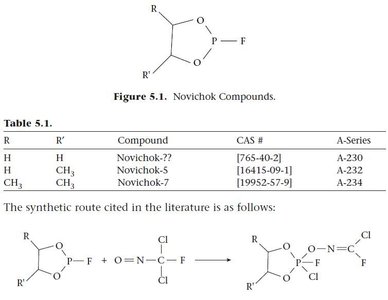
Novichok agents are a class of nerve agents developed in the Soviet Union and Russia. They are considered among the most toxic chemical warfare agents known, with some variants being several times more lethal than VX. Their chemical structures are not fully disclosed, but they are believed to be organophosphorus compounds designed as binary agents (components mixed just before use).
History: Developed from 1971 to 1993 under the FOLIANT program.
Notable incidents: Suspected use in the poisoning of Sergei and Yulia Skripal (2018) and Alexei Navalny (2020).
Properties: Extremely stable, persistent in the environment, and highly lethal.
Examples: A-230, A-232, A-234 (A-series agents).
Chemical Principle: Novichok agents inhibit acetylcholinesterase, leading to accumulation of acetylcholine and continuous nerve signal transmission, resulting in muscle paralysis and death.
Incapacitants
Physical Incapacitants: Tear Agents
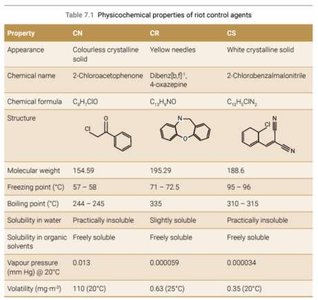
Physical incapacitants are chemicals that cause temporary irritation to the eyes, skin, and respiratory tract. They are commonly used for riot control and crowd management. The most widely used tear agents are CN, CS, and CR.
CN (Chloroacetophenone): Known as "mace" or "tear gas," highly toxic by inhalation and ingestion, rapid onset (20–60 s), effects last minutes.
CS (O-Chlorobenzylidene malononitrile): Developed in the 1950s, replaced CN, rapid onset, effects last 5–20 minutes, used in riot control and training.
CR (Dibenzoxazepine): More irritating than CS, less toxic, effects can last up to 6 hours for the eyes.
Mechanism: These agents stimulate sensory nerves, causing pain, tearing, and respiratory distress.
Comparison of Riot Control Agents
Property | CN | CR | CS |
|---|---|---|---|
Appearance | Colourless crystalline solid | Yellow needles | White crystalline solid |
Chemical Name | 2-Chloroacetophenone | Dibenz(b,f)-1,4-oxazepine | 2-Chlorobenzalmalononitrile |
Chemical Formula | C8H7ClO | C13H9NO | C10H5ClN2 |
Boiling Point (°C) | 244–245 | 335 | 310–315 |
Solubility in Water | Practically insoluble | Practically insoluble | Practically insoluble |
Volatility (mg/m3) | 110 (20°C) | 0.63 (25°C) | 0.35 (20°C) |
Physical Incapacitants: Vomiting Agents
Vomiting agents cause severe irritation of the respiratory tract, leading to sneezing, coughing, nausea, and vomiting. They are used for short-term incapacitation.
Examples: Adamsite (DA), Diphenylchlorarsine (DA), Diphenylcyanoarsine (DC).
Onset: Effects appear within minutes and subside in 1–2 hours.
Physical Incapacitants: Capsaicin (Pepper Spray)
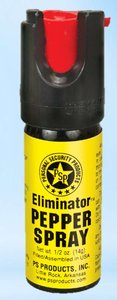
Capsaicin is the active component in pepper sprays, derived from capsicum plants. It activates sensory neuron receptors, causing intense irritation and inflammation of the airway mucosa.
Commercial use: Pepper sprays contain 1–15% capsaicinoids.
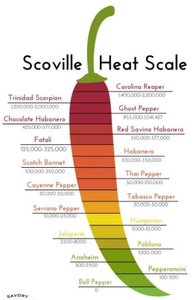
Scoville Heat Units (SHU): Measure the pungency of capsaicinoids.
Psychoincapacitants
Psychoincapacitants are chemicals that alter the central nervous system, causing hallucinations, confusion, or sedation. They are effective at low doses and do not cause permanent injury at proper concentrations.
CNS depressants: Antipsychotics, opioid-like agents (e.g., Kolokol-1).
CNS stimulants: Amphetamines, cocaine.
Psychedelics: LSD (lysergic acid diethylamide).
Deliriants: Agent 15, BZ (3-Quinuclidinyl benzilate).
Agent BZ: Causes hallucinations, involuntary muscle movements, and psychotropic effects. Full recovery occurs after 3–4 days.
Incendiary Agents
Thermite
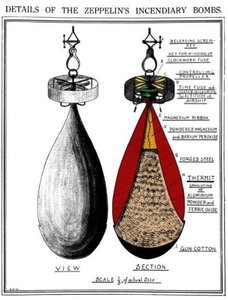
Thermite is a mixture of metal powder (usually aluminum) and a metal oxide (commonly iron(III) oxide). When ignited, it undergoes an exothermic reaction, producing extremely high temperatures (up to 2400°C). It is used in incendiary devices and for welding metals.
Reaction:
Applications: Hand grenades, bombs, exothermic welding (e.g., railway rails).
Napalm
Napalm is a gel-like incendiary composed of a gelling agent (aluminum salts of naphthenic and palmitic acids) and a volatile fuel (petrol or diesel). Napalm B contains polystyrene, benzene, and gasoline. It burns at 800–1200°C and is used in flamethrowers and bombs.
Historical use: Developed in 1942, widely used in World War II and Vietnam.
White Phosphorus (WP)
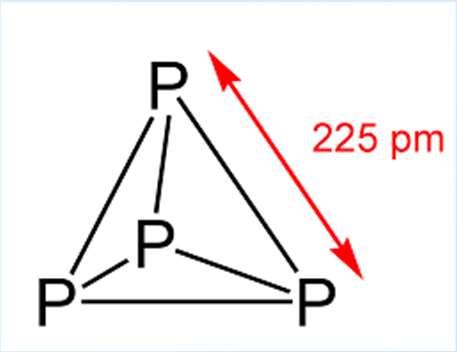
White phosphorus is an allotrope of phosphorus used as an incendiary and smoke-producing agent. It ignites spontaneously in air, producing dense white smoke and causing severe thermal and chemical burns.
Applications: Smoke grenades, munitions, and battlefield obscurants.
Hazards: Causes nausea, diarrhea, and cardiac arrhythmia upon exposure.
Summary Table: Types of Chemical Warfare Agents
Type | Mode of Action | Examples |
|---|---|---|
Choking agents | Attack lung tissue, cause pulmonary edema | Chlorine, phosgene |
Blood agents | Inhibit cellular respiration enzymes | Cyanide, cyanogen |
Blister agents | Cause severe blistering and tissue damage | Mustards, lewisite |
Nerve agents | Disrupt nervous system function | Sarin, VX, Novichok |
Incapacitants | Temporary physiological/psychological effects | CN, CS, CR, BZ, Kolokol-1 |
Incendiaries | Start fires, destroy equipment | Thermite, napalm, white phosphorus |
