 Back
BackChemistry of Drugs: Structure, Function, and Societal Impact
Study Guide - Smart Notes
 Tailored notes based on your materials, expanded with key definitions, examples, and context.
Drugs: Sources, Definitions, and Classifications
Definition and Sources of Drugs
Drugs are chemical substances that affect the function of living organisms. They are used to relieve pain, treat illnesses, or improve health and well-being. Drugs can be derived from natural sources such as plants, microorganisms, and marine organisms, or synthesized in laboratories.
Natural sources: Many drugs are isolated from plants and marine organisms.
Synthetic sources: Laboratory synthesis allows for the creation of new drugs and analogs of natural compounds.


Pain Relievers: Nonsteroidal Anti-Inflammatory Drugs (NSAIDs)
Mechanism and Types of NSAIDs
NSAIDs relieve pain and reduce inflammation by blocking the production of prostaglandins, which are chemicals involved in inflammation and pain signaling. Common NSAIDs include aspirin, ibuprofen, and naproxen.
Mechanism: NSAIDs inhibit cyclooxygenase (COX) enzymes, preventing prostaglandin synthesis.
COX-1: Found in stomach and kidney tissues; inhibition can cause side effects like stomach pain and bleeding.
COX-2: Found in inflamed tissues; inhibition reduces inflammation and pain.
Acetaminophen: Reduces pain and fever but is not anti-inflammatory and does not act as an anticoagulant. It acts by blocking the COX-3 enzyme and can cause liver/kidney damage in overdose.
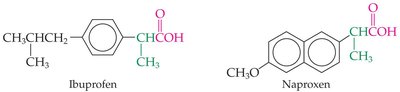
Example: Aspirin is used in low doses to prevent heart attacks and strokes due to its anticoagulant properties.
Chemistry, Allergies, and the Common Cold
Medications for Cold and Allergy Symptoms
Cold and allergy medications are primarily used to treat symptoms, as there are no cures for the common cold. These medications include antihistamines, cough suppressants, and decongestants.
Antihistamines: Block the effects of histamine, reducing redness, swelling, and itching caused by allergies.
Cough suppressants (antitussives): Include codeine and dextromethorphan; diphenhydramine is also effective.
Decongestants: Relieve nasal congestion and include compounds like oxymetazoline and phenylephrine.
Narcotics: Natural and Synthetic Analgesics
Opium, Morphine, and Derivatives
Narcotics are drugs that induce stupor or anesthesia and are used as painkillers. Many are addictive and regulated by law. Opium, derived from the poppy plant, contains morphine and other alkaloids.
Morphine: Main active alkaloid in opium, used for severe pain relief.
Codeine: Less potent derivative of morphine, used in cough syrups and mild pain relief.
Heroin: Produced by acetylating morphine, making it more lipid-soluble and potent.
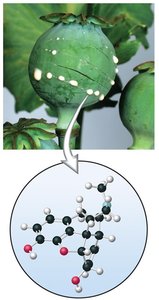
Synthetic narcotics: Developed to mimic morphine's effects with reduced addiction potential. Examples include methadone, meperidine, and fentanyl.
Substance | Duration of Action (h) | Oral Dose Equivalent to 30 mg Morphine (mg) |
|---|---|---|
Meperidine (Demerol®) | 2–4 | 300 |
Hydrocodone | 4–8 | 20 |
Fentanyl | 1–2 | <1 |
Oxycodone | 4–6 | 20 |
Hydromorphone (Dilaudid®) | 4–5 | 7.5 |
Methadone | 4–6 | Not applicable |
Endorphins: Natural peptides in the body that bind to the same receptors as morphine, providing pain relief and euphoria.
Antibacterial Drugs
Sulfa Drugs, Penicillins, and Modern Antibiotics
Antibacterial drugs are used to treat infections caused by bacteria. The development of these drugs has greatly reduced mortality from infectious diseases.
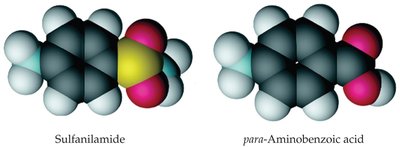
Sulfa drugs: The first antibacterial agents; sulfanilamide mimics para-aminobenzoic acid, interfering with bacterial folic acid synthesis.
Penicillins: Antibiotics derived from molds; inhibit bacterial cell wall synthesis.
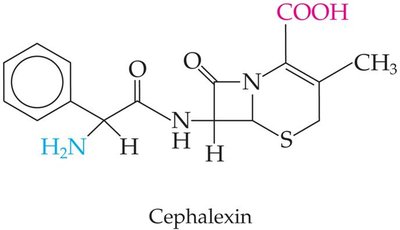
Cephalosporins: Newer antibiotics used to treat penicillin-resistant bacteria. Example: cephalexin.
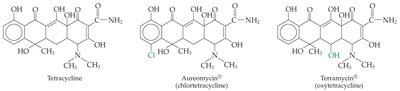
Tetracyclines: Broad-spectrum antibiotics that inhibit protein synthesis by binding to bacterial ribosomes.
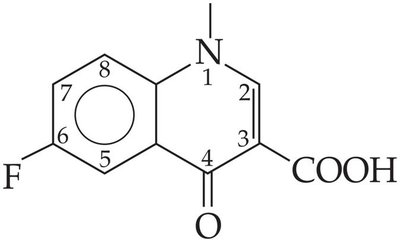
Fluoroquinolones: Inhibit DNA replication by interfering with DNA gyrase. Example: ciprofloxacin.
Drugs for the Heart
Treatments for Heart Disease
Heart drugs are used to increase blood supply, normalize heart rhythm, lower blood pressure, and prevent plaque buildup.
Arrhythmia: Abnormal heartbeat treated with drugs or defibrillators.
Coronary artery disease: Blockage by lipid plaque leads to angina and heart attacks. Treated with nitroglycerin (releases nitric oxide to relax vessels) and digitalis (improves heart function).
Drugs for the Mind
Psychotropic Drugs
Psychotropic drugs affect mental processes and are classified as stimulants, depressants, or hallucinogens.
Stimulants: Increase alertness and mood (e.g., cocaine, amphetamines).
Depressants: Reduce consciousness and reaction (e.g., alcohol, barbiturates, tranquilizers).
Hallucinogens: Alter perception of reality (e.g., LSD, marijuana).
Chemistry of the Nervous System
Neurons and Neurotransmitters
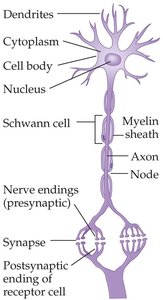
The nervous system consists of billions of neurons, each with a cell body, axon, and dendrites. Messages are transmitted across synapses by neurotransmitters.
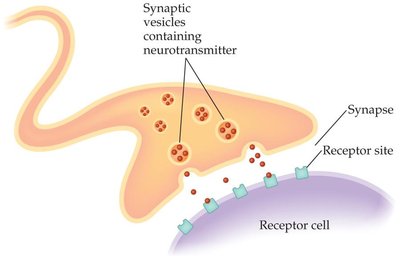
Neurotransmitters: Chemicals that transmit signals across synapses, such as dopamine, serotonin, and norepinephrine.
Brain Amines: Depression and Mania
Role of Neurotransmitters in Mental Health
Brain amines such as epinephrine, norepinephrine, and serotonin play key roles in mood regulation. Imbalances can lead to mental illnesses such as depression and mania.
Epinephrine: Increases blood pressure and is involved in the fight-or-flight response.
Norepinephrine: Associated with feelings of elation; deficiency leads to depression, excess to mania.
Serotonin: Regulates mood, sleep, and sensory perception; low levels are linked to depression.
Anesthetics
General and Local Anesthetics
Anesthetics are substances that cause loss of sensation. General anesthetics induce unconsciousness, while local anesthetics block pain in a specific area.
Substance | Duration of Action |
|---|---|
Procaine (Novocaine®) | Short |
Lidocaine (Xylocaine®) | Medium (30–60 min) |
Mepivacaine (Carbocaine®) | Fast (6–10 min) |
Bupivacaine (Marcaine®) | Moderate (8–12 min) |
Prilocaine (Citanest®) | Medium (30–90 min) |
Chloroprocaine (Nesacaine®) | Short (15–30 min) |
Cocaine | Medium |
Etidocaine (Duranest®) | Long (120–180 min) |
Local anesthetics work by reducing the permeability of nerve cell membranes to sodium ions, blocking nerve conduction.
Antianxiety and Antidepressant Drugs
Benzodiazepines and SSRIs
Antianxiety agents such as benzodiazepines act on GABA receptors and are addictive. Common examples include diazepam, clonazepam, and lorazepam.
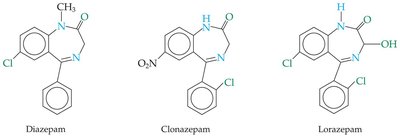
Antidepressants such as selective serotonin reuptake inhibitors (SSRIs) enhance serotonin's effect by blocking its reabsorption, helping to treat depression.
Stimulant Drugs
Amphetamines, Cocaine, Caffeine, and Nicotine
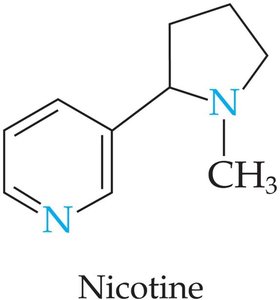
Stimulants increase alertness and energy. Amphetamines are used to treat ADHD and narcolepsy. Cocaine prevents dopamine reabsorption, causing intense but short-lived euphoria. Caffeine is a mild stimulant found in beverages, and nicotine is found in tobacco products.
Beverage | Caffeine (mg/12 oz) |
|---|---|
5-Hour Energy (2 oz) | 138 |
Red Bull (8.2 oz) | 80 |
Sun Drop | 63 |
Mountain Dew | 55 |
Mello Yello | 53 |
Diet Coke | 46 |
Dr Pepper | 41 |
Diet Sunkist Orange | 41 |
Pepsi-Cola | 38 |
Diet Pepsi | 36 |
Psychedelic Drugs
LSD, Psilocybin, Mescaline, and Marijuana
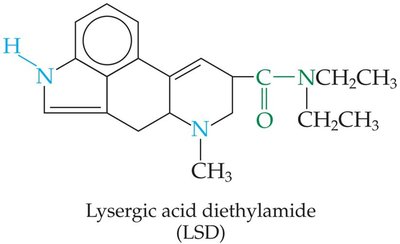
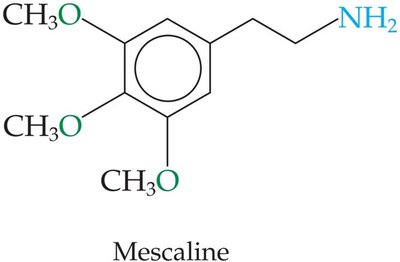
Psychedelic drugs alter perception and cognition. LSD is a semisynthetic compound derived from ergot. Psilocybin is found in certain mushrooms, and mescaline is found in the peyote cactus. Marijuana contains tetrahydrocannabinol (THC), its main psychoactive component.
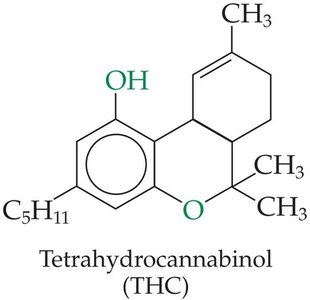
Drug Problems: Abuse and Misuse
Societal Impact
Drug abuse refers to the use of drugs for their intoxicating effects, leading to personal and societal problems. Drug misuse involves using drugs for the wrong purpose, such as taking antibiotics for viral infections, which contributes to antibiotic resistance.
