 Back
BackIntroduction to Chemistry: Foundations, Methods, and Measurement
Study Guide - Smart Notes
 Tailored notes based on your materials, expanded with key definitions, examples, and context.
Chapter 1: Introduction to Chemistry
Chemistry and the Nature of Science
Chemistry is the study of the properties and behavior of matter. It is a central science that connects and informs many other scientific fields. Science, including chemistry, is a systematic approach to understanding natural phenomena through observation, rational thinking, and experimentation.
Science: The search for understanding and explanation of natural phenomena, based on empirical evidence.
Chemistry: The study of matter, its properties, and the changes it undergoes.
Technology: The application of scientific knowledge to solve practical problems.
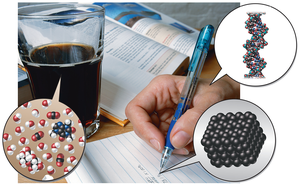
Example: Everyday activities such as cooking, cleaning, and even breathing involve chemical processes.
Chemicals Compose Ordinary Things
Many people associate the word "chemical" with danger, but chemicals make up everything around us, including food, water, and air. Chemistry helps us understand the composition and transformation of these substances.

Science and Technology
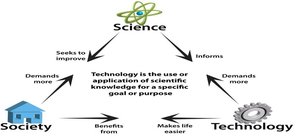
Science seeks to understand the principles of nature, while technology applies this knowledge for practical purposes. Both are interrelated and impact society.
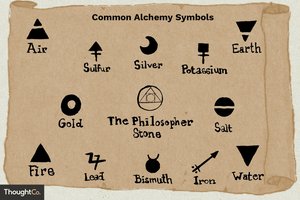
Alchemy: The Roots of Chemistry
Alchemy was a precursor to modern chemistry, originating in the Arab world and spreading to Europe. Alchemists discovered new substances and techniques such as distillation, and their work laid the foundation for modern chemical science.
Green and Sustainable Chemistry
Green chemistry focuses on designing products and processes that minimize environmental impact by reducing or preventing pollution at its source. Sustainable chemistry aims to meet current needs without compromising future generations.


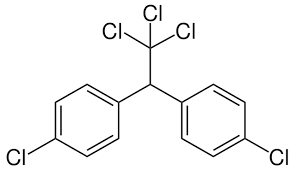
Carsonian Nightmare: Environmental Damage Caused by Pesticides
Rachel Carson's book Silent Spring (1962) highlighted the dangers of chemical pesticides like DDT, which can cause irreversible environmental damage. Her work led to increased awareness and regulation of chemical use.

The Scientific Approach to Knowledge
The scientific method is a systematic process for understanding nature, involving observation, hypothesis formulation, experimentation, and the development of laws and theories.
Observation: Gathering data, either qualitative (descriptions) or quantitative (measurements).
Hypothesis: A tentative explanation for observations, which must be testable and falsifiable.
Experimentation: Testing hypotheses through controlled experiments.
Theory: A well-substantiated explanation of some aspect of the natural world.
Law: A concise statement that summarizes observed phenomena and predicts future events.
Law of Conservation of Mass
This fundamental law, formulated by Antoine Lavoisier, states that the total mass of substances remains constant during a chemical reaction.
Law of Conservation of Mass:
Scientific Models and Molecular Modeling
Scientific models are representations (physical or conceptual) used to explain and predict the behavior of systems. Molecular models help visualize the structure and interactions of molecules.
Limitations of Science
Science is limited to studying observable phenomena and processes where variables can be controlled. It cannot address questions outside the realm of empirical investigation.
Science and Technology: Risks and Benefits
Scientific advancements and technological applications carry both risks and benefits. Risk-benefit analysis helps evaluate the desirability of a particular action or technology, often using the desirability quotient (DQ).
Chemistry: Its Central Role
Chemistry is central to solving societal problems through both applied and basic research. Applied research addresses specific issues, while basic research seeks knowledge for its own sake.
Chapter 2: The Metric System
Units of Measurement
The metric system (SI units) is a standardized system used worldwide for scientific measurements. It is based on powers of ten and uses prefixes to indicate multiples or fractions of base units.
Base units: meter (m) for length, liter (L) for volume, gram (g) for mass, second (s) for time, kelvin (K) for temperature.
Prefixes: kilo- (103), centi- (10-2), milli- (10-3), micro- (10-6), etc.
Volume and Mass
Volume is commonly measured in liters (L) and milliliters (mL), while mass is measured in grams (g) and kilograms (kg).
1 L = 1 dm3
1 mL = 1 cm3
Density
Density is a physical property defined as mass per unit volume. It is used to identify substances and predict whether an object will sink or float in a fluid.
Density formula:
Common units: g/mL or g/cm3
Dimensional Analysis (Unit Conversions)
Dimensional analysis is a method for converting between units using conversion factors. It ensures that calculations are consistent and units cancel appropriately.
Set up the problem by writing the given and needed units.
Use conversion factors to cancel units and obtain the desired unit.
Chapter 3: Matter and Energy
Matter: Classification and Properties
Matter is anything that has mass and occupies space. It can be classified by its physical state and composition.
Physical properties: Can be observed without changing the substance (e.g., boiling point, density).
Chemical properties: Can only be observed when a substance changes into another substance (e.g., flammability).
Physical and Chemical Changes
Physical changes do not alter the chemical identity of a substance, while chemical changes result in the formation of new substances.
States of Matter
Matter exists in three common states: solid, liquid, and gas. The kinetic molecular theory describes the properties of these states.
Solids: Definite shape and volume; particles are closely packed and vibrate in place.
Liquids: Definite volume but take the shape of their container; particles are close but can move past each other.
Gases: No definite shape or volume; particles are far apart and move rapidly.
Classification of Matter
Matter can be classified as elements, compounds, or mixtures.
Element: A pure substance made of only one kind of atom.
Compound: A substance made of two or more different elements chemically combined.
Mixture: A physical blend of two or more substances; can be homogeneous (uniform) or heterogeneous (not uniform).
Chapter 4: Models of the Atom
Matter is Made of Atoms
Atoms are the fundamental building blocks of matter. Each element consists of one type of atom, while molecules and compounds are formed by the combination of atoms.
Chapter 10: Gases
Properties of Gases
Gases have no definite shape or volume and are compressible. Their particles are far apart and move rapidly, filling the container they occupy.
Chapter 11: Liquids and Solids
Properties of Liquids and Solids
Liquids have a definite volume but take the shape of their container, while solids have both definite shape and volume. The arrangement and movement of particles differ between these states.
Chapter 12: Chemical Bonding
Molecular Modeling
Molecules are groups of atoms held together by chemical bonds. Molecular models help visualize the structure and interactions of molecules, which is essential for understanding chemical bonding and reactions.
Chapter 14: Acids and Bases
Green Chemistry and Environmental Impact
Green chemistry and sustainable practices are essential for minimizing the environmental impact of chemical processes, including the management of acids, bases, and other potentially hazardous substances.
Appendix: Tables
Table: Examples of Physical and Chemical Properties
Physical Properties | Chemical Properties |
|---|---|
Boiling point | Flammability |
Density | Reactivity with acid |
Mass | Corrosiveness |
Volume | Ability to oxidize |
Table: Metric Prefixes
Prefix | Symbol | Factor |
|---|---|---|
kilo- | k | 103 |
centi- | c | 10-2 |
milli- | m | 10-3 |
micro- | μ | 10-6 |
Key Equations
Density:
Kelvin to Celsius:
Celsius to Fahrenheit:
Fahrenheit to Celsius:
