 Back
BackIntroductory Chemistry: Atomic Structure, Periodic Table, and Chemical Compounds
Study Guide - Smart Notes
 Tailored notes based on your materials, expanded with key definitions, examples, and context.
Atomic Structure and the Periodic Table
Atomic Theory and Subatomic Particles
Atoms are the fundamental building blocks of matter, and each element is defined by its unique atomic structure. Understanding the structure of atoms is essential for studying chemical properties and reactions.
Atomic Theory: Atoms of each element are unique due to their number of protons (atomic number).
Subatomic Particles: Atoms consist of protons (positive charge), neutrons (neutral), and electrons (negative charge).
Nuclear Atomic Theory: The nucleus contains protons and neutrons, while electrons occupy the surrounding space.
Key Experiments: Thomson's cathode ray experiment discovered the electron; Rutherford's gold foil experiment revealed the nucleus.
Location of Particles: Protons and neutrons are in the nucleus; electrons are in orbitals around the nucleus.
Charge Interactions: Like charges repel, opposite charges attract (e.g., sodium ion and potassium ion repel each other).
Atomic Number, Mass Number, and Atomic Mass
These terms are fundamental for distinguishing between different atoms and isotopes.
Atomic Number (Z): Number of protons in the nucleus; defines the element.
Mass Number (A): Total number of protons and neutrons in the nucleus.
Atomic Mass: Weighted average mass of all isotopes of an element (measured in atomic mass units, amu).
Isotopes: Atoms of the same element with different numbers of neutrons (e.g., Ne-20 or 20Ne).
Calculating Atomic Mass: Use the masses and relative abundances of isotopes.
The Periodic Table
The periodic table organizes elements by increasing atomic number and recurring chemical properties. It is a foundational tool for understanding chemical behavior.
Groups/Families: Vertical columns; elements in the same group have similar properties (e.g., Group IIA: Be, Mg, Ca, Sr, Ba, Ra).
Periods: Horizontal rows; elements in the same period have the same number of electron shells.
Classification: Metals, nonmetals, metalloids; main group elements, transition metals; alkali metals, alkaline earth metals, pnictogens, chalcogens, halogens, noble gases.
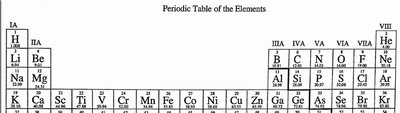
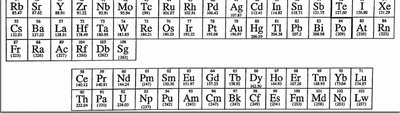
Counting Subatomic Particles: For atoms and ions, use atomic number and charge to determine protons, neutrons, and electrons.
Ion Charges: Predictable based on group (e.g., alkali metals form +1 ions).
Cations and Anions: Cations are positively charged (loss of electrons); anions are negatively charged (gain of electrons).
Chemical Composition and Calculations
Avogadro’s Number and the Mole Concept
Avogadro’s number is a fundamental constant for counting particles in chemistry.
Avogadro’s Number: particles/mol (atoms, molecules, ions).
Mole: The amount of substance containing Avogadro’s number of particles.
Conversions: Atoms/molecules ↔ moles ↔ grams using molar mass.
Molar Mass: Mass of one mole of a substance (g/mol); calculated from the chemical formula.
Example: Molar mass of Ca(NO3)2 is 164.10 g/mol.
Chemical Formulas and Mass Percent
Chemical formulas provide the ratio of elements in compounds, and mass percent expresses the composition by mass.
Empirical Formula: Simplest whole-number ratio of elements in a compound.
Molecular Formula: Actual number of atoms of each element in a molecule.
Mass Percent:
Example: Mass percent of carbon in C2H6 is 79.89%.
Stoichiometry and Conversion Factors
Stoichiometry involves using chemical formulas as conversion factors to relate moles, atoms, and mass.
Mole-Mole Conversion: Use coefficients from chemical formulas (e.g., 2 mol H per 1 mol H2O).
Atom-Molecule Conversion: Use subscripts in the formula (e.g., 4 Br atoms per 1 CBr4 molecule).
Example: How many grams of Br in 20.0 g of CBr4? (19.3 g Br)
Electrons in Atoms and the Periodic Table
Electromagnetic Radiation and Atomic Spectra
Electrons in atoms absorb and emit energy as electromagnetic radiation (EMR), which is quantized.
Types of EMR: Radio, microwave, infrared, visible, ultraviolet, X-ray, gamma ray.
Energy and Wavelength: Higher energy = higher frequency, shorter wavelength.
Key Equations:
Photon: A quantum of light energy.
Bohr Model: Electrons occupy quantized energy levels; emission spectra of H atom support this model.
Excitation and Relaxation: Moving to higher energy levels (excitation) requires energy; dropping to lower levels (relaxation) releases energy.
Energy Change:
Orbitals: s (sphere), p (two lobes), d (four-leaf clover shapes).
Degenerate Orbitals: Orbitals with the same energy in a given subshell.
Electron Configurations and Periodic Trends
Electron configurations describe the arrangement of electrons in atoms, which determines chemical properties.
Aufbau Principle: Electrons fill lowest energy orbitals first.
Pauli Exclusion Principle: No two electrons in an atom can have the same set of quantum numbers.
Hund’s Rule: Electrons fill degenerate orbitals singly before pairing.
Valence vs. Core Electrons: Valence electrons are in the outermost shell; core electrons are in inner shells.
Electron Removal: When forming cations, remove electrons from the highest principal quantum number (n) first.
Ionization Energy: Energy required to remove an electron from an atom; increases across a period, decreases down a group.
Atomic Radius: Size of an atom; decreases across a period, increases down a group.
Chemical Bonding and Compounds
Ionic Compounds and Nomenclature
Ionic compounds are formed from the electrostatic attraction between cations and anions. Naming conventions depend on the types of ions involved.
Formation: Atoms combine to form neutral compounds (e.g., Li2S from lithium and sulfur).
Naming: Binary ionic compounds: name of metal + nonmetal with “-ide” ending (e.g., sodium chloride).
Variable Charge Metals: Use Roman numerals for metals with multiple possible charges (e.g., copper(II) oxide for CuO).
Polyatomic Ions: Groups of atoms with a charge (e.g., sulfate SO42–, nitrate NO3–).
Oxoanions: -ate (more oxygen), -ite (less oxygen), per- (most), hypo- (least).
Writing Formulas: Total charges must add to zero; use subscripts to balance charges.
Ionic Compounds in Solution
When ionic compounds dissolve in water, they dissociate into ions, forming strong electrolyte solutions that conduct electricity.
Dissociation Equation:
States: (s) = solid, (aq) = aqueous (dissolved in water).
Electrolytes: Solutions of ionic compounds conduct electricity due to the presence of mobile ions.
Appendix: Common Ions and Polyatomic Ions
Ion | Formula |
|---|---|
Copper(II) | Cu2+ |
Carbonate | CO32– |
Acetate | C2H3O2– or CH3COO– |
Mercury(II) | Hg2+ |
Nitrate | NO3– |
Hydroxide | OH– |
Iron(III) | Fe3+ |
Sulfate | SO42– |
Ammonium | NH4+ |
Chromium(III) | Cr3+ |
Phosphate | PO43– |
Peroxide | O22– |
Cobalt(III) | Co3+ |
Chlorate | ClO3– |
Cyanide | CN– |
Tin(IV) | Sn4+ |
Chromate | CrO42– |
Oxalate | C2O42– |
Lead(IV) | Pb4+ |
