 Back
BackIntroductory Chemistry: Electrons in Atoms and the Periodic Table – Study Guidance
Study Guide - Smart Notes
 Tailored notes based on your materials, expanded with key definitions, examples, and context.
Q1. Is hydrogen a flammable gas? Yes/No
Background
Topic: Properties of Elements – Reactivity and Flammability
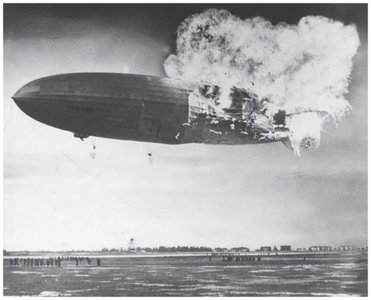
This question is testing your understanding of the chemical properties of hydrogen, specifically its reactivity and flammability, which are important in explaining historical events like the Hindenburg disaster.
Key Terms:
Flammable: Easily ignited and capable of burning rapidly.
Hydrogen (H2): A diatomic, colorless, odorless, highly flammable gas.
Step-by-Step Guidance
Recall that hydrogen is the lightest element and exists as a diatomic molecule () under standard conditions.
Think about the historical use of hydrogen in airships, such as the Hindenburg, and what happened during the disaster.
Consider the chemical property of hydrogen: does it react easily with oxygen in the air to produce water, releasing energy in the process?
Remember that a flammable gas is one that can ignite and burn in the presence of an oxidizer (like oxygen).
Try solving on your own before revealing the answer!
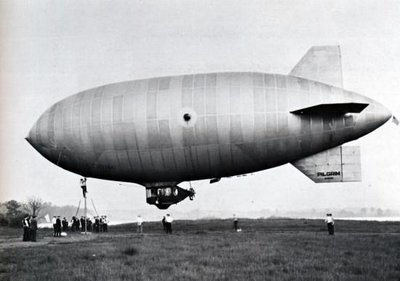
Q2. The ______________Blimp, a symbol of aviation and advertising, has been a century-old icon, making regular appearances at major events and serving as a floating billboard for Goodyear tires since 1925.
Background
Topic: Application of Chemistry in Everyday Life – Inert Gases
This question connects chemistry to real-world applications, specifically the use of inert gases in airships for safety reasons.
Key Terms:
Inert Gas: A gas that does not easily react with other substances (e.g., helium).
Helium: A noble gas used in modern blimps due to its non-flammable nature.
Step-by-Step Guidance
Recall the name of the company that has used blimps as advertising icons for nearly a century.
Think about which blimp is famous for being filled with helium and is associated with major sporting and public events.
Consider why helium is used instead of hydrogen in these blimps (hint: safety and chemical reactivity).
Try solving on your own before revealing the answer!
Q3. The number of neutrons = A – Z (where A is the mass number and Z is the atomic number). The number of neutrons in hydrogen is _________ if its A is 1 and Z is 1.
Background
Topic: Atomic Structure – Isotopes and Subatomic Particles
This question tests your ability to calculate the number of neutrons in an atom using the mass number and atomic number.
Key Formula:
= mass number (sum of protons and neutrons)
= atomic number (number of protons)
Step-by-Step Guidance
Identify the values given: (mass number), (atomic number for hydrogen).
Recall the formula for the number of neutrons: .
Substitute the values into the formula: , .
Try solving on your own before revealing the answer!
Q4. Mendeleev’s periodic table is based on ________________________.
Background
Topic: Periodic Table – Organization and Periodic Law
This question is about the historical development of the periodic table and the principle used by Mendeleev to arrange the elements.
Key Terms:
Periodic Law: The recurring trends in the properties of elements when arranged in a certain order.
Atomic Mass: The mass of an atom, typically used by Mendeleev for arrangement.
Step-by-Step Guidance
Recall what property Mendeleev used to order the elements in his original periodic table.
Think about how this arrangement led to the prediction of undiscovered elements and their properties.
Try solving on your own before revealing the answer!
