 Back
BackMatter and Energy: Classification, States, and Properties
Study Guide - Smart Notes
 Tailored notes based on your materials, expanded with key definitions, examples, and context.
Classification of Matter
Types of Matter
Chemistry is the study of matter and the changes it undergoes. Matter is anything that occupies space and has mass. Matter can be classified into three main types:
Element: The simplest type of matter, composed of only one kind of atom. Examples include gold (Au) and oxygen (O2).
Compound: Matter composed of two or more different elements that are chemically bonded together. For example, water (H2O) and carbon dioxide (CO2).
Mixture: Matter composed of elements and/or compounds that are physically mixed together but not chemically bonded. Mixtures can be homogeneous (uniform composition, e.g., air, saline solution) or heterogeneous (non-uniform composition, e.g., salad, concrete).
Key Points:
Compounds can only be separated into their elements by chemical means.
Elements and compounds are considered pure substances; mixtures are not.
Homogeneous mixtures have uniform composition throughout; heterogeneous mixtures do not.
Example: Classify the following:
Ammonia (NH3): Compound
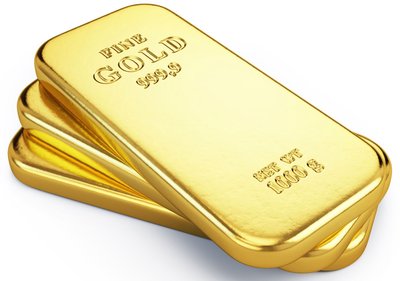
Gold bar: Element
Orange juice: Mixture (usually heterogeneous)
Wine: Mixture (homogeneous)
Saline solution: Mixture (homogeneous)
States of Matter
Physical States and Their Properties
Most substances can exist in three states of matter—solid, liquid, and gas—depending on temperature and pressure. Each state has distinct physical properties:
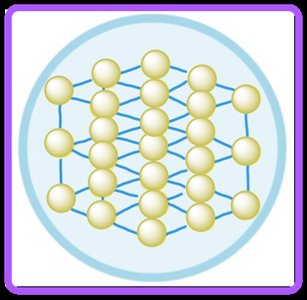
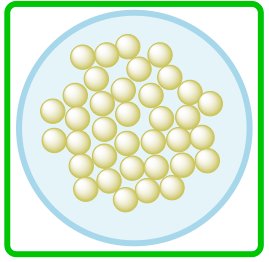
Solid: Maintains a fixed shape and volume. Particles are closely packed in a regular pattern (crystalline) or irregularly (amorphous). Solids are not easily compressible and have low viscosity.
Liquid: Assumes the shape of its container but not its volume. Particles are close together but can move past one another. Liquids are not easily compressible and have moderate viscosity.
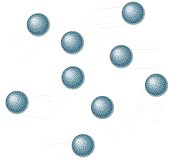
Gas: Assumes both the shape and volume of its container. Particles are far apart and move freely. Gases are highly compressible and have very low viscosity.
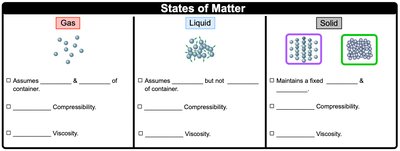
Additional info: Crystalline solids have a well-organized 3D structure, while amorphous solids lack a regular pattern.
Phase Changes
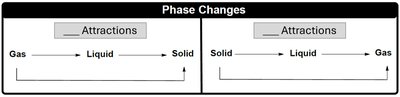
Phase changes involve transitions between solid, liquid, and gas states. These changes are driven by the addition or removal of energy, affecting the attractions between particles.
Melting, vaporization, and sublimation require energy input (endothermic).
Freezing, condensation, and deposition release energy (exothermic).
Physical and Chemical Changes
Physical Changes
Physical changes affect the form or state of a substance without altering its chemical composition. Examples include melting, freezing, dissolving, and tearing.
Example: Dissolving sugar in water is a physical change.
Chemical Changes
Chemical changes result in the formation of new substances with different chemical properties. These involve making or breaking chemical bonds.
Example: Cooking an egg or rusting iron are chemical changes.
Reversible and Irreversible Changes
Reversible changes: Can be undone, restoring the original substance (e.g., melting and freezing water).
Irreversible changes: Cannot be undone by simple physical means (e.g., burning wood, baking a cake).
Chemical and Physical Properties
Chemical Properties
Chemical properties describe a substance's ability to undergo chemical changes, forming new substances. These are observed during chemical reactions.
Examples: Reactivity with acids, flammability, toxicity, radioactivity.


Physical Properties
Physical properties can be measured or observed without changing the substance's chemical identity. These include color, density, melting point, boiling point, and hardness.
Examples: Gold is yellow, iron has a density of 7.87 g/cm3, mercury is a liquid at room temperature.

Periodic Table: Element Symbols and Classifications
Element Symbols
The periodic table organizes elements by increasing atomic number and recurring chemical properties. Each element is represented by a unique symbol, often derived from its English or Latin name.

Classifications of Elements
Elements are classified as metals, non-metals, or metalloids:
Metals: Good conductors of heat and electricity, malleable, ductile, and usually solid at room temperature.
Non-metals: Poor conductors, not malleable or ductile, can be solid, liquid, or gas.
Metalloids: Have properties intermediate between metals and non-metals; found along the 'staircase' on the periodic table.


Law of Conservation of Mass
Conservation in Chemical Reactions
The Law of Conservation of Mass states that in a chemical reaction, matter is neither created nor destroyed. The total mass of reactants equals the total mass of products.
Equation:
First Law of Thermodynamics
Energy Conservation
The First Law of Thermodynamics states that energy cannot be created or destroyed, only transferred between a system and its surroundings. Heat (q) is the transfer of thermal energy, and work (w) is the movement of matter against a force.
Equation:
Where is the change in internal energy, is heat, and is work.
