 Back
Periodic Properties of the Elements: Structure, Electron Configuration, and Trends
Study Guide - Smart Notes
 Tailored notes based on your materials, expanded with key definitions, examples, and context.
Periodic Properties of the Elements
Introduction to the Periodic Table
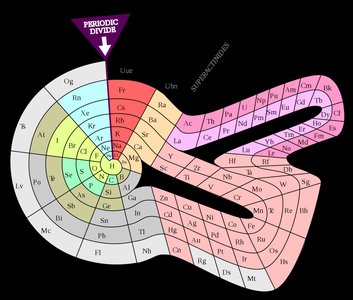
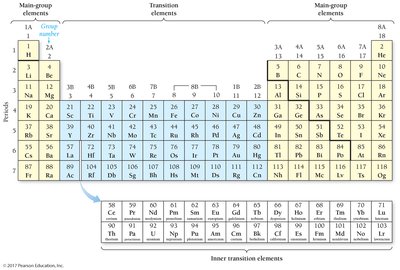
The periodic table is a fundamental tool in chemistry, organizing elements according to their atomic structure and recurring chemical properties. The arrangement reflects how electrons fill quantum-mechanical orbitals, which in turn determines the properties of atoms.
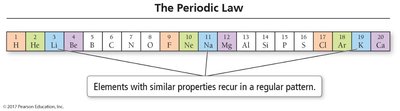
Periodic Law: When elements are arranged in order of increasing atomic number, sets of properties recur periodically.
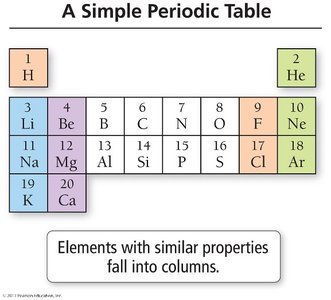
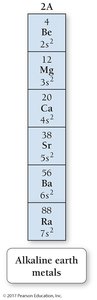
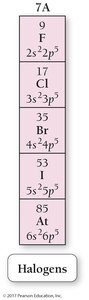
Groups (Columns): Elements in the same group have similar properties due to similar valence electron configurations.
Periods (Rows): Elements in the same period have the same principal quantum number for their outermost electrons.
Mendeleev’s Predictions and Modern Periodic Table
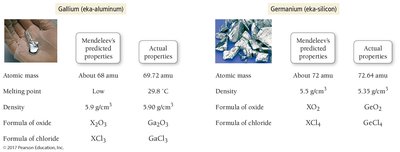
Dmitri Mendeleev organized the elements by increasing mass and predicted the existence and properties of undiscovered elements. Later, Moseley corrected the ordering to be by atomic number, which resolved inconsistencies.
Mendeleev’s Table: Predicted properties of elements such as gallium and germanium before their discovery.
Modern Table: Elements are arranged by atomic number, not mass.
Electron Configuration and Quantum Mechanical Model
Electron Configuration
Electron configuration describes the arrangement of electrons in an atom’s orbitals. The quantum mechanical model uses four quantum numbers to specify each electron’s state.
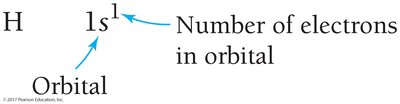
Notation: For example, hydrogen is written as 1s1.
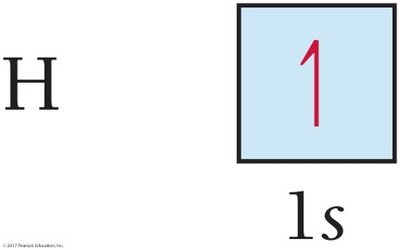
Orbital Diagram: Uses boxes and arrows to represent orbitals and electron spins.
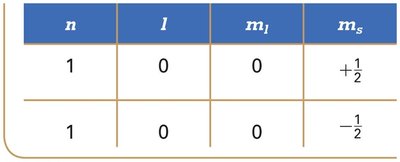
Quantum Numbers: n (principal), l (angular), ml (magnetic), ms (spin).
n | l | ml | ms |
|---|---|---|---|
1 | 0 | 0 | +1/2 |
1 | 0 | 0 | -1/2 |
Sublevel Energy Splitting, Shielding, and Penetration
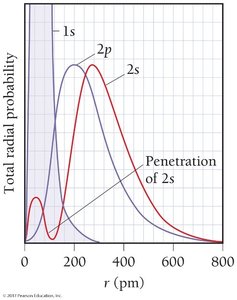
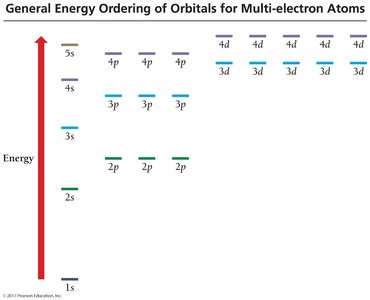
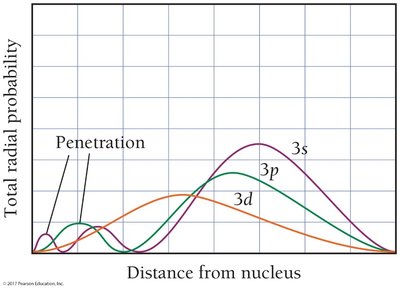
In multi-electron atoms, sublevels split in energy due to electron-electron repulsion, shielding, and penetration effects. Lower l values correspond to lower energy sublevels.
Coulomb’s Law: Like charges repel, opposite charges attract; energy depends on distance and charge magnitude.
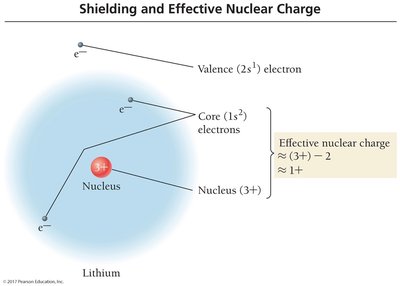
Shielding: Inner electrons reduce the effective nuclear charge felt by outer electrons.
Penetration: Electrons in orbitals that penetrate closer to the nucleus experience higher effective nuclear charge.
Aufbau Principle, Pauli Exclusion Principle, and Hund’s Rule
These principles govern how electrons fill orbitals:
Aufbau Principle: Electrons fill orbitals from lowest to highest energy.
Pauli Exclusion Principle: No two electrons in an atom can have the same four quantum numbers; maximum two electrons per orbital with opposite spins.
Hund’s Rule: When filling degenerate orbitals, place one electron in each before pairing.
Valence Electrons and Periodic Table Organization
Core and Valence Electrons
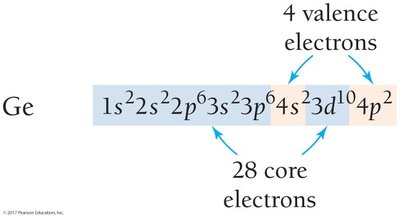
Core electrons are in lower-energy shells, while valence electrons are in the outermost shell and are responsible for chemical reactivity.
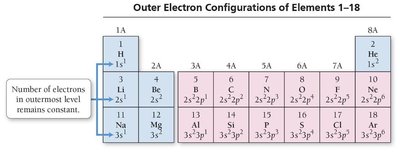
Main Group Elements: Valence electrons are those in the highest principal energy level.
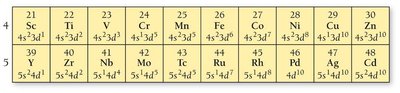
Transition Metals: Valence electrons include those in the highest principal energy level and the d orbitals.
Blocks of the Periodic Table
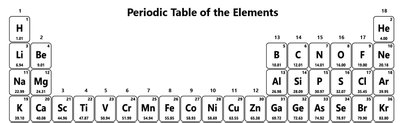
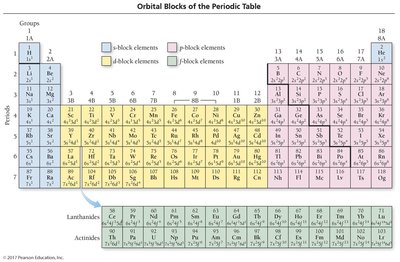
The periodic table is divided into s, p, d, and f blocks, corresponding to the type of orbital being filled.
Group Number: For main-group elements, equals the number of valence electrons.
Row Number: Equals the highest principal quantum number.
Elemental Properties and Periodic Trends
Elemental Properties and Reactivity
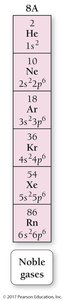
Elements in the same group have similar valence electron configurations, leading to similar chemical properties and reactivity. Noble gases are unreactive due to their full quantum levels.
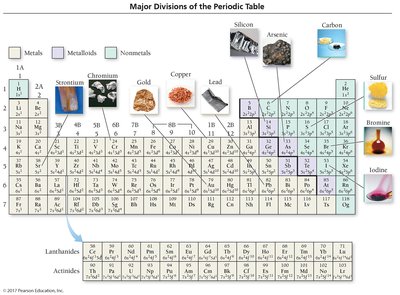
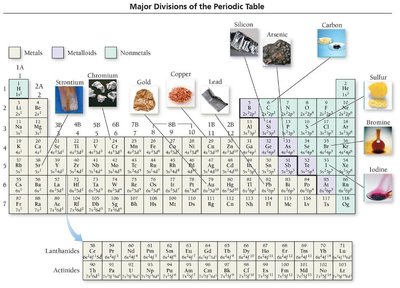
Metals: Conduct heat/electricity, malleable, ductile, shiny, tend to lose electrons.
Nonmetals: Poor conductors, tend to gain electrons.
Metalloids: Semiconductors, intermediate properties.
Transition Metals and Electron Configuration Anomalies
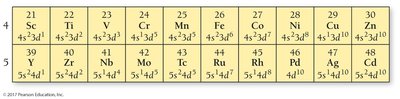
Transition and inner transition metals often have irregular electron configurations due to stability associated with half-filled or fully filled d sublevels. Examples include Cr, Mo, Cu, and Ag.
Ion Formation and Predictable Charges
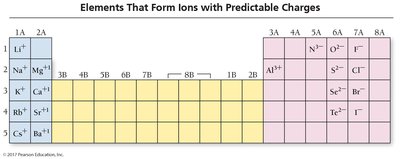
Atoms form ions to achieve a noble gas configuration. Metals lose electrons to form cations, while nonmetals gain electrons to form anions.
Main Group Cations: Remove electrons in reverse order of addition.
Transition Metal Cations: Remove electrons from the highest n-value orbital first.
Magnetic Properties: Paramagnetism and Diamagnetism
Magnetic properties depend on electron configuration:
Paramagnetic: Unpaired electrons; attracted to magnetic fields.
Diamagnetic: All electrons paired; slightly repelled by magnetic fields.


Periodic Trends: Atomic Size, Ionization Energy, Electron Affinity, and Metallic Character
Atomic Size and Effective Nuclear Charge
Atomic radius is defined differently for metals and nonmetals. Effective nuclear charge (Zeff) is the net positive charge experienced by valence electrons, accounting for shielding by core electrons.
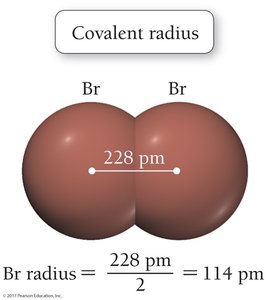
Covalent Radius: Half the distance between two bonded atoms.
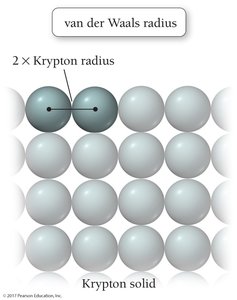
Van der Waals Radius: Half the distance between two non-bonded atoms in a crystal.
Trends in Atomic Radius
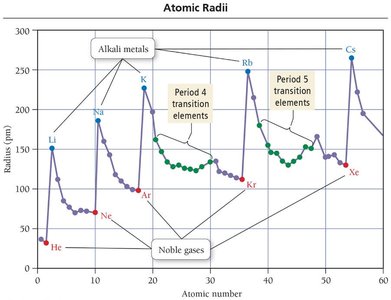
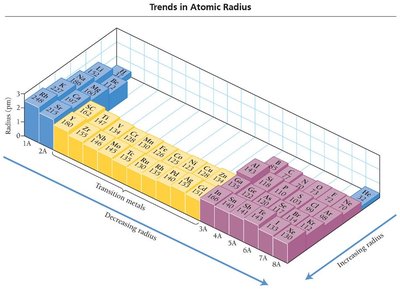
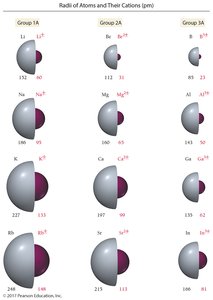
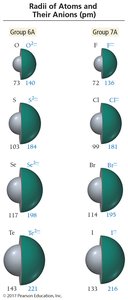
Atomic radius decreases across a period due to increased effective nuclear charge, and increases down a group as valence shells are farther from the nucleus.
Transition Metals: Atomic radii are relatively constant across the d block.
Cations: Smaller than their neutral atoms due to increased Zeff.
Anions: Larger than their neutral atoms due to increased electron repulsion.
Ionization Energy
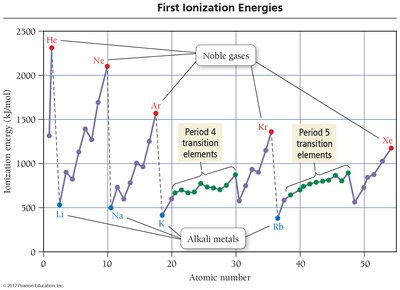
Ionization energy is the minimum energy required to remove an electron from an atom in the gas phase. It generally increases across a period and decreases down a group.
First Ionization Energy: Energy to remove the first electron.
Successive Ionization Energies: Each successive removal requires more energy.
Exceptions: Be to B and N to O due to sublevel penetration and electron pairing.
Electron Affinity
Electron affinity is the energy change when an atom gains an electron. It is usually exothermic, but can be endothermic for some groups. EA becomes more negative across a period and more positive down a group.
Metallic Character
Metallic character increases down a group and decreases across a period. Elements with low ionization energy exhibit high metallic character.
Density Trends
Density varies across the periodic table, generally increasing with atomic mass and decreasing with atomic radius.
Summary Table: Periodic Trends
Property | Trend | Reason |
|---|---|---|
Atomic Radius | Decreases across period, increases down group | Increasing Zeff across period, increasing principal quantum number down group |
Ionization Energy | Increases across period, decreases down group | Valence electrons held more tightly across period, farther from nucleus down group |
Electron Affinity | Becomes more negative across period, more positive down group | Greater tendency to gain electrons across period, less tendency down group |
Metallic Character | Decreases across period, increases down group | Lower ionization energy and easier electron loss down group |
