 Back
Periodicity and the Electronic Structure of Atoms: Waves, Light, and Quantum Theory
Study Guide - Smart Notes
 Tailored notes based on your materials, expanded with key definitions, examples, and context.
Periodicity and the Electronic Structure of Atoms
Historical Experiments Revealing Atomic Structure
The nature of atoms was revealed through a series of key experiments in the late 19th and early 20th centuries. These experiments established the existence of electrons, their mass, and the atomic nucleus.
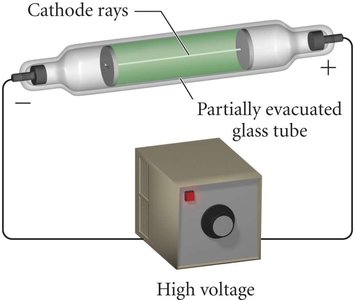
Thomson’s Cathode Ray Experiment: Demonstrated the existence of electrons as negatively charged particles within atoms.
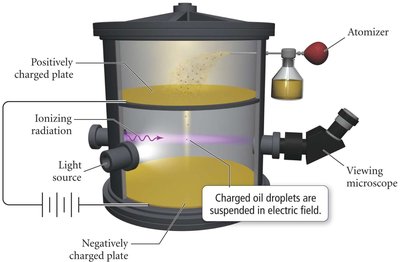
Millikan’s Oil Drop Experiment: Measured the charge and mass of the electron, confirming its fundamental properties.
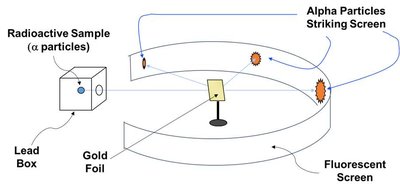
Rutherford’s Gold Foil Experiment: Revealed the existence of a dense, positively charged nucleus at the center of the atom.
Additional info: These experiments laid the foundation for modern atomic theory, showing that atoms are composed of subatomic particles.
Classical Mechanics and Its Limitations
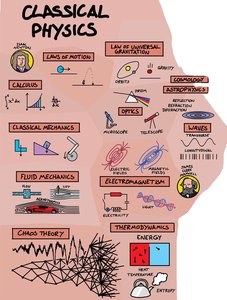
Classical mechanics, developed by Newton, describes the motion of visible objects but fails to explain the behavior of electrons and atoms. It assumes that energy can vary continuously, which is not true for atomic-scale phenomena.
Continuous Energy: In classical mechanics, objects like bowling balls can have any energy value.
Atomic Scale: Electrons do not behave like macroscopic objects; their energy is quantized.
Light and Electromagnetic Radiation
Properties of Light as a Wave
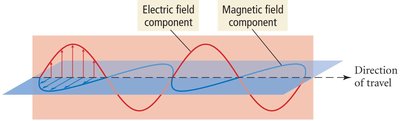
Light is a form of electromagnetic radiation, consisting of oscillating electric and magnetic fields that travel at a constant speed (c = 2.998 × 10⁸ m/s).
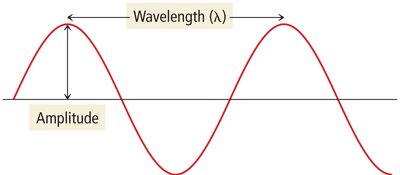
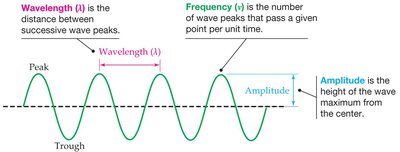
Amplitude (A): The height of the wave, related to brightness.
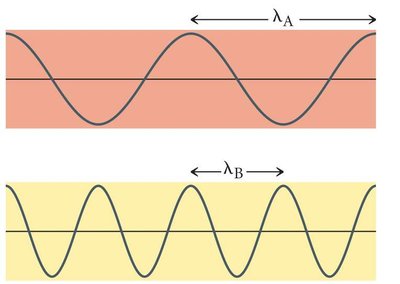
Wavelength (\lambda): The distance between successive wave peaks, determines color.
Frequency (\nu): The number of wave cycles per second, measured in Hertz (Hz).
Relationship: The speed of light is given by .
Energy of Light and Photons
The energy of light is directly proportional to its frequency and inversely proportional to its wavelength. Light can be described as both a wave and a particle (photon).
Planck’s Constant (h): 6.626 × 10⁻³⁴ J·s
Energy of a Photon:
Electromagnetic Spectrum: Includes radio waves, microwaves, infrared, visible light, ultraviolet, X-rays, and gamma rays.
Calculations: Wavelength, Frequency, and Energy
To solve for wavelength or frequency, use the speed of light equation. To find photon energy, use Planck’s equation.
Speed of Light Equation:
Photon Energy Equation:
Example: FM radio at 101.1 MHz:
Color and the Electromagnetic Spectrum
Visible Light and Color
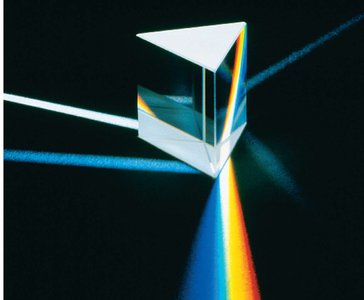
The color of light is determined by its wavelength. White light is a mixture of all visible wavelengths, and objects appear colored based on which wavelengths they reflect or absorb.
ROYGBIV: Red, Orange, Yellow, Green, Blue, Indigo, Violet
Absorption: Objects absorb certain wavelengths and reflect others, determining their observed color.

Wave Properties: Interference and Diffraction
Interference of Waves
Interference occurs when two waves overlap, resulting in constructive (in-phase) or destructive (out-of-phase) interference.
Constructive Interference: Waves add together, increasing amplitude.
Destructive Interference: Waves cancel each other, reducing amplitude.
Diffraction of Light
Diffraction is the bending of waves around obstacles or through slits, producing characteristic patterns. This property is unique to waves and not particles.
Double Slit Experiment: Demonstrates the wave nature of light through interference patterns.
Quantum Theory and Electron Behavior
Failures of Classical Physics: Blackbody Radiation and Photoelectric Effect
Classical physics could not explain certain phenomena, such as blackbody radiation and the photoelectric effect. Quantum theory was developed to address these issues.
Blackbody Radiation: The emission of electromagnetic radiation from heated objects.
Photoelectric Effect: Metals emit electrons when exposed to light of sufficient frequency.
Einstein’s Explanation: Light consists of photons, each with energy .
Quantization of Energy
Energy is quantized, meaning it can only take specific values. Electrons absorb or emit energy in discrete packets (quanta).
Binding Energy (\phi): Minimum energy required to dislodge an electron.
Kinetic Energy of Ejected Electron:
Atomic Spectra and Bohr Model
Atomic Emission and Absorption Spectra
Atoms emit or absorb light at specific wavelengths, producing unique spectra. This is evidence for quantized energy levels in atoms.
Emission Spectrum: Light emitted by excited atoms, consisting of discrete lines.
Absorption Spectrum: Dark lines where light is absorbed by atoms.
Bohr Model and Electron Transitions
Bohr’s model describes electrons as moving in quantized orbits around the nucleus. Transitions between orbits correspond to absorption or emission of photons.
Principal Quantum Number (n): Characterizes the energy of an electron in a given orbital.
Energy Difference:
Rydberg Formula:
Wave-Particle Duality and Quantum Mechanics
de Broglie Hypothesis
All matter exhibits wave-like properties, with wavelength inversely proportional to momentum.
de Broglie Equation:
Quantum Mechanics: Applies to all objects, but wave character is significant only for very small particles like electrons.
Heisenberg Uncertainty Principle
The position and velocity of an electron cannot both be known precisely at the same time. This leads to indeterminacy and probabilistic descriptions of electron behavior.
Uncertainty Principle:
Trajectory vs. Probability: Electron paths are described by probabilities, not definite trajectories.
Summary Table: Light Properties
Color | Wavelength (\lambda) | Speed (c) | Frequency (\nu = c/\lambda) |
|---|---|---|---|
Red | 700 nm | 3.0 × 10⁸ m/s | 4.3 × 10¹⁴ s-1 |
Violet | 400 nm | 3.0 × 10⁸ m/s | 7.5 × 10¹⁴ s-1 |
Additional info: 1 nm = 1 × 10⁻⁹ m
