 Back
BackPlant Systems: Structure, Function, and Classification of Flowering Plants (Angiosperms)
Study Guide - Smart Notes
 Tailored notes based on your materials, expanded with key definitions, examples, and context.
Plant Systems
Introduction to Flowering Plants (Angiosperms)
Flowering plants, also known as angiosperms, are the most diverse group of plants on Earth. They are characterized by the production of flowers and seeds enclosed within fruits. Angiosperms are divided into two major classes: monocotyledons (monocots) and dicotyledons (dicots). Understanding their structure and function is essential for appreciating their ecological, economic, and cultural significance.
Monocotyledons: Have one seed leaf (cotyledon), parallel leaf veins, and flower parts in multiples of three.
Dicotyledons: Have two seed leaves (cotyledons), net-like leaf veins, and flower parts in multiples of four or five.
Angiosperms are vital for food, medicine, and ecosystem stability.
Key Features of Flowering Plants
Flowers for sexual reproduction
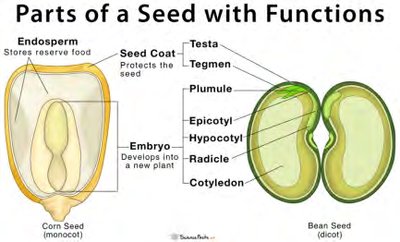
Endosperm for embryo nourishment
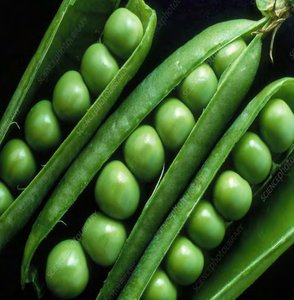
Seeds enclosed within fruits
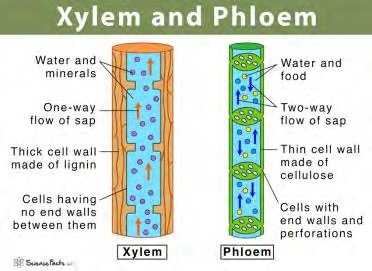
Vascular tissues: xylem and phloem
Classification: Monocotyledons vs. Dicotyledons
Distinguishing Features
Feature | Monocots | Dicots |
|---|---|---|
Cotyledons | One | Two |
Leaf Venation | Parallel | Net-like (reticulate) |
Flower Parts | Multiples of three | Multiples of four or five |
Vascular Bundles (Stem) | Scattered | Arranged in a ring |
Root System | Fibrous | Taproot |
Pollen Structure | Single furrow/pore | Three furrows/pores |
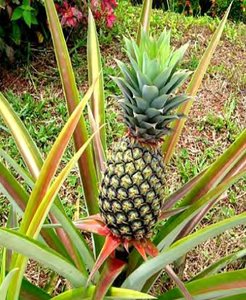
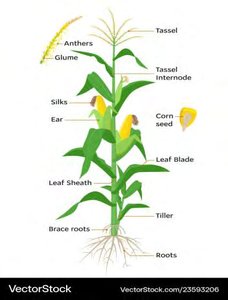
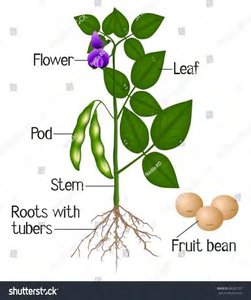
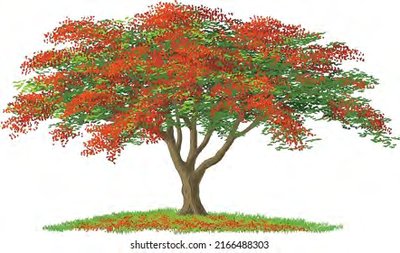
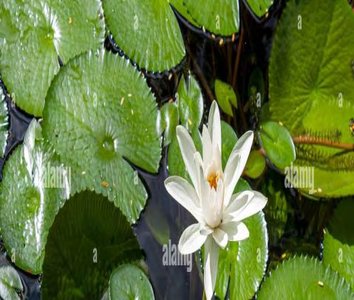
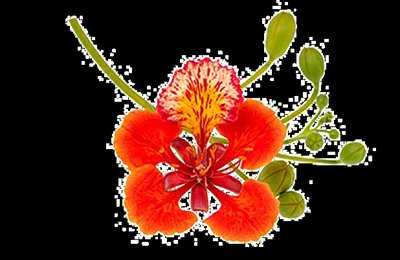
Examples: Monocots: maize, grass, banana. Dicots: soya bean, cocoa, flamboyant tree.
Major Angiosperms and Their Importance
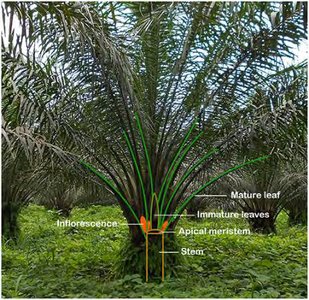
Oil Palm: Economic value (palm oil), biodiversity, soil health.
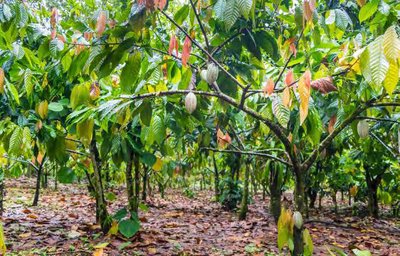
Cocoa: Economic importance, biodiversity, cultural significance.
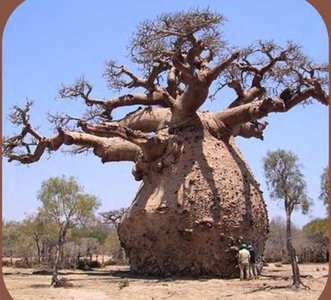
Baobab: Nutritional value, water storage, cultural symbol.
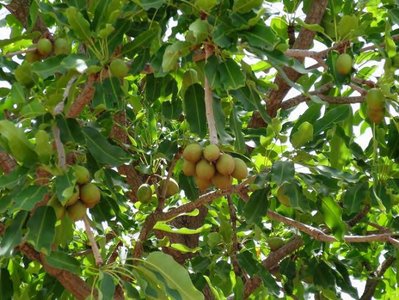
Shea Tree: Shea butter production, biodiversity, soil conservation.
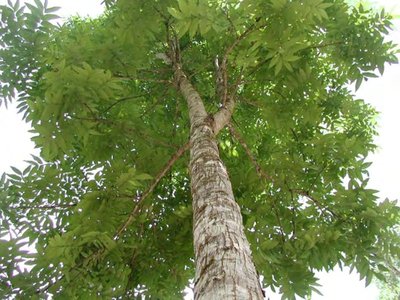
African Mahogany: Timber, biodiversity, economic value.
Features That Distinguish Angiosperms from Other Plants
Feature | Description |
|---|---|
Possess flowers | Reproductive organs unique to angiosperms. |
Possess endosperm | Provides food for embryo and seedling. |
Enclosed seeds | Seeds are protected within fruits. |
Xylem and phloem | Specialized tissues for transport. |
Double fertilization (unique to angiosperms)
Adaptability to diverse habitats
Complex root and shoot systems
Heterosporous (produce microspores and megaspores)
External and Internal Features of Monocots and Dicots
Monocotyledonous Plants
Single cotyledon
Parallel leaf venation
Flower parts in multiples of three
Fibrous root system
Scattered vascular bundles in stem
Pollen grains with single aperture
Dicotyledonous Plants
Two cotyledons
Net-like leaf venation
Flower parts in multiples of four or five
Taproot system
Vascular bundles arranged in a ring
Pollen grains with three apertures
Major Differences Table
Monocots | Dicots |
|---|---|
Single cotyledon | Two cotyledons |
Flower parts in multiples of three | Flower parts in multiples of four or five |
Parallel leaf veins | Reticulated leaf veins |
Scattered vascular bundles | Vascular bundles in a ring |
Adventitious roots | Roots develop from radicle |
Relating Structure to Function
Structure | Monocotyledons | Dicotyledons |
|---|---|---|
Seeds | One cotyledon for rapid nutrient absorption | Two cotyledons store nutrients |
Leaves | Long, narrow, parallel veins for water transport | Broad, net-veined for efficient photosynthesis |
Stems | Scattered vascular bundles for flexibility | Ringed bundles for secondary growth |
Roots | Fibrous system for surface absorption | Taproot for deep anchorage |
Flowers | Parts in threes for specific pollinators | Parts in fours/fives for diverse pollinators |
Internal Structures of Roots, Stems, and Leaves
Monocotyledonous Root
Epidermis: Outermost layer with root hairs for absorption
Cortex: Food storage and conduction
Endodermis: Regulates movement into vascular cylinder
Pericycle: Gives rise to lateral roots
Vascular system: Alternating xylem and phloem strands
Monocotyledonous Stem
Epidermis: Protective outer layer
Hypodermis: Mechanical support
Ground tissue: Storage and support
Vascular bundles: Scattered, each with xylem and phloem
Monocotyledonous Leaf
Epidermis: Upper and lower, with cuticle and stomata
Bulliform cells: Regulate leaf curling
Mesophyll: Photosynthetic tissue, not differentiated into palisade and spongy layers
Vascular bundles: Parallel arrangement, xylem above, phloem below
Sclerenchyma: Mechanical support
Dicotyledonous Root
Epiblema/Piliferous layer: Absorption of water
Cortex: Storage and support
Endodermis: Regulates entry to vascular tissue
Pericycle: Lateral root formation
Vascular bundles: Central core arrangement
Pith: Central storage tissue
Dicotyledonous Stem
Epidermis: Protection
Cortex: Support and storage
Vascular bundles: Ring arrangement, xylem inside, phloem outside
Pith: Central storage and support
Dicotyledonous Leaf
Epidermis: Upper and lower, with cuticle and stomata
Palisade mesophyll: Densely packed for photosynthesis
Spongy mesophyll: Loosely packed for gas exchange
Vascular bundles: Xylem above, phloem below, with cambium
Factors Affecting Growth and Development in Flowering Plants
Light: Drives photosynthesis, affects flowering and growth
Water: Essential for photosynthesis, turgor, and nutrient transport
Nutrients: Macronutrients (N, P, K) and micronutrients (Fe, Zn, Cu) are vital for growth
Temperature: Influences metabolic rate, photosynthesis, and hormone regulation
Soil texture and quality: Affects nutrient and water availability
Good Gardening and Farming Practices
Crop rotation
Soil conservation
Organic amendments
Efficient watering
Integrated pest management
Companion planting
Record keeping
Glossary of Key Terms
Cotyledon: First seed leaf in the embryo
Endosperm: Food reserve tissue in seeds
Vascular bundle: Group of xylem and phloem tissues
Stomata: Pores for gas exchange
Mesophyll: Photosynthetic tissue in leaves
Bulliform cells: Specialized cells for leaf movement
Casparian strip: Barrier in root endodermis
Summary Table: Monocots vs. Dicots
Feature | Monocots | Dicots |
|---|---|---|
Seed leaves (cotyledons) | One | Two |
Leaf venation | Parallel | Net-like |
Flower parts | Multiples of three | Multiples of four or five |
Root system | Fibrous | Taproot |
Vascular bundles | Scattered | Ring |
References and Further Reading
See textbook references and recommended online resources for more details on angiosperm diversity, structure, and function.
