 Back
Study Guidance for Chemistry 1305 Exam (Chapters 4–7)
Study Guide - Smart Notes
 Tailored notes based on your materials, expanded with key definitions, examples, and context.
Q1. What is the subatomic particle having a negligible mass and a negative charge?
Background
Topic: Atomic Structure
This question tests your understanding of the three main subatomic particles found in atoms: protons, neutrons, and electrons, including their charges and relative masses.
Key Terms:
Subatomic particle: A particle smaller than an atom (proton, neutron, electron).
Negligible mass: Mass so small it is often considered insignificant compared to protons and neutrons.
Negative charge: Indicates the particle carries a charge of -1.
Step-by-Step Guidance
Recall the three main subatomic particles: protons (positive charge), neutrons (neutral), electrons (negative charge).
Compare their masses: Protons and neutrons have similar, significant masses; electrons have much less mass.
Identify which particle has a negative charge and negligible mass.
Try solving on your own before revealing the answer!
Final Answer: Electron
The electron is the subatomic particle with a negative charge and negligible mass compared to protons and neutrons.
Q2. What is the general term that refers to either visible or invisible radiant energy?
Background
Topic: Electromagnetic Radiation
This question is about the terminology used to describe energy that travels as waves, including both visible light and other forms of electromagnetic radiation.
Key Terms:
Radiant energy: Energy transmitted in the form of electromagnetic waves.
Visible spectrum: The portion of electromagnetic radiation visible to the human eye.
Invisible spectrum: Includes ultraviolet, infrared, X-rays, etc.
Step-by-Step Guidance
Consider the types of energy that can be seen (visible light) and those that cannot (ultraviolet, infrared, etc.).
Think about the umbrella term that covers all these forms of energy.
Review the answer choices for the most general term.
Try solving on your own before revealing the answer!
Final Answer: Light
"Light" is the general term for radiant energy, including both visible and invisible forms.
Q3. How many neutrons are in the nucleus of an atom of ?
Background
Topic: Isotopes and Atomic Structure
This question tests your ability to determine the number of neutrons in an atom using its atomic number and mass number.
Key formula:
Mass number (A): Total number of protons and neutrons.
Atomic number (Z): Number of protons.
Step-by-Step Guidance
Identify the atomic number () and mass number () for tin (): , .
Recall the formula: .
Set up the calculation using the values for tin.
Try solving on your own before revealing the answer!
Final Answer: 68 neutrons
Subtracting the atomic number from the mass number gives the number of neutrons in the nucleus.
Q4. Given that the only naturally occurring isotope of sodium is , what is its isotopic mass?
Background
Topic: Isotopes and Atomic Mass
This question is about understanding isotopic mass and how it relates to the atomic mass of an element.
Key Terms:
Isotope: Atoms of the same element with different numbers of neutrons.
Isotopic mass: The mass of a specific isotope, usually in atomic mass units (amu).
Step-by-Step Guidance
Recall that the mass number of an isotope is the sum of protons and neutrons.
For sodium, the only naturally occurring isotope is .
Check the answer choices for the value closest to the mass number.
Try solving on your own before revealing the answer!
Final Answer: 22.99 amu
The isotopic mass of is 22.99 amu, which matches the atomic mass listed on the periodic table.
Q5. What is the term for the minimum amount of energy to remove an electron from a neutral atom in the gaseous state?
Background
Topic: Atomic Properties
This question tests your knowledge of the energy required to remove an electron from an atom, a fundamental concept in chemistry.
Key Terms:
Ionization energy: The energy needed to remove an electron from a neutral atom in the gaseous state.
Step-by-Step Guidance
Recall the definition of ionization energy.
Compare the answer choices to see which matches this definition.
Try solving on your own before revealing the answer!
Final Answer: Ionization energy
Ionization energy is the minimum energy required to remove an electron from a neutral atom in the gaseous state.
Q6. Which of the following is a representative element?
Background
Topic: Periodic Table Classification
This question is about identifying representative elements, which are found in Groups 1A–7A of the periodic table.
Key Terms:
Representative elements: Elements in Groups 1A–7A (main group elements).
Step-by-Step Guidance
Review the periodic table to identify which elements are in Groups 1A–7A.
Check if the answer choices are all representative elements.
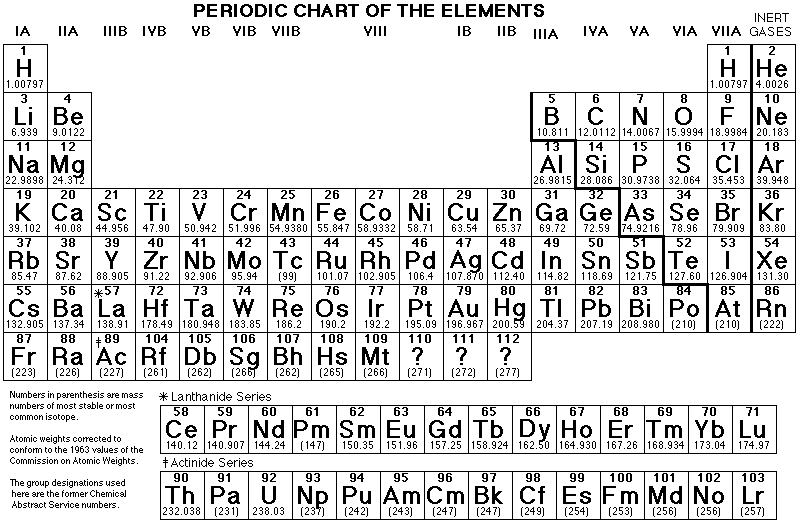
Try solving on your own before revealing the answer!
Final Answer: All of the above
B, Be, and Br are all representative elements (main group elements).
Q7. Which fourth period transition element has the highest atomic number?
Background
Topic: Periodic Table and Transition Elements
This question tests your ability to identify transition elements in the fourth period and compare their atomic numbers.
Key Terms:
Transition elements: Elements in Groups 3–12.
Fourth period: Row 4 of the periodic table.
Atomic number: Number of protons in the nucleus.
Step-by-Step Guidance
Locate the fourth period on the periodic table.
Identify which elements in the answer choices are transition elements.
Compare their atomic numbers to find the highest.
Try solving on your own before revealing the answer!
Final Answer: Cd (Cadmium)
Cd is the fourth period transition element with the highest atomic number among the choices.
Q8. Which of the following elements are fourth period semimetals?
Background
Topic: Periodic Table and Element Classification
This question is about identifying semimetals (metalloids) in the fourth period of the periodic table.
Key Terms:
Semimetals (metalloids): Elements with properties intermediate between metals and nonmetals.
Fourth period: Row 4 of the periodic table.
Step-by-Step Guidance
Locate the fourth period on the periodic table.
Identify which elements in the answer choices are classified as semimetals.
Check which pairs are both in the fourth period and are semimetals.
Try solving on your own before revealing the answer!
Final Answer: Ge and As
Germanium (Ge) and Arsenic (As) are fourth period semimetals.
Q9. Which of the following is an alkali metal?
Background
Topic: Periodic Table Groups
This question tests your knowledge of alkali metals, which are found in Group 1A of the periodic table.
Key Terms:
Alkali metals: Elements in Group 1A (Li, Na, K, Rb, Cs, Fr).
Step-by-Step Guidance
Review the answer choices and check which, if any, are in Group 1A.
Recall the properties and typical elements of alkali metals.
Try solving on your own before revealing the answer!
Final Answer: None of the above
None of the answer choices (Al, Fe, Ca) are alkali metals.
Q10. Predict the density for rhodium, Rh, given the density of cobalt, Co, (8.89 g/cm3) and iridium, Ir, (22.65 g/cm3).
Background
Topic: Periodic Trends and Properties
This question is about predicting the physical property (density) of an element based on the properties of related elements.
Key Terms:
Density: Mass per unit volume, usually in g/cm3.
Periodic trends: Patterns in properties across periods and groups.
Step-by-Step Guidance
Locate Rh, Co, and Ir on the periodic table to see their relative positions.
Consider the trend in density among these elements.
Estimate the density of Rh based on the values for Co and Ir.
Try solving on your own before revealing the answer!
Final Answer: 12.76 g/cm3
Rhodium's density is predicted to be between cobalt and iridium, closer to the average of their densities.
Q11. The compound Au2Se3 is classified as which of the following?
Background
Topic: Chemical Compounds Classification
This question tests your ability to classify compounds as binary ionic, ternary ionic, binary molecular, or binary acid.
Key Terms:
Binary ionic: Compound made of two elements, one metal and one nonmetal.
Ternary ionic: Compound made of three elements.
Binary molecular: Compound made of two nonmetals.
Binary acid: Acid with two elements.
Step-by-Step Guidance
Identify the elements in Au2Se3: gold (Au, metal) and selenium (Se, nonmetal).
Determine if the compound is binary (two elements) or ternary (three elements).
Classify the compound based on its composition.
Try solving on your own before revealing the answer!
Final Answer: Binary ionic
Au2Se3 is a binary ionic compound (metal + nonmetal).
Q12. What is the Stock system name for Cu+?
Background
Topic: Nomenclature of Ions
This question is about naming ions using the Stock system, which indicates the charge of the ion with Roman numerals.
Key Terms:
Stock system: Naming convention for ions, using Roman numerals to indicate charge.
Cu+: Copper ion with a +1 charge.
Step-by-Step Guidance
Recall the Stock system naming for transition metal ions.
Identify the charge of the copper ion (+1).
Choose the correct name with the appropriate Roman numeral.
Try solving on your own before revealing the answer!
Final Answer: Copper(I) ion
Cu+ is named "copper(I) ion" in the Stock system.
Q13. What is the systematic name for N3-?
Background
Topic: Nomenclature of Ions
This question tests your knowledge of naming anions, specifically the nitrogen anion.
Key Terms:
Anion: Negatively charged ion.
Systematic name: Standard naming convention for ions.
Step-by-Step Guidance
Recall the naming convention for anions: element root + "-ide".
Apply this to nitrogen with a 3- charge.
Try solving on your own before revealing the answer!
Final Answer: Nitride ion
N3- is called the nitride ion.
Q14. What is the chemical formula for the manganese(II) ion?
Background
Topic: Nomenclature and Chemical Formulas
This question is about writing the correct chemical formula for a transition metal ion with a specified charge.
Key Terms:
Manganese(II) ion: Manganese with a +2 charge.
Chemical formula: Symbol and charge notation for ions.
Step-by-Step Guidance
Recall the symbol for manganese: Mn.
Apply the charge (+2) to the symbol.
Try solving on your own before revealing the answer!
Final Answer: Mn2+
The chemical formula for the manganese(II) ion is Mn2+.
Q15. What is the predicted ionic charge of an element in Group IIA/2?
Background
Topic: Periodic Table and Ionic Charges
This question tests your knowledge of the typical ionic charges for elements in Group 2 (IIA) of the periodic table.
Key Terms:
Group IIA/2: Alkaline earth metals (Be, Mg, Ca, Sr, Ba, Ra).
Ionic charge: The charge an atom takes when it forms an ion.
Step-by-Step Guidance
Recall that Group 2 elements lose two electrons to achieve a stable configuration.
Determine the resulting charge after losing two electrons.
Try solving on your own before revealing the answer!
Final Answer: 2+
Group IIA/2 elements form ions with a 2+ charge.
Q16. What is the systematic name for CrO42-?
Background
Topic: Polyatomic Ions Nomenclature
This question is about naming polyatomic ions, specifically the chromate ion.
Key Terms:
Polyatomic ion: An ion composed of more than one atom.
Chromate ion: CrO42-.
Step-by-Step Guidance
Recall the names of common polyatomic ions.
Identify the correct name for CrO42-.
Try solving on your own before revealing the answer!
Final Answer: Chromate ion
CrO42- is called the chromate ion.
Q17. What is the name of a reaction in which two cations in different compounds exchange anions?
Background
Topic: Types of Chemical Reactions
This question tests your knowledge of reaction types, specifically double replacement reactions.
Key Terms:
Double replacement reaction: Two compounds exchange ions to form new compounds.
Step-by-Step Guidance
Recall the definition of double replacement reactions.
Compare the answer choices to the definition.
Try solving on your own before revealing the answer!
Final Answer: Double replacement
This reaction is called a double replacement reaction.
Q18. Which of the following is evidence for a chemical reaction?
Background
Topic: Chemical Reactions and Observations
This question is about recognizing signs that a chemical reaction has occurred.
Key Terms:
Evidence for chemical reaction: Gas formation, precipitate formation, color change, heat/light emission.
Step-by-Step Guidance
Recall the common signs of a chemical reaction.
Check which answer choices match these signs.
Try solving on your own before revealing the answer!
Final Answer: All of the above
Gas formation, precipitate formation, and flame observation are all evidence of a chemical reaction.
Q19. Which of the statements below best describes the following reaction?
Background
Topic: Chemical Equations and Reaction Types
This question tests your ability to interpret a chemical equation and describe the reaction.
Key Terms:
Decomposition reaction: A compound breaks down into simpler substances.
Reactants and products: Substances before and after the reaction.
Step-by-Step Guidance
Analyze the equation: Na2CO3(s) → Na2O(s) + CO2(g).
Identify the reactant and products.
Determine the type of reaction and describe it in words.
Try solving on your own before revealing the answer!
Final Answer: Solid sodium carbonate decomposes to give solid sodium oxide and carbon dioxide gas.
This is a decomposition reaction where sodium carbonate breaks down into sodium oxide and carbon dioxide.
Q20. What is the coefficient of oxygen gas after balancing the following equation?
Background
Topic: Balancing Chemical Equations
This question tests your ability to balance a chemical equation and identify the correct coefficient for oxygen gas.
Key Terms:
Chemical equation: Representation of a chemical reaction.
Coefficient: Number in front of a chemical formula indicating the number of units.
Step-by-Step Guidance
Write the unbalanced equation: P(s) + O2(g) → P2O3(s).
Balance phosphorus and oxygen atoms on both sides.
Determine the correct coefficient for O2(g).
Try solving on your own before revealing the answer!
Final Answer: 3
The balanced equation requires a coefficient of 3 for O2(g).
Q21. What is the predicted product from the following reaction? Balance this equation. What kind of reaction is it?
Background
Topic: Types of Chemical Reactions and Balancing Equations
This question tests your ability to predict products, balance equations, and classify reaction types.
Key Terms:
Combination reaction: Two elements combine to form a compound.
Balancing equations: Ensuring equal numbers of atoms on both sides.
Step-by-Step Guidance
Write the reactants: Ca(s) + O2(g).
Predict the product: Calcium reacts with oxygen to form calcium oxide.
Write the unbalanced equation: Ca(s) + O2(g) → CaO(s).
Balance the equation by adjusting coefficients.
Try solving on your own before revealing the answer!
Final Answer: CaO, Combination Reaction
The product is calcium oxide (CaO), and this is a combination reaction.
Q22. Which of the following metals does not react with aqueous Ni(NO3)2? Why?
Background
Topic: Activity Series and Reactivity
This question tests your understanding of the activity series and predicting metal reactivity.
Key Terms:
Activity series: A list of metals ranked by their reactivity.
Reactivity: Ability of a metal to displace another from solution.
Step-by-Step Guidance
Review the partial activity series: Mg > Al > Ni > (H) > Cu.
Determine which metals are more or less reactive than Ni.
Identify which metal cannot displace Ni from solution.
Try solving on your own before revealing the answer!
Final Answer: Cu, because it is not as active as Ni
Copper does not react with Ni(NO3)2 because it is less reactive than nickel.
Q23. What is the name of each compound?
Background
Topic: Nomenclature of Ionic Compounds
This question tests your ability to name common ionic compounds.
Key Terms:
Ionic compound: Compound formed from a metal and a nonmetal.
Naming convention: Metal name + nonmetal root + "-ide" or polyatomic ion name.
Step-by-Step Guidance
For each formula, identify the cation and anion.
Apply the naming rules for ionic compounds.
Write the systematic name for each compound.
Try solving on your own before revealing the answer!
Final Answer:
a. Calcium Hydroxide
b. Potassium Chloride
c. Aluminum Bromide
d. Sodium Fluoride
Q24. What are the chemical formulas for oxide ion and iodide ion?
Background
Topic: Chemical Formulas for Ions
This question tests your ability to write the correct formulas for common ions.
Key Terms:
Oxide ion: Oxygen with a 2- charge.
Iodide ion: Iodine with a 1- charge.
Step-by-Step Guidance
Recall the charge and symbol for each ion.
Write the chemical formula using the correct charge notation.
Try solving on your own before revealing the answer!
Final Answer:
Oxide ion: O2-
Iodide ion: I-
Q25. What is the core notation for the electron configuration of an aluminum atom?
Background
Topic: Electron Configuration
This question tests your ability to write the electron configuration using core notation.
Key Terms:
Core notation: Uses noble gas abbreviation to represent inner electrons.
Aluminum: Atomic number 13.
Step-by-Step Guidance
Identify the noble gas preceding aluminum (Neon).
Write the remaining electron configuration for aluminum.
Try solving on your own before revealing the answer!
Final Answer: [Ne] 3s2 3p1
Aluminum's core notation is [Ne] 3s2 3p1.
Bonus Question: What is the chemical formula of each of the following compounds?
Background
Topic: Chemical Formulas for Polyatomic and Ionic Compounds
This question tests your ability to write chemical formulas for common ions and compounds.
Key Terms:
Sulfate ion: Polyatomic ion with formula SO42-.
Barium chromate: Compound formed from Ba2+ and CrO42-.
Aluminum chloride: Compound formed from Al3+ and Cl-.
Magnesium oxide: Compound formed from Mg2+ and O2-.
Step-by-Step Guidance
Write the formula for each ion or compound based on their charges.
Balance the charges to write the correct formula for each compound.
Try solving on your own before revealing the answer!
Final Answer:
a. Sulfate ion: SO42-
b. Barium chromate: BaCrO4
c. Aluminum chloride: AlCl3
d. Magnesium oxide: MgO
