 Back
BackStudy Guide: Gases and Their Properties (Chapter 11, Introductory Chemistry)
Study Guide - Smart Notes
 Tailored notes based on your materials, expanded with key definitions, examples, and context.
Gases: Properties and Behavior
Introduction to Gases
Gases are one of the fundamental states of matter, characterized by their ability to expand and fill any container. Their behavior is governed by several physical laws and theoretical models, which help explain their properties and interactions.
Kinetic Molecular Theory
Basic Principles
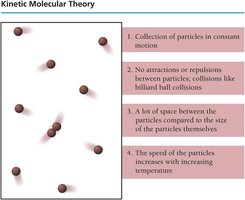
The Kinetic Molecular Theory provides a model for understanding the behavior of gases. It assumes that gas particles are in constant, straight-line motion, do not attract or repel each other, and have significant space between them. The average kinetic energy of gas particles is proportional to the temperature in kelvin.
Constant Motion: Gas particles move continuously in straight lines.
No Interactions: Particles collide elastically, like billiard balls.
Large Empty Space: Most of the volume is empty space compared to the size of the particles.
Kinetic Energy and Temperature: Higher temperature means faster-moving particles.
Properties Explained by Kinetic Molecular Theory
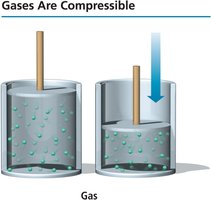
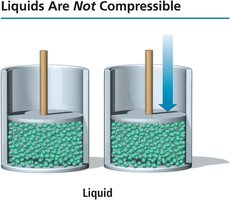
Compressibility: Gases can be compressed because of the large empty space between particles.
Shape and Volume: Gases assume the shape and volume of their container.
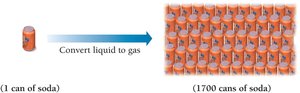
Low Density: Gases have much lower densities than liquids or solids.

Pressure: The Result of Molecular Collisions
Definition and Origin
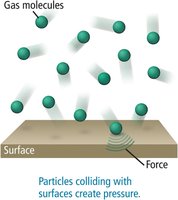
Pressure is the force per unit area exerted by gas molecules as they collide with surfaces. It is a fundamental property of gases and is responsible for phenomena such as drinking through a straw, inflating tires, and breathing.
Formula:
Atmospheric Pressure: At sea level, atmospheric pressure averages 101,325 Pa (14.7 lb/in2).
Pressure Differences and Effects
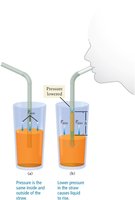
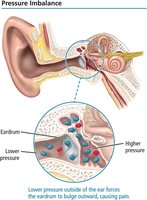
Pressure differences drive many everyday processes, such as drinking from a straw and changes in ear pressure during altitude changes.
When pressure inside a straw is lowered, atmospheric pressure pushes liquid up the straw.
Pressure imbalances can cause discomfort, such as ear pain during altitude changes.
Units of Pressure
Common Units
Pressure can be measured in several units:
Atmosphere (atm): Average pressure at sea level.
Pascals (Pa): SI unit, 1 Pa = 1 N/m2.
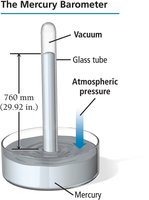
Millimeters of Mercury (mm Hg): Based on the height of mercury in a barometer; 1 atm = 760 mm Hg.
Torr: 1 mm Hg = 1 torr.
Pounds per square inch (psi): Common in engineering.

Gas Laws
Boyle’s Law: Pressure and Volume
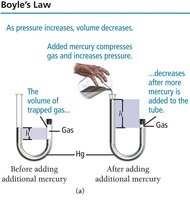
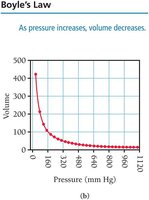
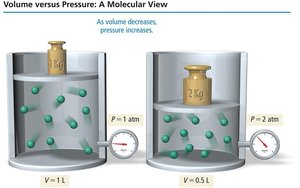
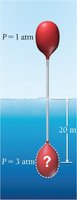
Boyle’s Law states that the volume of a gas is inversely proportional to its pressure at constant temperature and amount of gas.
Mathematical Expression:
As pressure increases, volume decreases, and vice versa.

Charles’s Law: Volume and Temperature
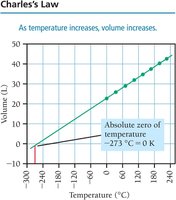
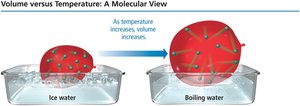
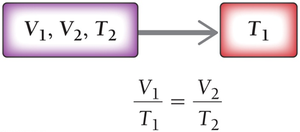
Charles’s Law states that the volume of a gas is directly proportional to its temperature (in kelvin) at constant pressure and amount of gas.
Mathematical Expression:
As temperature increases, volume increases.
Absolute zero (0 K, -273°C) is the lowest possible temperature.

Combined Gas Law
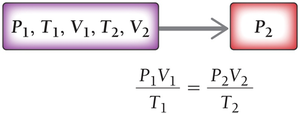
The Combined Gas Law relates pressure, volume, and temperature when the amount of gas is constant.
Mathematical Expression:
Avogadro’s Law: Volume and Moles
Avogadro’s Law states that the volume of a gas is directly proportional to the number of moles at constant temperature and pressure.
Mathematical Expression:
Adding more gas increases the volume.
The Ideal Gas Law
The Ideal Gas Law combines Boyle’s, Charles’s, and Avogadro’s laws into a single equation:
Mathematical Expression:
R: Ideal gas constant,
Pressure (P) in atm, Volume (V) in L, Amount (n) in mol, Temperature (T) in K.
Partial Pressures and Gas Mixtures
Dalton’s Law of Partial Pressures
In a mixture of gases, each gas exerts its own pressure independently. The total pressure is the sum of the partial pressures of each component.
Mathematical Expression:
Partial pressure = Fractional composition × Total pressure
Applications and Physiology
Gas Laws in Everyday Life
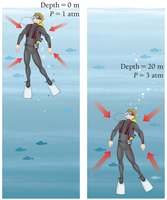
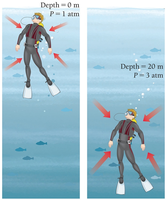
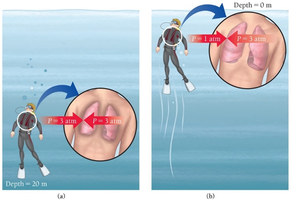
Scuba Diving: Boyle’s law explains why divers must ascend slowly to avoid lung damage.
Airplane Cabin Pressurization: Cabin pressure is maintained to prevent hypoxia.
Extra-Long Straws and Snorkels: Atmospheric pressure limits the maximum height liquid can be pushed up a straw or snorkel.
Environmental Chemistry: Air Pollution
Major Gaseous Pollutants
Sulfur Dioxide: Emitted from electricity generation and metal refining; causes respiratory irritation and acid rain.
Carbon Monoxide: Produced by incomplete combustion; displaces oxygen in blood.
Ozone: Upper atmospheric ozone protects from UV; ground-level ozone is a pollutant.
Nitrogen Dioxide: Emitted by vehicles and power plants; causes haze and respiratory issues.
Summary Table: Common Units of Pressure
Unit | Definition | Conversion |
|---|---|---|
Atmosphere (atm) | Average pressure at sea level | 1 atm = 101,325 Pa = 760 mm Hg |
Pascals (Pa) | SI unit | 1 Pa = 1 N/m2 |
Millimeters of Mercury (mm Hg) | Height of mercury column | 1 mm Hg = 1 torr |
Pounds per square inch (psi) | Force per area | 1 atm = 14.7 psi |
Key Equations
Pressure:
Boyle’s Law:
Charles’s Law:
Combined Gas Law:
Avogadro’s Law:
Ideal Gas Law:
Dalton’s Law:
Learning Objectives
Describe how kinetic molecular theory predicts the main properties of a gas.
Identify and explain the relationship between pressure, force, and area.
Convert among pressure units.
Restate and apply Boyle’s, Charles’s, Avogadro’s, and the ideal gas laws.
Apply Dalton’s law of partial pressures.
Apply stoichiometry to chemical reactions involving gases.
