 Back
BackThe Central Dogma, Proteins, and Nucleic Acids: Structure and Function
Study Guide - Smart Notes
 Tailored notes based on your materials, expanded with key definitions, examples, and context.
The Central Dogma of Molecular Biology
Overview
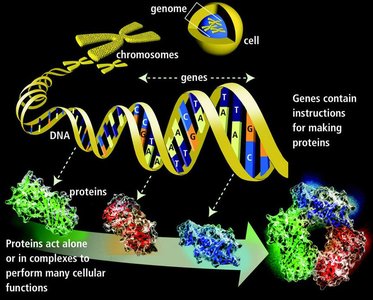
The Central Dogma describes the flow of genetic information within a biological system. It explains how DNA encodes genetic instructions, which are transcribed into RNA and then translated into proteins, the functional molecules of life.
DNA is the carrier of genetic information.
DNA is replicated to pass on information to new cells.
DNA is transcribed into messenger RNA (mRNA).
mRNA is translated into protein by ribosomes.
Proteins perform structural, catalytic, and regulatory functions in cells.

Key Enzymes: DNA polymerase (replication), RNA polymerase (transcription), ribosomes (translation).
Proteins: Structure and Function
Protein Structure
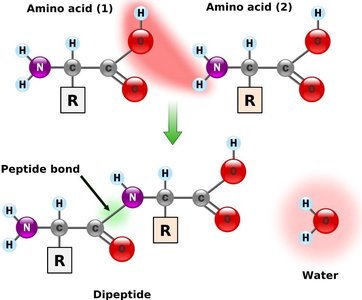
Proteins are polymers of amino acids, and their function depends on their three-dimensional structure. There are four levels of protein structure:
Primary Structure: The unique sequence of amino acids in a polypeptide chain.
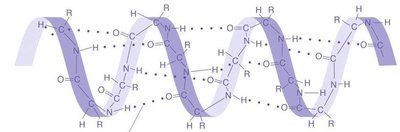
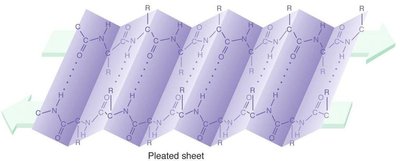
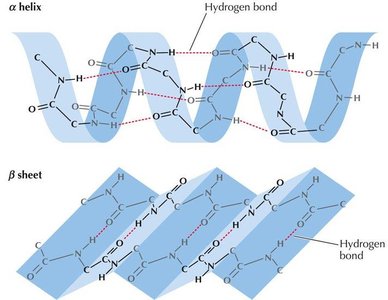
Secondary Structure: Local folding into structures such as alpha helices and beta sheets, stabilized by hydrogen bonds.
Tertiary Structure: The overall three-dimensional shape of a single polypeptide, stabilized by interactions between R groups (side chains).
Quaternary Structure: The assembly of multiple polypeptide chains into a functional protein complex (e.g., hemoglobin).
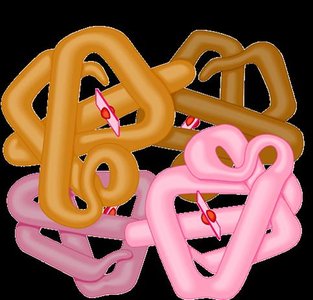
Amino Acids
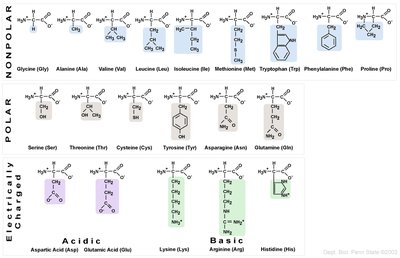
There are 20 naturally occurring amino acids, each with a central carbon atom bonded to an amino group, a carboxyl group, a hydrogen atom, and a variable R group (side chain). The properties of the R group determine the characteristics of each amino acid.
Protein Denaturation
Denaturation is the loss of secondary, tertiary, or quaternary structure due to external stress (heat, pH changes, chemicals, agitation), resulting in loss of function.
Examples: Cooking an egg, sterilizing instruments, making yogurt.
Nucleic Acids: DNA and RNA
DNA Structure and Function
DNA (deoxyribonucleic acid) is a double-stranded helix composed of nucleotides. Each nucleotide contains a deoxyribose sugar, a phosphate group, and a nitrogenous base (adenine, thymine, cytosine, or guanine).
Base Pairing: Adenine pairs with thymine (A-T), cytosine pairs with guanine (C-G) via hydrogen bonds.
Antiparallel Strands: The two DNA strands run in opposite directions (5' to 3' and 3' to 5').
Chargaff's Rule: The amount of A equals T, and C equals G in DNA.
DNA Replication
DNA replication is the process by which DNA makes an exact copy of itself before cell division. It is semi-conservative, meaning each new DNA molecule contains one old and one new strand.
Key Enzymes: DNA helicase (unwinds DNA), DNA polymerase (synthesizes new strands), primase, ligase, topoisomerase.
Direction: New DNA is synthesized in the 5' to 3' direction.
RNA Structure and Function
RNA (ribonucleic acid) is usually single-stranded and contains ribose sugar. The nitrogenous bases are adenine, guanine, cytosine, and uracil (uracil replaces thymine).
Types of RNA: mRNA (messenger), tRNA (transfer), rRNA (ribosomal).
Transcription and Translation
Transcription is the synthesis of RNA from a DNA template. Translation is the process by which ribosomes read mRNA and synthesize proteins.
Transcription: Initiation, elongation, and termination steps. RNA polymerase synthesizes RNA in the 5' to 3' direction.
Translation: Ribosomes read mRNA codons (three-base sequences) and use tRNA to add the correct amino acids, forming a polypeptide chain.
Start Codon: AUG (methionine); Stop Codons: UAA, UAG, UGA.
Genetic Mutations and Regulation
Mutations
Mutations are changes in the DNA sequence. They can be classified as:
Point Mutations: Affect a single nucleotide (substitution, insertion, deletion).
Frameshift Mutations: Insertions or deletions that shift the reading frame.
Chromosomal Mutations: Large-scale changes affecting multiple genes.
Mutations can be spontaneous or induced by physical/chemical mutagens. Some mutations are silent (no effect on protein), missense (change one amino acid), or nonsense (introduce a stop codon).
Gene Regulation
Gene expression is regulated at multiple levels. In prokaryotes, operons (e.g., lac and trp operons) allow coordinated regulation of gene clusters. In eukaryotes, regulation involves transcription factors, enhancers, and post-transcriptional modifications.
Summary Table: DNA vs RNA
Feature | DNA | RNA |
|---|---|---|
Pentose Sugar | Deoxyribose | Ribose |
Base Composition | A, T, C, G | A, U, C, G |
Strandedness | Double-stranded | Single-stranded |
Function | Genetic blueprint | Messenger, structural, catalytic |
Central Dogma in Context
The Central Dogma is fundamental to understanding how genetic information is stored, transmitted, and expressed in all living organisms.
