 Indietro
Biochemistry Foundations for Anatomy & Physiology: Chemical Reactions and Biomolecules
Guida di studio - Note intelligenti
 Appunti personalizzati basati sui tuoi materiali, ampliati con definizioni chiave, esempi e contesto.
Biochemistry in Anatomy & Physiology
Levels of Structural Organization
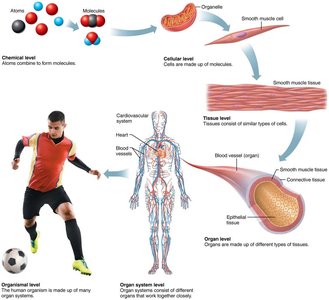
The human body is organized hierarchically, from the simplest chemical level to the complex organismal level. Understanding these levels is essential for grasping how biochemical processes underpin physiological functions.
Chemical Level: Atoms combine to form molecules.
Cellular Level: Cells are made up of molecules and organelles.
Tissue Level: Groups of similar cells form tissues.
Organ Level: Organs are made up of different types of tissues.
Organ System Level: Organ systems consist of different organs working together.
Organismal Level: The human organism is made up of many organ systems.
Chemical Reactions in the Body
Types of Chemical Reactions
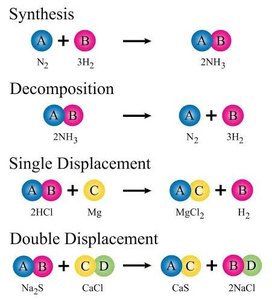
Chemical reactions are fundamental to life, involving the formation, rearrangement, or breaking of chemical bonds. These reactions are classified into three main types:
Synthesis (Combination) Reactions: Atoms or molecules combine to form larger, more complex molecules. These reactions are anabolic, building up body structures.
Decomposition Reactions: Larger molecules are broken down into smaller molecules or atoms. These are catabolic, breaking down substances for energy or recycling.
Exchange (Displacement) Reactions: Both synthesis and decomposition occur; parts of reactants are exchanged to form new products.
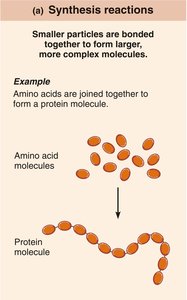
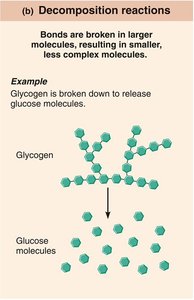
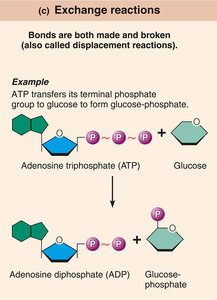
Generalized equations for these reactions:
Synthesis:
Decomposition:
Exchange:
Redox (Reduction-Oxidation) Reactions
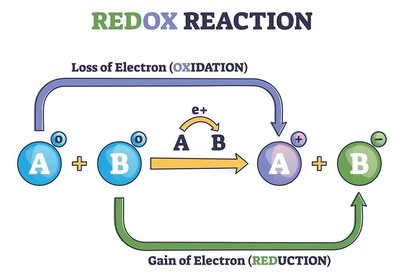
Redox reactions involve the transfer of electrons between atoms. These are crucial in cellular respiration and energy production.
Oxidation: Loss of electrons.
Reduction: Gain of electrons.
Example: Glucose is oxidized and oxygen is reduced during cellular respiration.
Cellular respiration equation:
Chemical Compounds: Inorganic vs. Organic
Inorganic Compounds
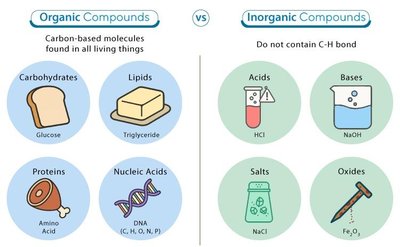
Inorganic compounds are essential for life but do not contain carbon-hydrogen bonds. Major types include water, salts, acids, and bases.
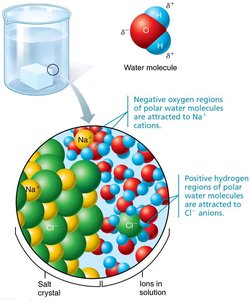
Water: Most abundant inorganic compound; excellent solvent.
Salts: Electrolytes like NaCl; dissociate into ions in water.
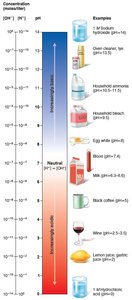
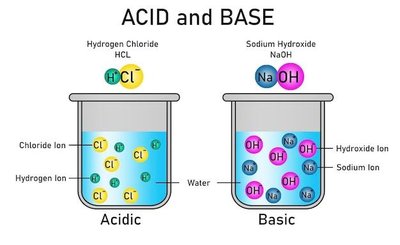
Acids and Bases: Acids release hydrogen ions (H+), bases release hydroxide ions (OH-).
pH Scale and Solutions
The pH scale measures the concentration of hydrogen ions in a solution, indicating its acidity or alkalinity.
Acidic: High [H+], pH < 7
Neutral: pH = 7 (e.g., pure water)
Alkaline (Basic): Low [H+], pH > 7
Organic Compounds (Biomolecules)
Formation and Breakdown of Biomolecules
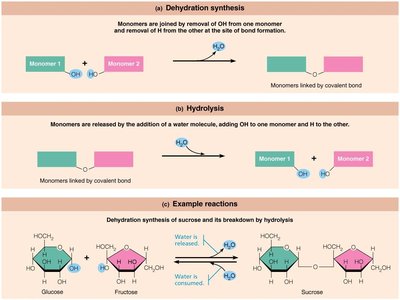
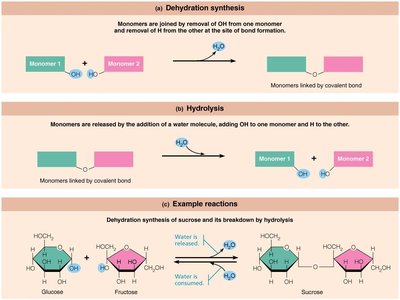
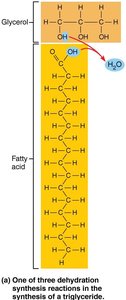
Organic compounds are built from monomers (building blocks) that form polymers (chains) via dehydration synthesis and are broken down by hydrolysis.
Dehydration Synthesis: Monomers join by removing water.
Hydrolysis: Polymers break apart by adding water.
Major Classes of Organic Compounds
Four main types of organic compounds are vital for life: carbohydrates, lipids, nucleic acids, and proteins.
Carbohydrates: Provide energy; include sugars and starches.
Lipids: Long-term energy storage; major component of cell membranes.
Nucleic Acids: Store genetic information (DNA, RNA).
Proteins: Perform most cellular functions; made of amino acids.
Carbohydrates
Carbohydrates are classified by the number of sugar units:
Monosaccharides: Single sugar units (e.g., glucose).
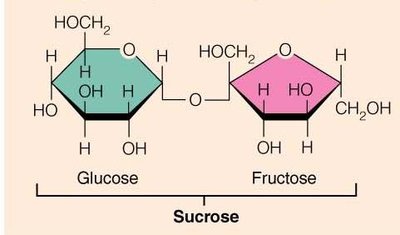
Disaccharides: Two sugar units (e.g., sucrose).
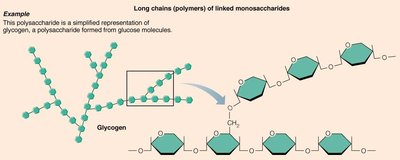
Polysaccharides: Many sugar units (e.g., glycogen, starch).
Lipids
Lipids include fats, oils, and steroids. They are important for energy storage and cell membrane structure.
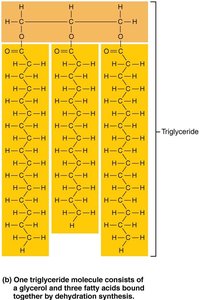
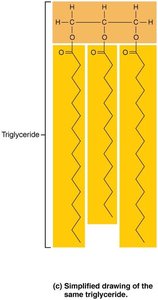
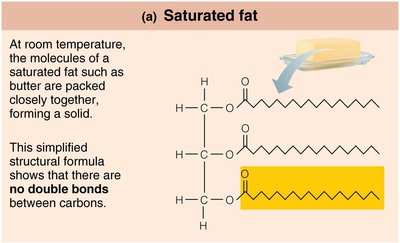
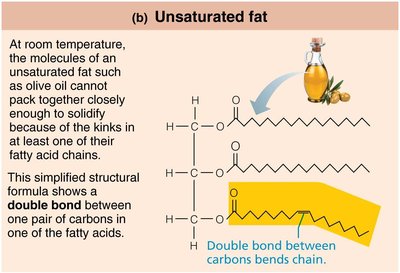
Triglycerides: Glycerol + 3 fatty acids; can be saturated (no double bonds) or unsaturated (one or more double bonds).
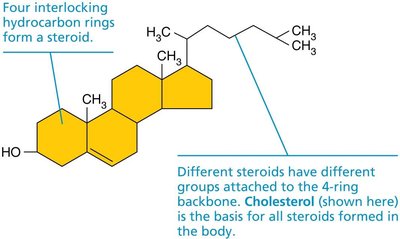
Steroids: Four-ring structure; cholesterol is a key example.
Nucleic Acids
Nucleic acids (DNA and RNA) store and transmit genetic information. They are polymers of nucleotides.
DNA: Double helix; stores genetic code.
RNA: Single-stranded; involved in protein synthesis.
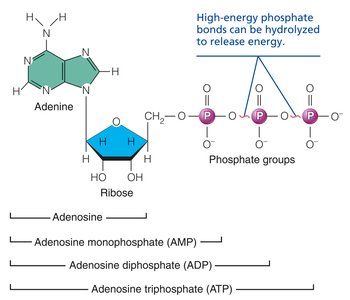
ATP: Adenosine triphosphate; immediate energy source for cells.
ATP hydrolysis equation:
Proteins
Proteins are polymers of amino acids, held together by peptide bonds. They perform a vast array of functions in the body.
Amino Acids: Building blocks of proteins.
Dipeptide: Two amino acids joined.
Polypeptide: Many amino acids; one or more polypeptides form a protein.
Protein Structure and Function
Proteins are categorized by their shape and function:
Structural (Fibrous) Proteins: Strand-like, water-insoluble; provide support (e.g., collagen).
Globular (Functional) Proteins: Compact, spherical, water-soluble; include enzymes, antibodies, and hormones.

Enzymes
Enzymes are globular proteins that catalyze biochemical reactions, lowering activation energy. They often have names ending in -ase (e.g., lactase).
Function: Speed up reactions without being consumed.
Example: Lactase breaks down lactose; deficiency leads to lactose intolerance.
Word Roots in Biochemistry
Common Word Roots
Understanding word roots helps decode scientific terminology. Here are some examples:
Root | Meaning |
|---|---|
org | living |
lysis | break apart |
tri | three |
hydro | water |
glyco, gluco | sweet, sugary |
di | two |
fibr, fibro | fibrous tissue, fiber |
mono, mon | one, single |
poly | many |
syn, sym | together, joined |
sucr | sweet, sugary |
nucl | pit, kernel, little nut |
pep, pept | digest |
gene | beginning, origin |
Summary Table: Biomolecules
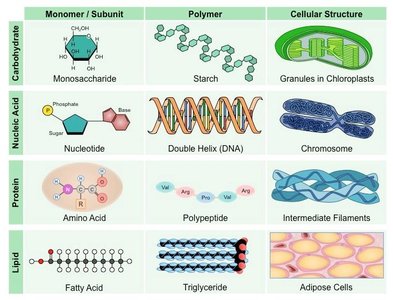
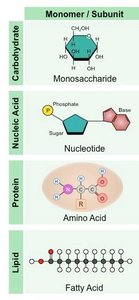
The following table summarizes the four major classes of biomolecules, their monomers, polymers, and examples of food sources:
Compound | Monomer | Polymer | Food Example |
|---|---|---|---|
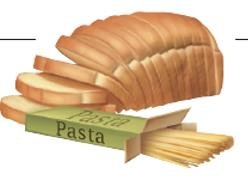
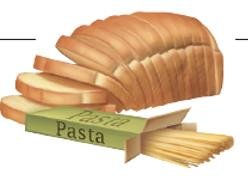
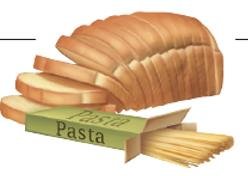
Carbohydrate | Monosaccharide (e.g., glucose) | Polysaccharide (e.g., glycogen, starch) | Bread, pasta |
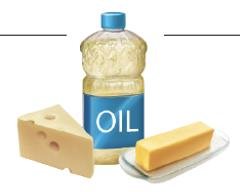
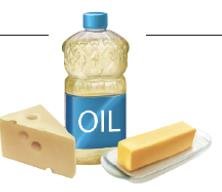
Lipid | Fatty acid | Triglyceride | Butter, oil |
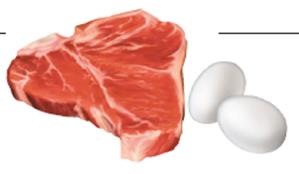
Protein | Amino acid | Polypeptide | Meat, eggs |
Nucleic Acid | Nucleotide | DNA, RNA | Not a dietary source |
Additional info: This study guide expands on brief points from lecture slides and textbook images, providing definitions, examples, and context for each major topic in biochemistry relevant to Anatomy & Physiology.
