 Indietro
Fundamentals of the Nervous System and Nervous Tissue
Guida di studio - Note intelligenti
 Appunti personalizzati basati sui tuoi materiali, ampliati con definizioni chiave, esempi e contesto.
Fundamentals of the Nervous System and Nervous Tissue
Overview of the Nervous System
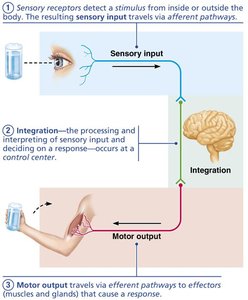
The nervous system is the master controlling and communicating system of the body. It utilizes electrical and chemical signals to coordinate rapid, specific responses to internal and external stimuli. The nervous system is responsible for sensory input, integration, and motor output.
Sensory Input: Information gathered by sensory receptors about internal and external changes.
Integration: Processing and interpretation of sensory input to determine an appropriate response.
Motor Output: Activation of effectors (muscles and glands) to produce a response.
Subdivisions of the Nervous System
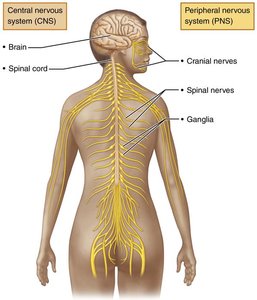
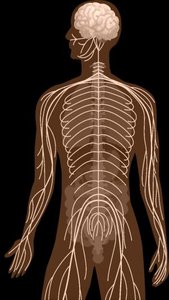
The nervous system is divided into two principal parts: the Central Nervous System (CNS) and the Peripheral Nervous System (PNS). Each subdivision has distinct structures and functions.
Central Nervous System (CNS): Consists of the brain and spinal cord, located in the dorsal body cavity. It serves as the integration and control center, interpreting sensory input and dictating motor output.
Peripheral Nervous System (PNS): Comprises nerves that extend from the brain and spinal cord. It includes spinal nerves (to and from the spinal cord) and cranial nerves (to and from the brain). The PNS connects the CNS to the rest of the body.
Functional Divisions of the PNS
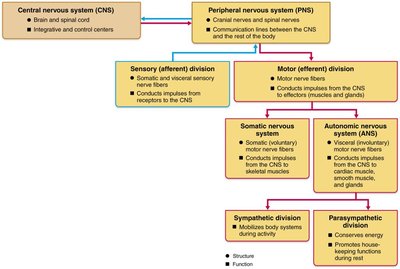
Sensory (Afferent) Division: Transmits sensory information from receptors to the CNS. Includes somatic sensory fibers (from skin, muscles, joints) and visceral sensory fibers (from internal organs).
Motor (Efferent) Division: Transmits impulses from the CNS to effectors (muscles and glands). Includes the somatic nervous system (voluntary control of skeletal muscles) and the autonomic nervous system (involuntary control of smooth muscle, cardiac muscle, and glands).
Autonomic Nervous System (ANS)
Sympathetic Division: Mobilizes body systems during activity (fight or flight response).
Parasympathetic Division: Conserves energy and promotes housekeeping functions during rest.
Nervous Tissue: Cell Types
Principal Cell Types
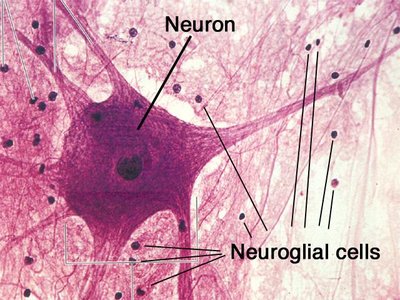
Nervous tissue consists of two main cell types: neuroglia (glial cells) and neurons (nerve cells).
Neuroglia (Glial Cells): Small cells that surround and support neurons. They provide structural support, maintain the environment, and assist in signal transmission.
Neurons: Excitable cells that transmit electrical signals. They are the structural and functional units of the nervous system.
Types of Neuroglia in the CNS
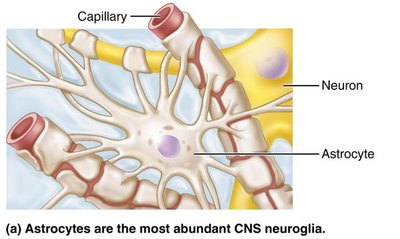
Astrocytes: Most abundant glial cells; support neurons, regulate exchanges between capillaries and neurons, control the chemical environment, and recycle neurotransmitters.
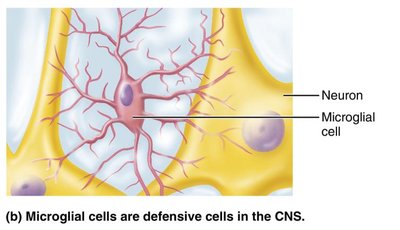
Microglial Cells: Defensive cells; monitor neuron health, migrate toward injured neurons, and phagocytize microorganisms and debris.
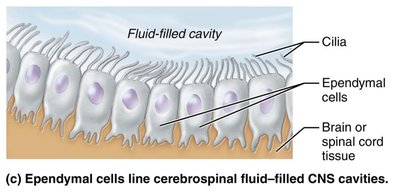
Ependymal Cells: Line cerebrospinal fluid-filled cavities; may be ciliated to circulate CSF and form a barrier between CSF and nervous tissue.
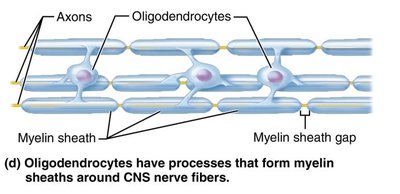
Oligodendrocytes: Form myelin sheaths around CNS nerve fibers, insulating and increasing the speed of impulse transmission.
Types of Neuroglia in the PNS
Satellite Cells: Surround neuron cell bodies in the PNS; function similarly to astrocytes.
Schwann Cells (Neurolemmocytes): Surround all peripheral nerve fibers and form myelin sheaths around thicker fibers; vital for regeneration of damaged peripheral nerve fibers.
Neurons: Structure and Function
Characteristics of Neurons
Neurons are large, highly specialized cells that conduct impulses. They exhibit extreme longevity, are mostly amitotic, and have a high metabolic rate requiring continuous oxygen and glucose supply. Each neuron consists of a cell body and one or more processes.
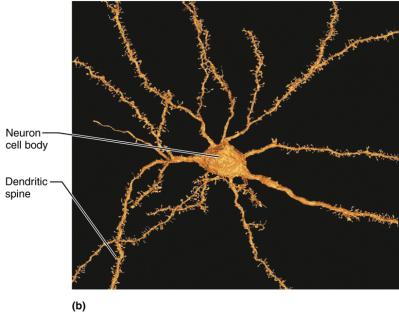
Cell Body (Soma): Contains the nucleus and cytoplasm; receptive region for signals from other neurons.
Processes: Extensions from the cell body, including dendrites and axons.
Dendrites
Dendrites are short, tapering, and highly branched processes that serve as the receptive (input) regions of the neuron. They convey incoming messages toward the cell body as graded potentials.
Axon
The axon is the conducting region of the neuron, transmitting nerve impulses away from the cell body. Axons may vary in length and can branch at their distal ends (axon terminals), which release neurotransmitters to excite or inhibit other cells.
Axon Hillock: The initial segment where the axon arises from the cell body.
Axon Terminals: Secretory regions that release neurotransmitters.
Tracts: Bundles of axons in the CNS.
Nerves: Bundles of axons in the PNS.
Axonal Transport
Axons utilize efficient internal transport mechanisms:
Anterograde Movement: Away from the cell body (e.g., mitochondria, enzymes).
Retrograde Movement: Toward the cell body (e.g., degraded organelles, viruses).
Clinical Implications: Certain viruses and toxins exploit retrograde transport to damage neural tissues (e.g., polio, rabies).
Myelin Sheath
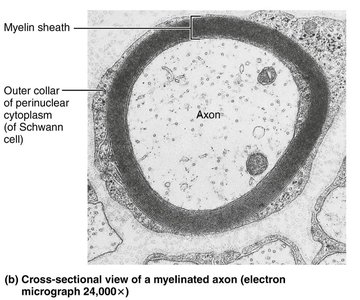
The myelin sheath is a white, fatty substance that coats many axons, providing protection, electrical insulation, and increased speed of impulse transmission. Myelinated axons conduct impulses rapidly, while nonmyelinated axons conduct more slowly.
Myelination in the PNS: Formed by Schwann cells; each cell forms one segment of myelin sheath. Myelin sheath gaps (nodes of Ranvier) are sites where axon collaterals can emerge.
Myelination in the CNS: Formed by oligodendrocyte processes; each cell can wrap multiple axons.
Classification of Neurons
Structural Classification
Neurons are classified based on the number of processes extending from the cell body:
Multipolar: Three or more processes (one axon, multiple dendrites); most common in CNS.
Bipolar: Two processes (one axon, one dendrite); rare, found in retina and olfactory mucosa.
Unipolar: One T-like process (two axons); mostly sensory neurons in PNS.
Functional Classification
Neurons are also classified by the direction of impulse transmission relative to the CNS:
Sensory (Afferent) Neurons: Transmit impulses from sensory receptors toward the CNS; mostly unipolar.
Motor (Efferent) Neurons: Carry impulses from the CNS to effectors; mostly multipolar.
Interneurons (Association Neurons): Lie between motor and sensory neurons; shuttle signals through CNS pathways; most are multipolar and constitute 99% of all neurons.
Summary Table: Structural and Functional Classification of Neurons
Type | Structure | Function | Location |
|---|---|---|---|
Multipolar | 3+ processes (1 axon, multiple dendrites) | Interneurons, motor neurons | CNS |
Bipolar | 2 processes (1 axon, 1 dendrite) | Sensory neurons (special senses) | Retina, olfactory mucosa |
Unipolar | 1 T-like process (2 axons) | Sensory neurons | PNS |
Example: Multipolar neurons are found in the spinal cord and brain, bipolar neurons in the retina, and unipolar neurons in sensory ganglia.
