 Indietro
Study Notes: The Respiratory System – Structure, Function, and Physiology
Guida di studio - Note intelligenti
 Appunti personalizzati basati sui tuoi materiali, ampliati con definizioni chiave, esempi e contesto.
The Respiratory System
Overview and Functions
The respiratory system is essential for gas exchange, sound production, olfaction, and protection of the airways. It consists of organs and structures that facilitate the movement of air and the exchange of gases between the body and the environment.
Oxygen Intake & Carbon Dioxide Removal: Oxygen is brought into the body to fuel cellular metabolism, while carbon dioxide, a waste product, is expelled.
Sound Production: Air passing over the vocal folds in the larynx produces sound.
Smell: Air passes over olfactory receptor cells in the nasal cavity, enabling the sense of smell.
Protection: Coughing and sneezing help clear airways of debris and pathogens.
Respiration: Processes and Zones
Respiration involves three main processes: ventilation, gas exchange, and oxygen utilization. The respiratory system is divided into the conducting zone and the respiratory zone.
Ventilation: The physical movement of air in and out of the lungs (inhalation and exhalation).
Gas Exchange: Occurs in two stages:
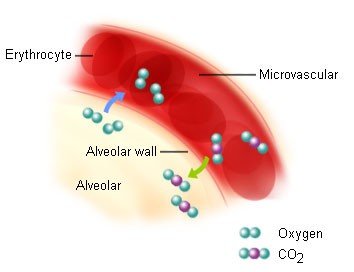
External Respiration: Gas exchange between air in the lungs and red blood cells.
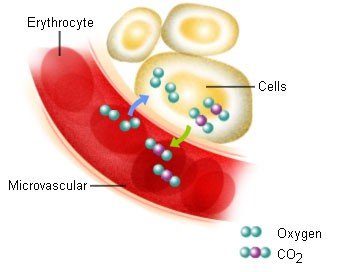
Internal Respiration: Gas exchange between red blood cells and body tissues.
Oxygen Utilization: Cells use oxygen for metabolic processes, producing carbon dioxide as a byproduct.
Gas Exchange: External and Internal Respiration
Gas exchange is a critical function of the respiratory system, occurring at the alveolar and tissue levels.
External Respiration: Oxygen diffuses from alveoli into erythrocytes (red blood cells), while carbon dioxide diffuses from blood into alveoli to be exhaled.
Internal Respiration: Oxygen is delivered from erythrocytes to body cells, and carbon dioxide is collected from cells and transported back to the lungs.
Anatomy of the Respiratory System
Major Organs and Structures
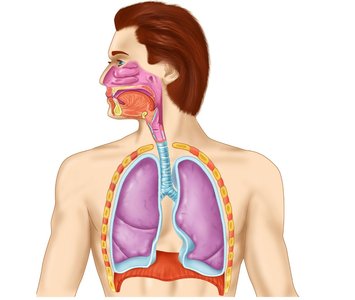
The respiratory system includes the nasal cavity, pharynx, larynx, trachea, bronchi, lungs, and alveoli. Each structure plays a specific role in air transport, filtration, and gas exchange.
Nasal Cavity: Filters, warms, and humidifies air; contains olfactory receptors.
Pharynx: Passageway for air and food; divided into nasopharynx, oropharynx, and laryngopharynx.
Larynx: Air passage and voice production; contains vocal folds.
Trachea: Conducts air to bronchi; supported by hyaline cartilage rings.
Bronchi and Bronchioles: Branching airways leading to alveoli.
Lungs: Main organs of respiration; contain alveoli for gas exchange.
Alveoli: Tiny air sacs where external gas exchange occurs.
Microscopic Structure: Alveoli and Respiratory Membrane
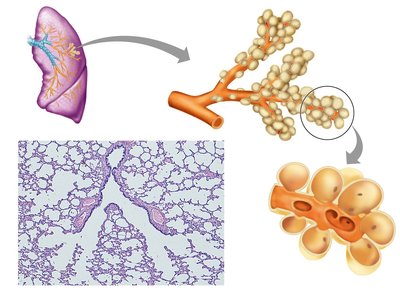
Alveoli are the primary sites of gas exchange, surrounded by capillaries. The respiratory membrane consists of alveolar epithelium, capillary endothelium, and fused basal laminae.
Type I Cells: Simple squamous cells forming the alveolar wall.
Type II Cells: Cuboidal cells that secrete surfactant to reduce surface tension.
Macrophages: Remove debris and pathogens from alveoli.
Alveolar Pores: Equalize air pressure between alveoli.
Histology of the Respiratory System
Respiratory Epithelium
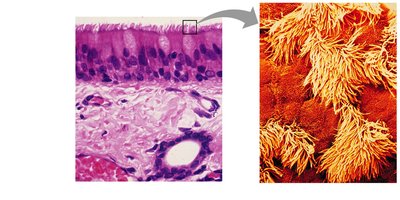
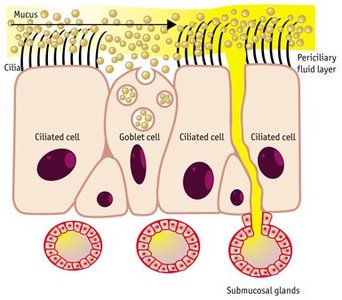
The respiratory tract is lined by specialized epithelium that aids in air filtration and protection.
Pseudostratified Ciliated Columnar Epithelium: Lines most of the conducting zone; cilia move mucus and trapped particles.
Goblet Cells: Secrete mucin, which forms mucus when mixed with water.
Lamina Propria: Highly vascular connective tissue beneath the epithelium.
Mechanics of Breathing
Inhalation and Exhalation
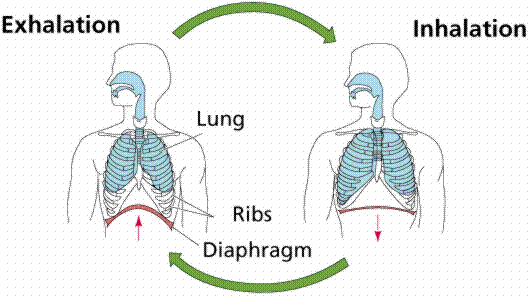
Breathing is driven by changes in thoracic cavity volume, primarily through the action of the diaphragm and intercostal muscles.
Inhalation: Diaphragm contracts and moves downward, increasing thoracic volume and decreasing pressure, causing air to flow into the lungs.
Exhalation: Diaphragm relaxes and moves upward, decreasing thoracic volume and increasing pressure, causing air to flow out of the lungs.
Summary Table: Respiratory Zones and Functions
Zone | Main Function | Key Structures |
|---|---|---|
Conducting Zone | Transport, filter, warm, and humidify air | Nasal cavity, pharynx, larynx, trachea, bronchi, bronchioles |
Respiratory Zone | External gas exchange | Respiratory bronchioles, alveolar ducts, alveoli |
Key Equations
Boyle's Law: Describes the relationship between pressure and volume in the thoracic cavity during breathing.
Where P is pressure and V is volume. As thoracic volume increases, pressure decreases, causing air to flow into the lungs.
Clinical Relevance
Respiratory Distress Syndrome
Premature infants may lack functional Type II cells, leading to difficulty inflating alveoli due to insufficient surfactant.
Emphysema and COPD
Chronic exposure to irritants can cause inflammation, excess mucus, and destruction of alveoli, resulting in impaired gas exchange and difficulty exhaling.
Conclusion
The respiratory system is vital for oxygen delivery, carbon dioxide removal, and maintaining homeostasis. Understanding its anatomy, histology, and physiology is essential for recognizing normal function and disease states.
