 Indietro
The Chemical Level of Organization: Molecules of Cells
Guida di studio - Note intelligenti
 Appunti personalizzati basati sui tuoi materiali, ampliati con definizioni chiave, esempi e contesto.
The Chemical Level of Organization
Carbon-Based Molecular Diversity
Carbon is the fundamental element in organic compounds, forming the backbone of diverse molecules found in cells. Its ability to form four covalent bonds allows branching in multiple directions, enabling complex molecular structures.
Organic compounds: Molecules containing carbon bonded to other elements.
Carbon can bond to four other atoms, creating a variety of shapes and sizes.
These properties are essential for the molecular diversity necessary for life.
Functional Groups and Their Properties
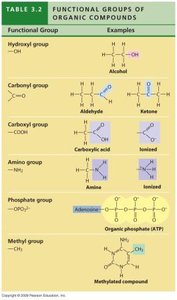
Functional groups are specific groups of atoms attached to organic molecules, determining their chemical properties and biological functions. Compounds with functional groups are typically hydrophilic, making them soluble in water.
Functional groups include hydroxyl, carbonyl, carboxyl, amino, phosphate, and methyl groups.
Functional groups affect molecular function in characteristic ways.
Hydrophilic groups are essential for water-based life.
Functional Group | Structure | Example |
|---|---|---|
Hydroxyl | -OH | Alcohol |
Carbonyl | C=O | Aldehyde, Ketone |
Carboxyl | -COOH | Carboxylic acid |
Amino | -NH2 | Amine |
Phosphate | -OPO32- | ATP |
Methyl | -CH3 | Methylated compound |
Functional Groups in Sex Hormones
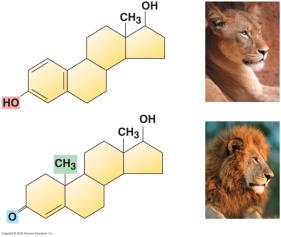
Sex hormones such as estradiol and testosterone differ only in their functional groups, resulting in distinct molecular actions and physiological features in males and females.
Small changes in functional groups can lead to significant differences in biological activity.
Macromolecules: Building Blocks of Life
Classes of Biological Molecules
Cells synthesize a vast array of large molecules from a small set of monomers. The four major classes of biological macromolecules are carbohydrates, proteins, lipids, and nucleic acids.
Macromolecules: Large molecules essential for cell structure and function.
Polymers: Chains of monomers linked together.
Proteins are made from 20 amino acids; DNA from 4 nucleotides.
Polymer Formation and Breakdown
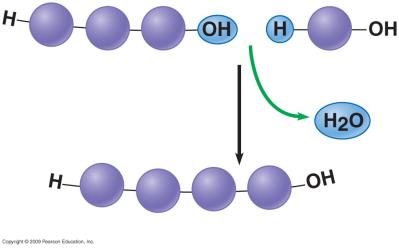
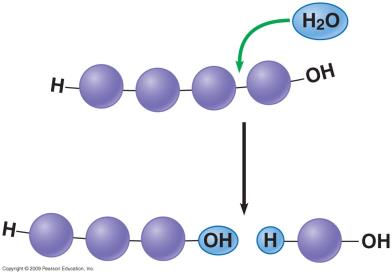
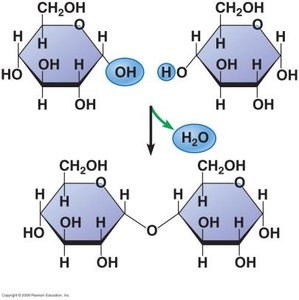
Monomers are joined to form polymers through dehydration reactions, which remove water. Polymers are broken down by hydrolysis, which adds water. Enzymes catalyze these reactions in cells.
Dehydration reaction: Joins monomers by removing water.
Hydrolysis: Breaks polymers by adding water.
Carbohydrates
Monosaccharides: Simple Sugars
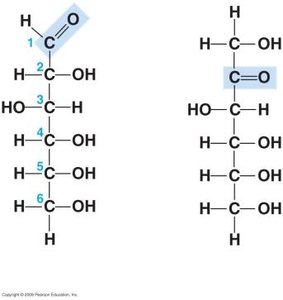
Monosaccharides are the simplest carbohydrates, serving as the main fuel for cellular work and as raw materials for other organic molecules. Their carbon skeletons vary in length, typically from 3 to 7 carbons.
Glucose and fructose are common 6-carbon sugars.
Monosaccharides are used for energy and biosynthesis.
Disaccharides and Polysaccharides
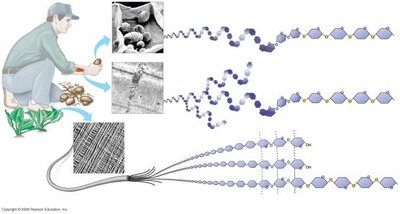
Two monosaccharides can bond to form a disaccharide via dehydration. Polysaccharides are long chains of monosaccharides, functioning as storage or structural molecules.
Disaccharide: Example is sucrose (glucose + fructose).
Polysaccharides: Starch (plants), glycogen (animals), cellulose (plant cell walls), chitin (exoskeletons).
Polysaccharides are hydrophilic and absorb water.
Lipids
Fats: Energy Storage Molecules
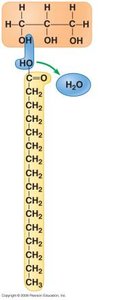
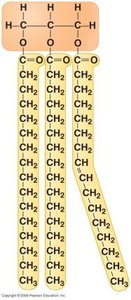
Lipids are hydrophobic molecules important for energy storage. Fats are made from glycerol and fatty acids, often called triglycerides due to their structure.
Fats contain twice as much energy as polysaccharides.
Fatty acids link to glycerol by dehydration reactions.
Saturated vs. Unsaturated Fats
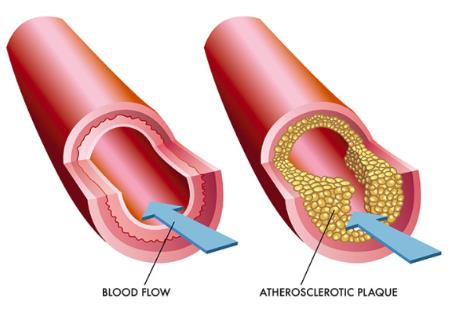
Fatty acids with double bonds are unsaturated, causing kinks in the chain and fewer hydrogen atoms. Saturated fats have the maximum number of hydrogens and are associated with higher cholesterol levels.
Phospholipids and Steroids
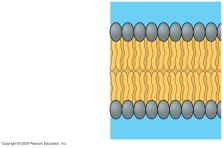
Phospholipids are major components of cell membranes, forming a bilayer with hydrophilic heads and hydrophobic tails. Steroids, such as cholesterol, have fused ring structures and are precursors to sex hormones.
Proteins
Structure and Function
Proteins are polymers of amino acids, with unique structures directly related to their functions. They serve as enzymes, structural components, contractile elements, defensive molecules, signals, receptors, and transporters.
Enzymes: Catalyze metabolic reactions.
Structural proteins: Provide support.
Contractile proteins: Enable movement.
Defensive proteins: Antibodies.
Signal proteins: Hormones.
Receptor proteins: Receive signals.
Transport proteins: Move substances.
Amino Acids and Peptide Bonds
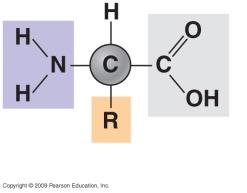
Amino acids have an amino group, carboxyl group, hydrogen atom, and an R group attached to a central carbon. They are classified as hydrophobic or hydrophilic. Peptide bonds link amino acids via dehydration reactions.
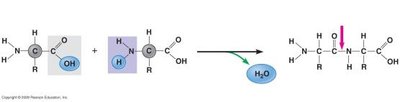
Protein Structure Levels
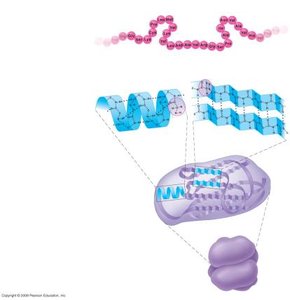
Protein function depends on its shape, which is determined by four structural levels:
Primary structure: Unique amino acid sequence.
Secondary structure: Coiling (alpha helix) or folding (pleated sheet) due to hydrogen bonding.
Tertiary structure: Three-dimensional shape from R group interactions and disulfide bridges.
Quaternary structure: Association of multiple polypeptide chains.
Nucleic Acids
Structure and Function
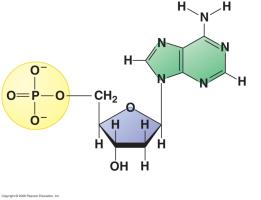
DNA and RNA are polymers of nucleotides, each consisting of a 5-carbon sugar, phosphate group, and nitrogenous base. DNA contains adenine, thymine, cytosine, and guanine; RNA contains adenine, cytosine, guanine, and uracil.
DNA Double Helix and Genes
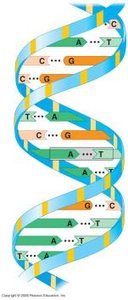
DNA consists of two polynucleotide strands forming a double helix, with base pairs held together by hydrogen bonds. Genes are sequences of nucleotides that instruct the formation of polypeptides.
Mutations and Genetic Material
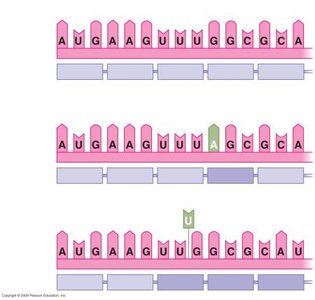
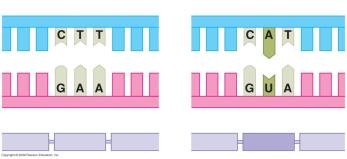
Mutations are changes in the DNA sequence, including base substitutions, deletions, and insertions. These can alter protein function and lead to diseases such as sickle-cell anemia.
Carcinogenesis and Malignant Cells
Mechanisms of Carcinogenesis
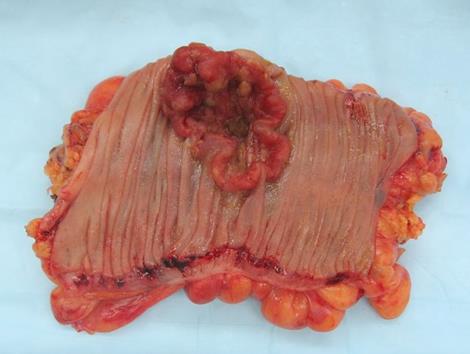
Cancer can arise from environmental factors, viruses, or genetic predisposition. All carcinogens cause mutations that alter gene expression.
Environmental: UV radiation, chemicals, pollution, diet.
Viruses: HPV, hepatitis B and C, Epstein-Barr virus.
Genetic: Family history and inherited mutations.
Malignant Cell Characteristics
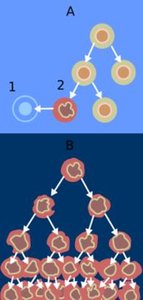
Malignant cells are clonal, originating from a single defective cell. They can metastasize, spreading to secondary sites via blood or lymph. They avoid apoptosis and continue to multiply.
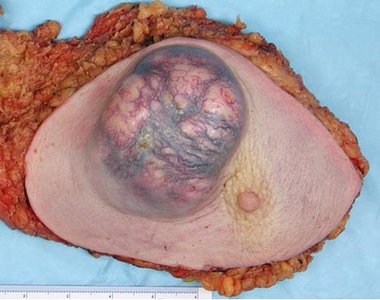
Healthy vs. Diseased Organs
Smoking and other carcinogenic exposures can lead to significant changes in organ structure and function, as seen in healthy versus smoker's lungs.
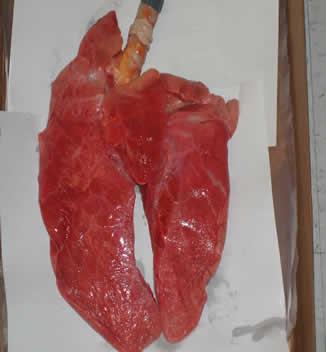
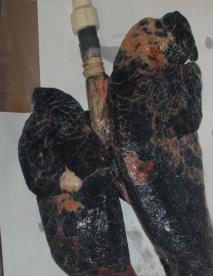
Spread and Mechanisms of Cancer
Oncogenes and tumor suppressor genes play key roles in carcinogenesis. Oncogenes promote uncontrolled cell growth, while tumor suppressor genes inhibit it. Loss of tumor suppressor genes and activation of oncogenes drive the progression from benign to malignant tumors.
Additional info: These notes expand on the original lecture content, providing definitions, examples, and academic context for each topic. All images included are directly relevant to the adjacent explanations, reinforcing key concepts in molecular biology and carcinogenesis.
