 Indietro
The Endocrine System: Structure, Function, and Regulation
Guida di studio - Note intelligenti
 Appunti personalizzati basati sui tuoi materiali, ampliati con definizioni chiave, esempi e contesto.
Endocrine System Overview
Introduction to the Endocrine System
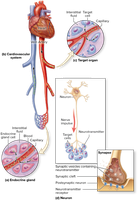
The endocrine system is a major regulatory system of the body, working alongside the nervous system to maintain homeostasis—a dynamic steady state of internal conditions. Both systems use chemical messengers (ligands) to affect specific target organs, but their methods and effects differ.
Endocrine System: Uses hormones released into the bloodstream, affecting distant target organs with slower, widespread effects.
Nervous System: Uses neurotransmitters released at synapses, producing rapid, localized effects.
Endocrine Secretions and Target Organs
Endocrine glands are ductless and release hormones directly into the blood. These hormones circulate throughout the body but only affect cells with specific receptors.
Hormones: Chemical messengers regulating slow, long-lasting processes such as growth, metabolism, and reproduction.
Target Organs: Cells or tissues with receptors for a specific hormone.
Endocrine Organs and Cells
Major Endocrine Organs
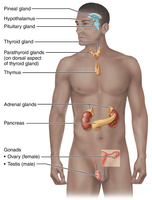
Endocrine tissue can be an entire organ or clusters of cells within other organs.
Primary Endocrine Organs: Pituitary, pineal, parathyroid, thyroid, adrenal glands.
Endocrine Cells in Other Organs: Hypothalamus, skin, thymus, heart, liver, stomach, pancreas, small intestine, kidneys, gonads.
Hormone Classification and Synthesis
Classes of Hormones
The chemical structure of a hormone determines its interaction with target cells.
Amino Acid-Based Hormones: Made from chains or modified amino acids (e.g., insulin, growth hormone).
Steroid Hormones: Derived from cholesterol (e.g., cortisol, sex hormones).
Hormone Synthesis and Release
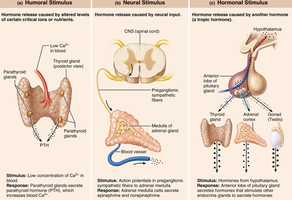
Hormone secretion is controlled by reflexes—preprogrammed responses to stimuli. There are three types of stimulation:
Humoral: Changes in blood levels of ions or nutrients trigger hormone release.
Neural: Nerve impulses stimulate hormone release.
Hormonal: Hormones stimulate the release of other hormones.
Feedback Mechanisms
Negative Feedback Loop
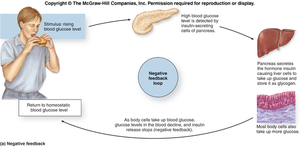
Negative feedback is the most common mechanism for hormone regulation. A stimulus initiates a process, and the hormone or its effects eventually slow down or stop the process.
Example: Regulation of blood glucose by insulin.
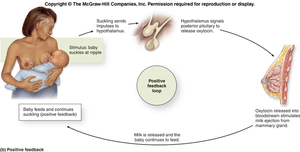
Positive Feedback Loop
Positive feedback accelerates the original process, ensuring the pathway continues or speeds up. Only a few positive feedback loops exist in the endocrine system.
Example: Milk release from mammary glands during breastfeeding.
Hypothalamic Control of the Endocrine System
Role of the Hypothalamus
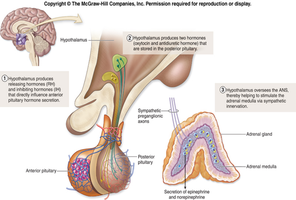
The hypothalamus is the master control center of the endocrine system, overseeing most endocrine activity.
Regulatory Hormones: Special cells in the hypothalamus secrete releasing (RH) and inhibiting (IH) hormones that regulate the anterior pituitary.
Direct Hormone Production: Produces oxytocin and antidiuretic hormone (ADH), which are stored in the posterior pituitary.
Adrenal Medulla Control: Oversees stimulation and hormone secretion of the adrenal medulla via the autonomic nervous system.
Pituitary Gland
Structure and Function
The pituitary gland (hypophysis) is connected to the hypothalamus by the infundibulum and is divided into anterior (adenohypophysis) and posterior (neurohypophysis) portions.
Posterior Pituitary: Neural portion; stores hormones produced by the hypothalamus.
Anterior Pituitary: Glandular portion; produces and releases hormones regulated by hypothalamic hormones.
Hormones of the Anterior Pituitary
Tropic Hormones: TSH, ACTH, FSH, LH (stimulate other endocrine glands).
Direct-Acting Hormones: GH, PRL, MSH (act directly on target tissues).
Hormones of the Posterior Pituitary
ADH (Vasopressin): Targets kidneys to reabsorb water.
Oxytocin: Contracts uterus during childbirth, causes milk ejection during nursing, and is involved in bonding behaviors.
Other Endocrine Organs
Thyroid Gland
The thyroid gland is located inferior to the thyroid cartilage and anterior to the trachea, with a distinctive butterfly shape. It is highly vascularized and regulated by a negative feedback loop involving the pituitary gland.
Parathyroid Glands
Small glands located on the posterior surface of the thyroid, usually four in number.
Chief Cells: Produce parathyroid hormone (PTH), which increases blood calcium by stimulating osteoclasts, promoting intestinal absorption, and reducing urinary loss.
Oxyphil Cells: Function unknown.
Adrenal Glands
Paired, pyramid-shaped glands on the superior surface of each kidney.
Adrenal Cortex:
Zona glomerulosa: Mineralocorticoids (aldosterone)
Zona fasciculata: Glucocorticoids (cortisol)
Zona reticularis: DHEA (androgens)
Adrenal Medulla: Secretes epinephrine and norepinephrine.
Pancreas
The pancreas is a heterocrine gland with both exocrine and endocrine functions.
Pancreatic Islets:
Alpha cells: Glucagon (raises blood glucose)
Beta cells: Insulin (lowers blood glucose)
Delta cells: Somatostatin (inhibits insulin and glucagon release)
PP cells: Pancreatic polypeptide (regulates somatostatin secretion)
Pineal Gland
Small, cone-shaped structure attached to the posterior epithalamus.
Function: Secretes melatonin, regulates circadian rhythm, and may influence sexual maturation.
Thymus
Bilobed structure in the mediastinum, large in children and diminishes with age.
Function: Produces thymopoietin and thymosins, which stimulate T-lymphocyte maturation and regulate immunity.
Other Endocrine Structures
Heart: Atrial natriuretic peptide (ANP) decreases blood volume.
GI Tract: Diffuse neuroendocrine system regulates digestion and blood chemistry.
Placenta: Produces steroid and protein hormones during pregnancy.
Kidneys: Renin and erythropoietin.
Skin: Produces vitamin D.
Disorders of the Endocrine System
Pituitary Disorders
Gigantism, Acromegaly, Dwarfism: Abnormal growth hormone secretion.
Diabetes Insipidus: Insufficient ADH.
Pancreatic Disorders
Diabetes Mellitus: Insufficient insulin or resistance to insulin.
Type 1: Insulin-dependent, develops in children.
Type 2: Non-insulin-dependent, develops later in life, managed with diet and exercise.
Thyroid Disorders
Graves’ Disease: Autoimmune, excess thyroid hormone, bulging eyes.
Hypothyroidism: Low thyroid hormone, fatigue, low metabolic rate (Hashimoto’s disease, iodine deficiency).
Adrenal Cortex Disorders
Cushing’s Disease: Excess glucocorticoids, high blood glucose, protein loss, fat redistribution.
Addison’s Disease: Low glucocorticoids and mineralocorticoids, fatigue, loss of appetite.
Disorder | Hormone Involved | Main Symptoms |
|---|---|---|
Gigantism | GH | Excessive growth |
Diabetes Insipidus | ADH | Excessive urination |
Diabetes Mellitus (Type 1) | Insulin | High blood glucose |
Graves’ Disease | TH | Bulging eyes, high metabolism |
Cushing’s Disease | Cortisol | High blood glucose, fat redistribution |
Addison’s Disease | Cortisol, Aldosterone | Fatigue, loss of appetite |
Summary Table: Major Endocrine Glands and Their Hormones
Gland | Hormone(s) | Main Function |
|---|---|---|
Pituitary (anterior) | TSH, ACTH, FSH, LH, GH, PRL, MSH | Regulates other glands, growth, lactation |
Pituitary (posterior) | ADH, Oxytocin | Water balance, uterine contraction, bonding |
Thyroid | TH, Calcitonin | Metabolism, calcium regulation |
Parathyroid | PTH | Raises blood calcium |
Adrenal Cortex | Aldosterone, Cortisol, Androgens | Electrolyte balance, stress response |
Adrenal Medulla | Epinephrine, Norepinephrine | Fight-or-flight response |
Pancreas | Insulin, Glucagon, Somatostatin, PP | Blood glucose regulation |
Pineal | Melatonin | Circadian rhythm |
Thymus | Thymopoietin, Thymosins | Immune cell maturation |
Key Equations
Feedback Regulation Example
Blood glucose regulation (simplified):
Negative feedback:
Additional info: These equations represent the proportional relationship and negative feedback mechanism in hormone regulation.
