 Indietro
The Immune System: Structure, Function, and Responses
Guida di studio - Note intelligenti
 Appunti personalizzati basati sui tuoi materiali, ampliati con definizioni chiave, esempi e contesto.
The Immune System
Immunity Overview
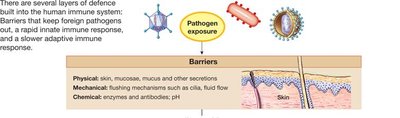
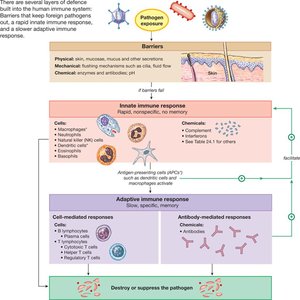
The immune system is the body's defense mechanism against pathogens and foreign substances. It must distinguish between self and non-self, targeting bacteria, viruses, parasites, allergens, and other pathogens. The first line of defense includes physical, chemical, and mechanical barriers that prevent pathogen entry.
Physical barriers: Skin, mucous membranes
Chemical barriers: Enzymes, antibodies, pH
Mechanical barriers: Flushing mechanisms (e.g., cilia, fluid flow)
Innate Immunity
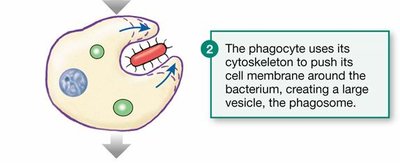
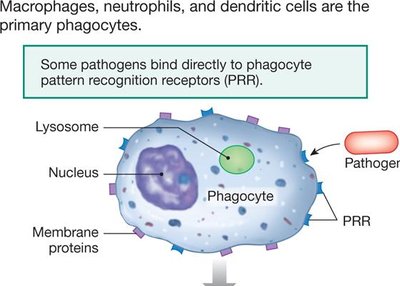
Innate immunity is present from birth and provides an immediate, non-specific response to pathogens. It is not remembered by the immune system and involves leukocytes communicating via cytokines. Phagocytes ingest and digest bacteria as a primary example of innate defense.
Antigens: Trigger immune response
Leukocytes: Carry out internal response
Cytokines: Mediate communication between immune cells
Phagocytosis: Process by which phagocytes engulf pathogens
Adaptive Immunity
Adaptive immunity is a specific immune response that develops over days to weeks and is remembered by the immune system, allowing for faster responses upon re-exposure. It consists of two branches: cell-mediated and antibody-mediated (humoral) immunity.
Cell-mediated: Contact-dependent signaling, primarily by T cells
Antibody-mediated: B cells produce antibodies targeting specific antigens
Memory: Adaptive immunity remembers previous encounters, leading to faster responses
Bacteria and Viruses
Differences Between Bacteria and Viruses
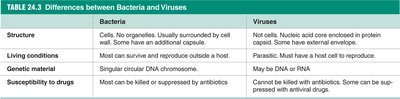
Bacteria and viruses are two major types of pathogens with distinct structural and functional characteristics.
Feature | Bacteria | Viruses |
|---|---|---|
Structure | Cells, no organelles, cell wall | Not cells, nucleic acid core, protein capsid |
Living conditions | Can survive outside host | Must have host cell to reproduce |
Genetic material | Singular circular DNA | DNA or RNA |
Susceptibility to drugs | Suppressed by antibiotics | Suppressed by antiviral drugs |
Bacterial Structure
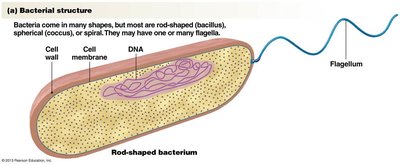
Bacteria are unicellular organisms with a cell wall, cell membrane, DNA, and sometimes flagella for movement. They come in various shapes, such as rod-shaped (bacillus), spherical (coccus), or spiral.
Viral Structure and Replication
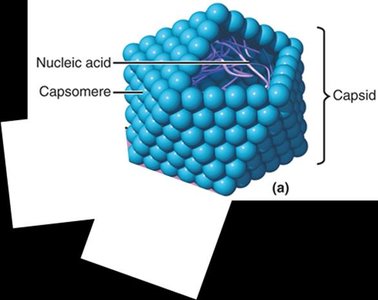
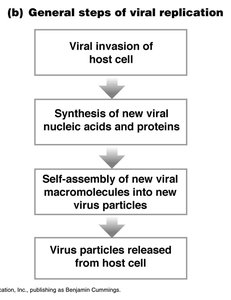
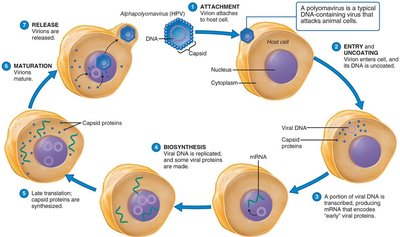
Viruses consist of nucleic acid (DNA or RNA) enclosed in a protein capsid. Some viruses have an external envelope. Viral replication involves invasion of a host cell, synthesis of viral components, assembly of new virus particles, and release from the host cell.
Capsid: Protein shell surrounding nucleic acid
Replication steps: Attachment, entry, biosynthesis, assembly, release
Leukocytes and Immune Cells
Types of Leukocytes
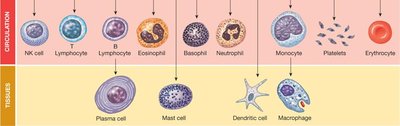
Leukocytes are white blood cells that play key roles in both innate and adaptive immunity. They include granulocytes, phagocytes, antigen-presenting cells (APCs), and lymphocytes.
Basophils and mast cells: Release chemicals for inflammation
Eosinophils: Target parasites and allergic reactions
Neutrophils: Phagocytic, release cytokines
Monocytes/macrophages: Phagocytic, APCs
Dendritic cells: Link innate and adaptive responses, APCs
T and B lymphocytes: Adaptive immune response
Natural Killer (NK) cells: Innate response, kill infected/cancer cells
Development of Lymphocytes
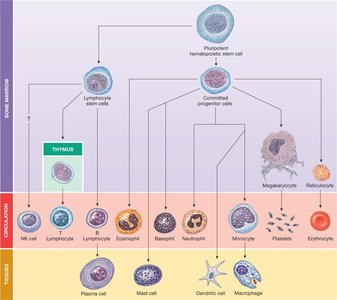
Hematopoiesis occurs in the bone marrow, producing all blood cells. T lymphocytes mature in the thymus, B lymphocytes mature in bone marrow, and NK cells develop in bone marrow and other tissues. Each B and T cell binds to a specific antigen.
Anatomy of the Immune System
Lymphoid Tissues
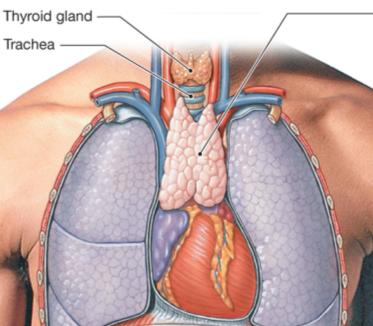
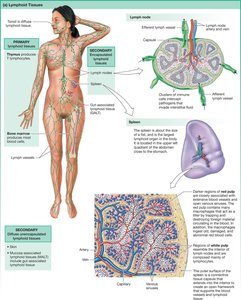
Lymphoid tissues are distributed throughout the body and are classified as primary (formation and maturation of cells) and secondary (interaction with pathogens). Primary tissues include the thymus and bone marrow; secondary tissues include the spleen, lymph nodes, and tonsils.
Self-Recognition and Autoimmunity
Self-Tolerance
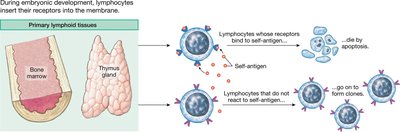
The immune system must recognize self to prevent attacking the body's own tissues. Self-tolerance is established during embryogenesis, where lymphocytes that recognize self-antigens are destroyed, and those that do not form clones. Failure of self-tolerance leads to autoimmune diseases.
Innate Immune Response
Components and Functions
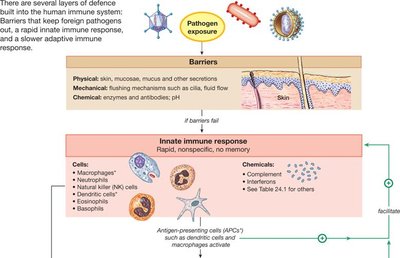
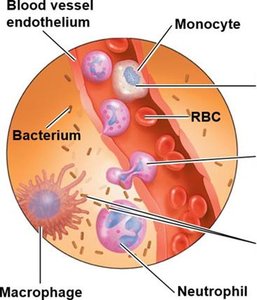
The innate immune response includes physical and chemical barriers, rapid responses by phagocytes, NK cells, complement system, inflammatory response, fever, and interferons. These mechanisms act quickly and non-specifically to eliminate pathogens.
Phagocytes: Engulf and digest pathogens
NK cells: Induce apoptosis in infected/cancer cells
Complement system: Membrane attack complex (MAC) lyses cells
Inflammation: Attracts immune cells, promotes tissue repair
Fever: Enhances immune cell function, inhibits pathogen growth
Interferons: Promote synthesis of antiviral proteins
Antibodies and Antigens
Structure and Function
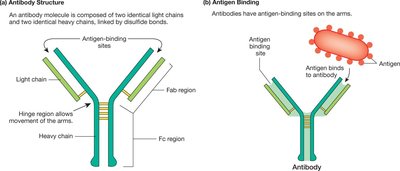
Antigens are substances that trigger antibody production. Antibodies (immunoglobulins) are proteins that recognize and bind specific antigens, targeting them for destruction. The Fc region is constant, while the Fab region contains antigen-binding sites.
IgG: Most abundant, secondary responses, crosses placenta
IgE: Targets parasites, associated with allergies
Major Histocompatibility Complexes (MHC)
Role in Adaptive Immunity
MHC molecules are cell membrane proteins that present antigen fragments to immune cells. MHC class I is found on all nucleated cells (endogenous antigens), while MHC class II is found on APCs (exogenous antigens).
MHC-I: Present on all nucleated cells
MHC-II: Present on APCs (macrophages, dendritic cells)
Antigen-Presenting Cells (APCs)
Bridge Between Innate and Adaptive Immunity
APCs digest pathogens and display antigens on MHC molecules, activating lymphocytes in secondary lymphoid tissues. This links the nonspecific innate response to the antigen-specific adaptive response.
Clonal Expansion
Lymphocyte Activation and Differentiation
Each lymphocyte clone has a receptor specific to an antigen. Exposure activates the clone, leading to clonal expansion and differentiation into effector cells (short-lived, carry out response) and memory cells (long-lived, faster response upon re-exposure).
Adaptive Immunity: B Cell Responses
Primary and Secondary Responses
B cells bind antigens and, upon first exposure, undergo clonal expansion and differentiation. Effector cells become plasma cells that secrete antibodies. Memory B cells enable quicker and larger responses upon subsequent exposures.
Antibody Functions
Antibodies perform several functions:
Clumping of antigens
Inactivation of bacterial toxins
Act as opsonins
Trigger degranulation of immune cells
Activate complement proteins
Activate B lymphocytes
T Lymphocytes and Cell-Mediated Immunity
Contact-Dependent Signaling
T cell receptors bind antigens displayed on MHC proteins. Activated T cells differentiate into cytotoxic T cells (attack cells with MHC-I antigen complexes), helper T cells (activate other immune cells via cytokines), and regulatory T cells (suppress immune function).
Integrated Immune Responses
Bacterial and Viral Infections
Immune responses to bacteria involve complement system, phagocytes, and adaptive immunity. Viral responses include antibody neutralization, macrophage antigen presentation, helper T cell activation, and cytotoxic T cell-mediated killing.
Allergic Responses
Mechanism and Treatment
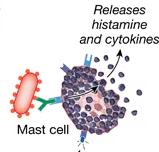
Allergies are inflammatory responses to nonpathogenic antigens (allergens). First exposure activates B cells to produce IgE, which binds mast cells. Re-exposure triggers mast cell degranulation, releasing histamines and cytokines. Antihistamines block histamine receptors; epinephrine (EpiPen) reverses severe symptoms.
Types of Adaptive Immunity
Adaptive immunity can be active or passive, acquired naturally or artificially:
Active: Exposure to pathogen or vaccination
Passive: Transfer of antibodies (e.g., placenta, breast milk, injection)
Immune System Pathologies
Incorrect, Overactive, and Lack of Response
Pathologies include autoimmune diseases (incorrect response), allergies/hypersensitivity (overactive response), and immunodeficiency (lack of response, e.g., AIDS).
The Thymus Gland
The thymus is essential for T cell maturation. Congenital athymia results in severe immunodeficiency due to lack of thymus.
Neuroendocrine–Immune Interactions
Neuroimmunomodulation studies interactions between the immune, nervous, and endocrine systems. Hormones and neuropeptides can alter immune cell function, and cytokines can affect neuroendocrine function. Chronic stress increases cortisol, suppressing immunity.
