 Indietro
ATP Hydrolysis, Phosphorylation, and Redox Reactions in Cellular Respiration
Guida di studio - Note intelligenti
 Appunti personalizzati basati sui tuoi materiali, ampliati con definizioni chiave, esempi e contesto.
ATP Hydrolysis and Energy Coupling
ATP Structure and Function
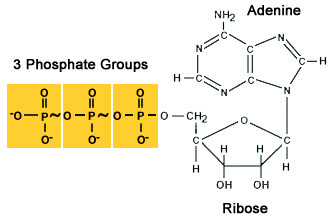
Adenosine triphosphate (ATP) is the primary energy carrier in cells. It consists of the nucleotide adenine, the sugar ribose, and three phosphate groups. The bonds between the phosphate groups, especially the terminal phosphoanhydride bond, are considered "high-energy" due to their instability and the large amount of free energy released when broken.
ATP Structure: Contains adenine, ribose, and three phosphate groups.
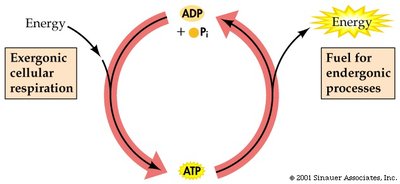
Energy Release: Hydrolysis of ATP to ADP and inorganic phosphate (Pi) releases energy for cellular processes.
Equation:
Free Energy Change: (exergonic reaction)
ATP Hydrolysis and Cellular Work
ATP hydrolysis provides energy for endergonic (energy-requiring) cellular processes. The energy released from ATP breakdown is used to drive reactions such as muscle contraction, active transport, and biosynthesis.
Coupling: ATP hydrolysis is coupled to cellular work, making it possible for cells to perform functions that require energy input.
Regeneration: ATP is regenerated from ADP and Pi using energy from cellular respiration.
Phosphorylation: Types and Mechanisms
Phosphorylation Overview
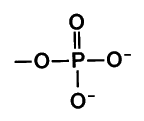
Phosphorylation is the process of adding a phosphate group to a molecule, often catalyzed by enzymes. It is essential for ATP synthesis and regulation of metabolic pathways.
Definition: Addition of a phosphate group to a molecule (ends with -ylation).
Importance: Drives cellular processes and regulates enzyme activity.
Types of Phosphorylation
There are three main types of phosphorylation involved in ATP synthesis:
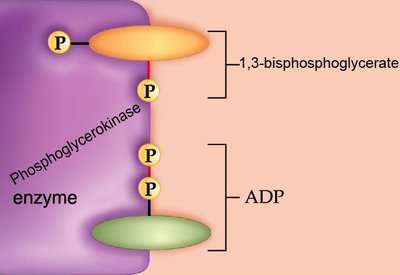
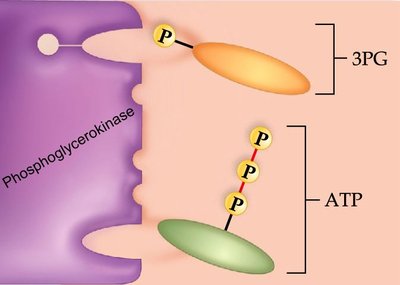
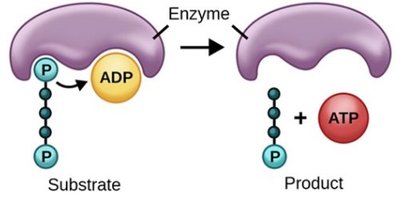
Substrate-level Phosphorylation: Direct transfer of a phosphate group from a phosphorylated intermediate to ADP, catalyzed by an enzyme. Occurs in all living cells and produces a small amount of ATP.
Oxidative Phosphorylation: Occurs in organisms that use oxygen. Involves the electron transport chain and chemiosmosis in mitochondria, producing a large amount of ATP.
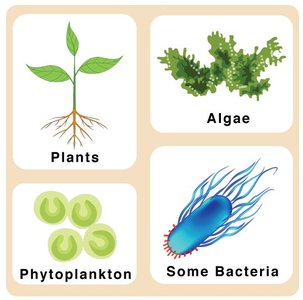
Photophosphorylation: Occurs in autotrophic organisms (e.g., plants, algae, some bacteria) during photosynthesis, producing a medium amount of ATP.
Substrate-level Phosphorylation Mechanism
Substrate-level phosphorylation uses the energy from breaking a bond in a phosphorylated intermediate to transfer a phosphate group to ADP, forming ATP.
Enzyme: Catalyzes the transfer of the phosphate group.
Phosphorylated Intermediate: The molecule that donates the phosphate group.
Example: Occurs during glycolysis and the citric acid cycle.
Oxidative Phosphorylation
Mechanism and Importance
Oxidative phosphorylation is the primary method of ATP production in aerobic organisms. It involves the transfer of electrons through the electron transport chain, creating a proton gradient that drives ATP synthesis via chemiosmosis.
Location: Mitochondria
Key Components: Electron transport chain, NADH, H+, oxygen, chemiosmosis, redox reactions
Majority of ATP: Most ATP generated during cellular respiration is produced by oxidative phosphorylation.
Redox Reactions in Cellular Respiration
Reduction-Oxidation (REDOX) Reactions
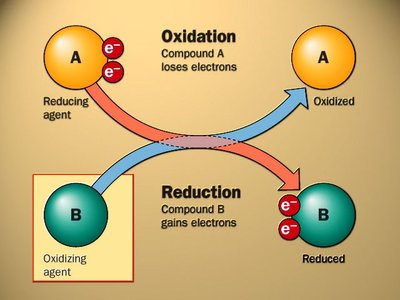
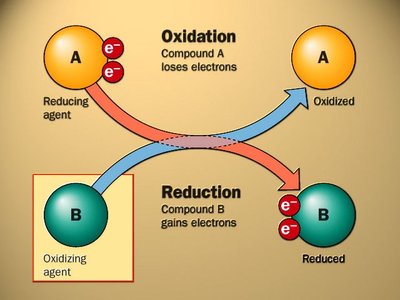
Redox reactions involve the transfer of electrons between molecules. Oxidation is the loss of electrons, while reduction is the gain of electrons. These reactions are fundamental to energy transfer in cellular respiration.
Oxidation: Loss of electrons (OIL: Oxidation Is Loss)
Reduction: Gain of electrons (RIG: Reduction Is Gain)
Coupling: One molecule is oxidized while another is reduced.
Hydrogen Transfer: Often conceptualized as the transfer of hydrogen atoms (H+ + e-).
Agents in Redox Reactions
Reducing Agent: Donates electrons and becomes oxidized.
Oxidizing Agent: Accepts electrons and becomes reduced.
Summary Table: Types of Phosphorylation
Type | Where It Occurs | ATP Yield | Example |
|---|---|---|---|
Substrate-level | All living cells | Small amount | Glycolysis, Citric Acid Cycle |
Oxidative | Mitochondria (organisms using O2) | Large amount | Electron Transport Chain |
Photo | Autotrophs (plants, algae, some bacteria) | Medium amount | Photosynthesis |
Additional info:
Nicotinamide adenine dinucleotide (NAD) is a key electron carrier in cellular respiration. Its oxidized form is NAD+, and its reduced form is NADH.
ATP synthesis during cellular respiration occurs via substrate-level and oxidative phosphorylation.
Four steps of aerobic cellular respiration: Glycolysis, Pyruvate Oxidation, Citric Acid Cycle, Electron Transport Chain/Chemiosmosis.
