 Indietro
Cell Cycle and Mitosis: Growth, Division, and Chromosome Structure
Guida di studio - Note intelligenti
 Appunti personalizzati basati sui tuoi materiali, ampliati con definizioni chiave, esempi e contesto.
Cell Cycle and Mitosis
Overview of Cell Growth and Division
The cell cycle is a fundamental process by which cells grow and divide, enabling organisms to develop, maintain tissues, and reproduce. Eukaryotic cells undergo a highly regulated sequence of events that ensures accurate duplication and distribution of genetic material.
Cell Cycle: An ordered sequence of events from the formation of a cell to its division into two daughter cells.
Mitosis: The process by which a single cell divides to produce two genetically identical daughter cells.
Functions of Mitosis: Growth, asexual reproduction, replacement of dead and damaged cells, and repair.
Example: Growth of multicellular organisms, such as human embryos and regeneration in plants.

The Eukaryotic Cell Cycle
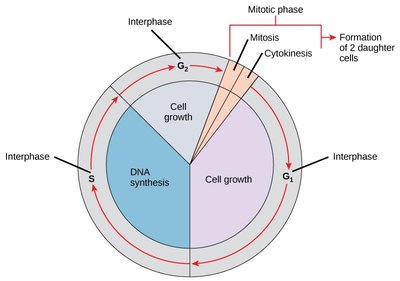
The eukaryotic cell cycle consists of two main phases: Interphase and the Mitotic phase. Interphase is subdivided into three stages: G1 (First Gap), S (DNA Synthesis), and G2 (Second Gap). The mitotic phase includes mitosis and cytokinesis.
Interphase: Period of cell growth and DNA replication.
Mitotic Phase: Division of the nucleus (mitosis) and cytoplasm (cytokinesis).
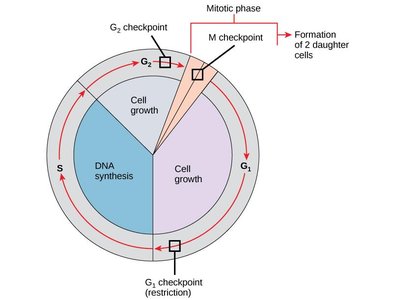
Checkpoints: The cell cycle is regulated at three checkpoints: G1, G2, and M.
Interphase: Preparation for Cell Division
Interphase is the longest phase of the cell cycle, during which the cell grows, duplicates its DNA, and prepares for division. The S phase is critical for DNA replication, ensuring each daughter cell receives a complete set of chromosomes.
G1 Phase: Cell growth and preparation for DNA synthesis.
S Phase: DNA replication; each chromosome is duplicated.
G2 Phase: Further growth and preparation for mitosis.
Chromatin and Chromosomes
Chromosomes are structures composed of DNA and proteins (histones) that carry genetic information. During interphase, DNA exists as chromatin, a less condensed form. Prior to mitosis, chromatin condenses into visible chromosomes.
Chromatin: DNA and protein complex; less condensed during interphase.
Chromosomes: Condensed chromatin; visible during mitosis.
Sister Chromatids: Identical copies of a chromosome, joined at the centromere.
Stages of Mitosis
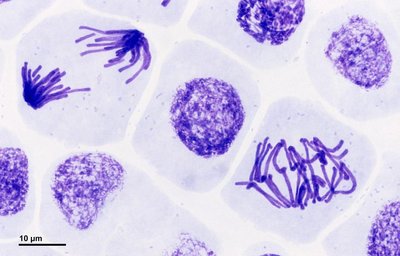
Mitosis is divided into distinct stages: prophase, metaphase, anaphase, and telophase. Each stage ensures the accurate segregation of duplicated chromosomes into daughter cells.
Prophase: Chromatin condenses, spindle fibers form.
Metaphase: Chromosomes align at the cell's equator.
Anaphase: Sister chromatids separate and move to opposite poles.
Telophase: Nuclear membranes reform, chromosomes decondense.
Cytokinesis: Division of the cytoplasm, resulting in two daughter cells.
Chromosome Number and Karyotypes
Humans have 46 chromosomes (23 pairs) in diploid cells. Karyotypes are images of chromosomes that allow detection of number and structure, including abnormalities such as trisomy 21 (Down syndrome).
Diploid Cells: Two sets of chromosomes (2n); somatic cells.
Haploid Cells: One set of chromosomes (n); gametes.
Karyotype: Visual representation of chromosomes for analysis.
Homologous Chromosomes: Chromosome pairs carrying the same traits.
Cell Division in Prokaryotes: Binary Fission
Prokaryotic cells, such as bacteria, divide by binary fission, a simpler process than mitosis. The cell duplicates its DNA and splits into two genetically identical cells.
Binary Fission: Asexual reproduction in prokaryotes.
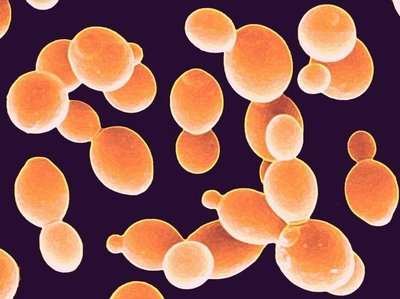
Example: Yeast cells dividing by budding.
Apoptosis: Programmed Cell Death
Apoptosis is a controlled process by which cells die, playing a crucial role in development and maintaining tissue health. It eliminates damaged or unnecessary cells.
Apoptosis: Programmed cell death; essential for normal development and preventing cancer.
Example: Removal of webbing between fingers during embryonic development.
HeLa Cells and Their Impact on Science
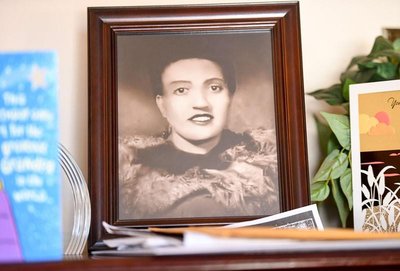
HeLa cells, derived from a patient with cervical cancer, are immortal cell lines used extensively in biological research. They have contributed to advances in cancer, immunology, and infectious disease research.
HeLa Cells: First immortal human cell line; used in vaccine development and cancer research.
Ethical Considerations: Issues of consent and patient rights in scientific research.
Summary Table: Functions of Mitosis
Function | Description |
|---|---|
Asexual reproduction | Production of offspring without genetic variation |
Growth | Increase in cell number for organismal development |
Replacement | Substitution of dead or damaged cells |
Repair | Restoration of tissue integrity |
Key Equations and Concepts
Chromosome Number After S Phase: If a cell has n chromosomes, after S phase it has 2n sister chromatids.
Diploid and Haploid: for diploid cells, for haploid cells.
Cell Cycle Regulation: Checkpoints ensure proper progression and prevent errors.
Example Equation:
Additional info: The cell cycle is tightly regulated to prevent uncontrolled cell division, which can lead to cancer. Apoptosis and checkpoints are essential for maintaining cellular health.
