 Indietro
Cellular Respiration, Fermentation, and Photosynthesis: Study Notes for General Biology
Guida di studio - Note intelligenti
 Appunti personalizzati basati sui tuoi materiali, ampliati con definizioni chiave, esempi e contesto.
Cellular Respiration
Overview of Cellular Respiration
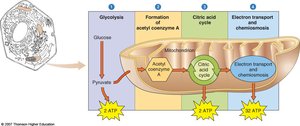
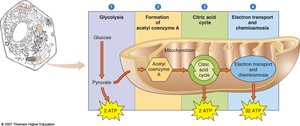
Cellular respiration is a fundamental metabolic process in which cells convert biochemical energy from nutrients into adenosine triphosphate (ATP), and release waste products. It involves a series of oxidation-reduction (redox) reactions, primarily using glucose as the substrate. - Key Point 1: Cellular respiration consists of four main stages: Glycolysis, Transition Reaction (Pyruvate Oxidation), Krebs Cycle (Citric Acid Cycle), and Oxidative Phosphorylation (Electron Transport Chain and Chemiosmosis). - Key Point 2: The process occurs in both the cytoplasm and mitochondria, and can be aerobic (with oxygen) or anaerobic (without oxygen). - Example: Glucose is oxidized to carbon dioxide and water, producing ATP. 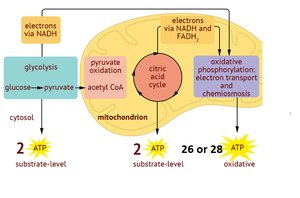
Redox Reactions in Cellular Respiration
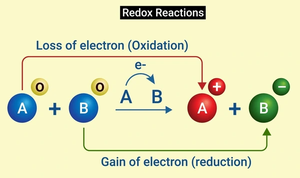
Redox reactions are central to cellular respiration, involving the transfer of electrons from one molecule to another. - Key Point 1: Oxidation is the loss of electrons, while reduction is the gain of electrons. - Key Point 2: The donor molecule is oxidized, and the acceptor molecule is reduced. - Example: In the reaction Xe- + Y → X + Ye-, Xe- is oxidized and Y is reduced. 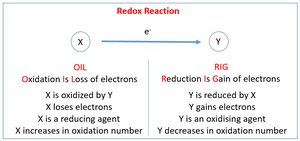
Stages of Cellular Respiration
Cellular respiration is divided into distinct stages, each with specific reactants, products, and locations within the cell.
Stage | Location | ATP Yield | Key Reactants | Key Products |
|---|---|---|---|---|
Glycolysis | Cytoplasm | 2 ATP | Glucose | Pyruvate, NADH |
Transition Reaction | Mitochondrial Matrix | 0 ATP | Pyruvate | Acetyl CoA, NADH, CO2 |
Krebs Cycle | Mitochondrial Matrix | 2 ATP | Acetyl CoA | CO2, NADH, FADH2 |
Oxidative Phosphorylation | Inner Mitochondrial Membrane | 26-28 ATP | NADH, FADH2, O2 | ATP, H2O |
Glycolysis
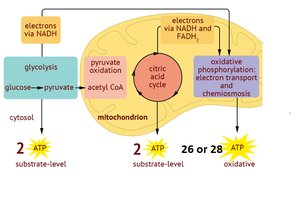
Glycolysis is the first step in cellular respiration, occurring in the cytoplasm and not requiring oxygen. - Key Point 1: Glucose (6C) is split into two pyruvate (3C) molecules. - Key Point 2: Net yield is 2 ATP (via substrate-level phosphorylation) and 2 NADH. - Key Point 3: Each step is catalyzed by a specific enzyme. 
Transition Reaction (Pyruvate Oxidation)
The transition reaction links glycolysis to the Krebs cycle, converting pyruvate into acetyl CoA. - Key Point 1: Occurs in the mitochondrial matrix. - Key Point 2: Produces acetyl CoA, CO2, and NADH. 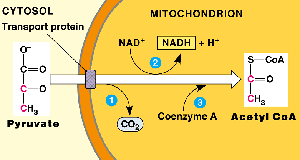
Krebs Cycle (Citric Acid Cycle)
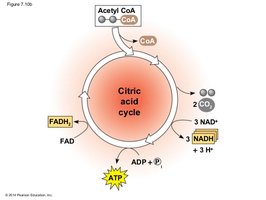
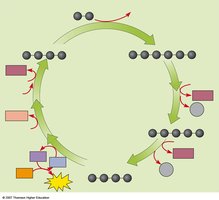
The Krebs cycle completes the oxidation of glucose, generating high-energy electron carriers. - Key Point 1: Acetyl CoA combines with oxaloacetate to form citrate. - Key Point 2: Each cycle produces 1 ATP, 3 NADH, 1 FADH2, and 2 CO2 per acetyl CoA. - Key Point 3: Occurs twice per glucose molecule. 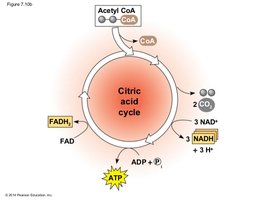
Oxidative Phosphorylation: Electron Transport Chain and Chemiosmosis
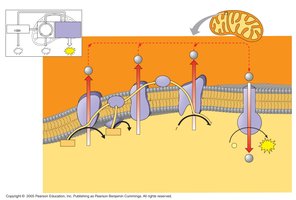
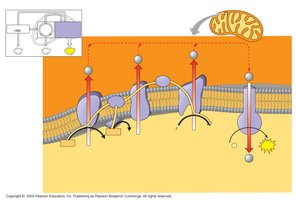
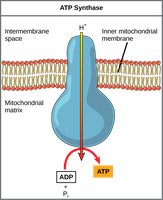
The electron transport chain (ETC) and chemiosmosis are the final steps, producing the majority of ATP. - Key Point 1: NADH and FADH2 donate electrons to the ETC, which occurs in the inner mitochondrial membrane. - Key Point 2: The energy from electron transfer pumps protons (H+) into the intermembrane space, creating a proton gradient. - Key Point 3: ATP synthase uses the proton gradient to synthesize ATP (chemiosmosis). - Key Point 4: Oxygen is the final electron acceptor, forming water. 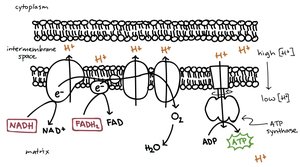
Aerobic vs Anaerobic Respiration
Cellular respiration can occur with or without oxygen, affecting the pathway and ATP yield.
Type | Oxygen Required? | Main Pathways | ATP Yield |
|---|---|---|---|
Aerobic | Yes | Glycolysis, Transition Reaction, Krebs Cycle, ETC | 32-34 ATP |
Anaerobic | No | Glycolysis, Fermentation | 2 ATP |
Fermentation
Fermentation Pathways
Fermentation is an anaerobic process that allows glycolysis to continue by regenerating NAD+. - Key Point 1: In animals, pyruvate is converted to lactic acid. - Key Point 2: In yeast and plants, pyruvate is converted to alcohol and CO2. - Key Point 3: Fermentation yields only 2 ATP per glucose. 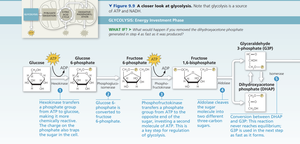
Photosynthesis
Overview of Photosynthesis
Photosynthesis is the process by which photoautotrophs convert solar energy into chemical energy stored in sugars. - Key Point 1: Occurs in chloroplasts of plants, algae, and some prokaryotes. - Key Point 2: Involves light-dependent and light-independent (Calvin cycle) reactions.
Pigments and Light Absorption
Pigments such as chlorophyll a, chlorophyll b, and carotenoids absorb specific wavelengths of light. - Key Point 1: Chlorophylls absorb red and blue light, reflect green. - Key Point 2: Carotenoids absorb additional wavelengths, protecting chlorophyll from damage.
Light-Dependent and Light-Independent Reactions
- Key Point 1: Light-dependent reactions occur in the thylakoid membranes, producing ATP and NADPH. - Key Point 2: The Calvin cycle (light-independent) occurs in the stroma, using ATP and NADPH to synthesize carbohydrates.
Electromagnetic Spectrum and Plant Pigments
- Key Point 1: Violet light has a shorter wavelength and higher energy than red light. - Key Point 2: Green plants absorb red and blue wavelengths, reflect green. - Key Point 3: Only absorbed wavelengths are converted into chemical energy.
Laboratory Applications
Yeast Fermentation Experiment
- Key Point 1: Formation of a yellow precipitate indicates alcohol production by yeast fermentation.
Succinate Dehydrogenase Assay
- Key Point 1: DPIP acts as an electron acceptor, changing color as it is reduced, indicating enzyme activity.
Tetrazolium (TTC) Reduction Test
- Key Point 1: TTC turns red when reduced by the electron transport system, indicating cellular respiration activity.
Summary Table: ATP Yield in Cellular Respiration
Pathway | ATP Yield |
|---|---|
Glycolysis | 2 ATP |
Krebs Cycle | 2 ATP |
Oxidative Phosphorylation | 26-28 ATP |
Total (Aerobic) | 30-32 ATP |
Fermentation (Anaerobic) | 2 ATP |
Additional info: These notes expand on the original lab content by providing definitions, context, and structured explanations suitable for exam preparation in General Biology.
