 Indietro
Cellular Respiration: Glycolysis and Fermentation Study Guide
Guida di studio - Note intelligenti
 Appunti personalizzati basati sui tuoi materiali, ampliati con definizioni chiave, esempi e contesto.
Cellular Respiration: Overview
Introduction to Cellular Respiration
Cellular respiration is a fundamental metabolic process that enables cells to convert biochemical energy from nutrients into adenosine triphosphate (ATP), the energy currency of the cell. This process involves a series of interconnected pathways that break down glucose and other molecules, releasing energy for cellular activities.
Cellular respiration consists of four main stages: Glycolysis, Pyruvate Processing, Citric Acid Cycle (Krebs Cycle), and Electron Transport Chain/Oxidative Phosphorylation.
Each stage has distinct inputs and outputs, contributing to the overall production of ATP.
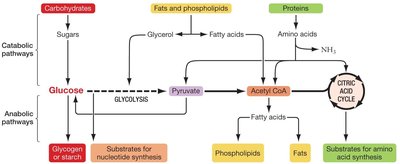
Cellular respiration is central to both catabolism (breaking down molecules for energy) and anabolism (building molecules).
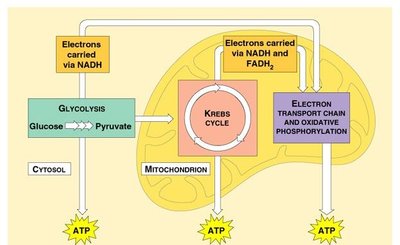
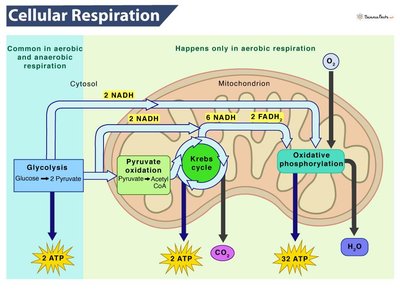
Metabolic Pathways and Glucose Utilization
Glucose is a key molecule in cellular metabolism, serving as a hub for energy processing. Its oxidation leads to the synthesis of ATP, and its intermediates can be used in various anabolic and catabolic pathways.
Glucose can be converted to pyruvate via glycolysis, then to acetyl CoA, which enters the citric acid cycle.
Intermediates from these pathways are used for the synthesis of amino acids, nucleotides, and lipids.
Complete oxidation of one glucose molecule yields about 29 ATP.
Glycolysis
Overview and Phases of Glycolysis
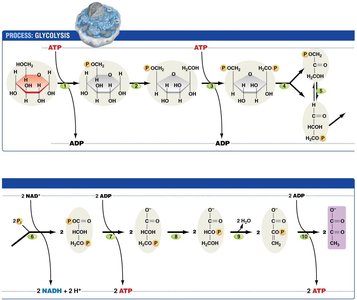
Glycolysis is the first stage of cellular respiration, occurring in the cytosol. It involves ten enzyme-catalyzed reactions that convert glucose into pyruvate, producing ATP and NADH.
Glycolysis consists of two phases: energy-investment phase and energy-payoff phase.
Energy-investment phase: 2 ATP are consumed to phosphorylate glucose and its intermediates.
Energy-payoff phase: 4 ATP and 2 NADH are produced, resulting in a net gain of 2 ATP per glucose.
Steps and Enzymes of Glycolysis
Each step in glycolysis is catalyzed by a specific enzyme, with distinct chemical transformations.
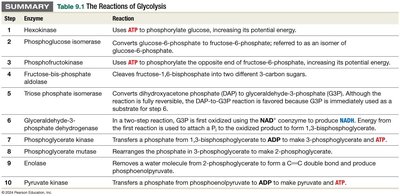
Hexokinase: Phosphorylates glucose using ATP.
Phosphoglucose isomerase: Converts glucose-6-phosphate to fructose-6-phosphate.
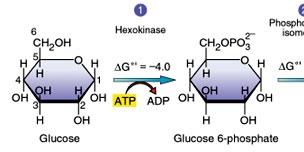
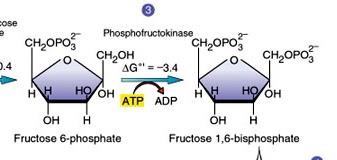
Phosphofructokinase: Phosphorylates fructose-6-phosphate using ATP (committed step).
Fructose-bis-phosphate aldolase: Splits fructose-1,6-bisphosphate into two 3-carbon sugars.
Triose phosphate isomerase: Converts dihydroxyacetone phosphate to glyceraldehyde-3-phosphate.
Glyceraldehyde-3-phosphate dehydrogenase: Oxidizes G3P, producing NADH and 1,3-bisphosphoglycerate.
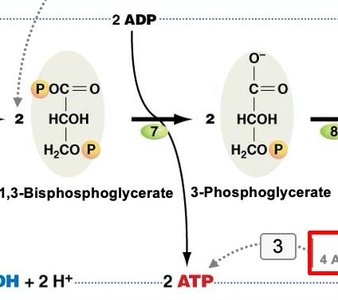
Phosphoglycerate kinase: Transfers phosphate to ADP, forming ATP.
Phosphoglycerate mutase: Rearranges phosphate group.
Enolase: Removes water, forming phosphoenolpyruvate.
Pyruvate kinase: Transfers phosphate to ADP, forming ATP and pyruvate.
Regulation of Glycolysis
Glycolysis is tightly regulated to ensure efficient energy production and prevent wasteful consumption of resources.
Phosphofructokinase (PFK) is a key regulatory enzyme, inhibited by high levels of ATP.
ATP acts as an allosteric inhibitor at the regulatory site of PFK, slowing glycolysis when energy is abundant.
Regulation ensures that glycolysis proceeds only when the cell needs ATP.

Energy Yield and Fate of Pyruvate
The net products of glycolysis are 2 pyruvate, 2 ATP, and 2 NADH per glucose molecule. Pyruvate can be further metabolized depending on oxygen availability.
In aerobic conditions, pyruvate enters the mitochondrion for further oxidation.
In anaerobic conditions, pyruvate undergoes fermentation.
Fermentation
Overview of Fermentation
Fermentation is an anaerobic process that allows cells to regenerate NAD+ from NADH, enabling glycolysis to continue in the absence of oxygen.
Fermentation occurs in the cytosol and produces ATP by substrate-level phosphorylation.
Two main types: Lactic acid fermentation and Alcohol fermentation.
Lactic Acid Fermentation
Lactic acid fermentation occurs in human muscle cells and some microorganisms. Pyruvate accepts electrons from NADH, forming lactate and regenerating NAD+.
Inputs: Glucose, 2 ADP, 2 NAD+
Outputs: 2 ATP, 2 NADH, 2 pyruvate, 2 lactate
No intermediate; direct electron transfer from NADH to pyruvate.

Alcohol Fermentation
Alcohol fermentation occurs in yeast and some plants. Pyruvate is converted to acetaldehyde, which then accepts electrons from NADH to form ethanol.
Inputs: Glucose, 2 ADP, 2 NAD+
Outputs: 2 ATP, 2 NADH, 2 pyruvate, 2 ethanol, 2 CO2
Acetaldehyde acts as an intermediate electron acceptor.
Summary Table: Glycolysis Steps and Enzymes
Step | Enzyme | Reaction |
|---|---|---|
1 | Hexokinase | Uses ATP to phosphorylate glucose, increasing its potential energy. |
2 | Phosphoglucose isomerase | Converts glucose-6-phosphate to fructose-6-phosphate. |
3 | Phosphofructokinase | Uses ATP to phosphorylate fructose-6-phosphate, increasing its potential energy. |
4 | Fructose-bis-phosphate aldolase | Cleaves fructose-1,6-bisphosphate into two 3-carbon sugars. |
5 | Triose phosphate isomerase | Converts dihydroxyacetone phosphate to glyceraldehyde-3-phosphate. |
6 | Glyceraldehyde-3-phosphate dehydrogenase | Oxidizes G3P using NAD+ to produce NADH and 1,3-bisphosphoglycerate. |
7 | Phosphoglycerate kinase | Transfers phosphate to ADP, forming ATP. |
8 | Phosphoglycerate mutase | Rearranges phosphate group. |
9 | Enolase | Removes water, forming phosphoenolpyruvate. |
10 | Pyruvate kinase | Transfers phosphate to ADP, forming ATP and pyruvate. |
Key Terms and Concepts
ATP (Adenosine Triphosphate): The primary energy carrier in cells.
NADH: Electron carrier produced during glycolysis and other metabolic pathways.
Substrate-level phosphorylation: Direct transfer of a phosphate group to ADP to form ATP.
Allosteric regulation: Regulation of enzyme activity by binding of molecules at sites other than the active site.
Important Equations
Overall equation for cellular respiration:
Net equation for glycolysis:
Summary and Applications
Cellular respiration is essential for energy production in all living cells.
Glycolysis provides a rapid means of ATP production, especially under anaerobic conditions.
Fermentation allows cells to survive and produce ATP when oxygen is unavailable.
Regulation of glycolysis ensures efficient energy use and prevents waste.
Example: During intense exercise, muscle cells rely on lactic acid fermentation to produce ATP quickly, resulting in the accumulation of lactate. Additional info: The study notes expand on brief points from the original materials, providing academic context and explanations for each step and concept.
