 Indietro
Cellular Respiration: Pathways, Regulation, and Comparative Metabolism
Guida di studio - Note intelligenti
 Appunti personalizzati basati sui tuoi materiali, ampliati con definizioni chiave, esempi e contesto.
Cellular Respiration
Overview of Cellular Respiration
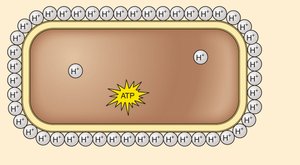
Cellular respiration is the process by which cells extract energy from organic molecules, primarily glucose, to produce ATP, the main energy currency of the cell. This process involves a series of metabolic pathways that utilize oxygen and release carbon dioxide. - Cellular respiration refers to the exchange of gases (O2 and CO2) and the breakdown of molecules to release energy. - ATP (adenosine triphosphate) is produced via two main mechanisms: substrate-level phosphorylation and chemiosmosis. - Substrate-level phosphorylation: Direct transfer of a phosphate group to ADP to form ATP. - Chemiosmosis: Utilizes a proton gradient across a membrane to drive ATP synthesis via ATP synthase. 
Regulation of Metabolic Pathways
Metabolic pathways are tightly regulated to ensure efficient energy production and cellular function. - Enzyme regulation: Enzymes catalyze reactions; controlling their production or activity regulates the pathway. - Regulation methods: 1. Not synthesizing the enzyme (e.g., lactose intolerance due to lack of lactase). 2. Controlling the physical environment (e.g., pepsin only active in acidic stomach). 3. Biochemical control (e.g., inhibitors, coenzymes, cofactors).
Major Steps of Cellular Respiration
Stepwise Breakdown of Glucose
Cellular respiration consists of four major steps, each occurring in specific cellular locations and yielding distinct products. - Four major steps: 1. Glycolysis 2. Formation of acetyl coenzyme A 3. Citric acid cycle (Krebs cycle) 4. Electron transport and chemiosmosis - Location: Glycolysis occurs in the cytosol; subsequent steps occur in the mitochondria. 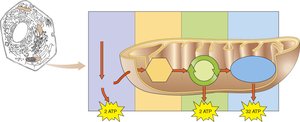
Summary Table of Aerobic Respiration
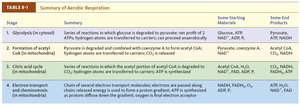
The following table summarizes the stages, locations, reactants, products, and ATP yield for each step of aerobic respiration.
Stage | Summary | Starting Materials | End Products |
|---|---|---|---|
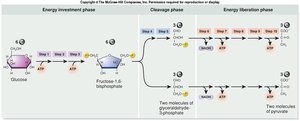
Glycolysis | Glucose is degraded to pyruvate; net production of 2 ATP and 2 NADH | Glucose, ATP, NAD+ | Pyruvate, ATP, NADH |
Formation of Acetyl CoA | Pyruvate is degraded and combined with coenzyme A; CO2 released, NADH produced | Pyruvate, NAD+, CoA | Acetyl CoA, CO2, NADH |
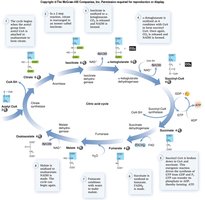
Citric Acid Cycle | Acetyl CoA enters cycle; ATP, NADH, FADH2, and CO2 produced | Acetyl CoA, NAD+, FAD, ADP | CO2, NADH, FADH2, ATP |
Electron Transport & Chemiosmosis | Electrons transferred to O2; ATP synthesized via oxidative phosphorylation | NADH, FADH2, O2, ADP | ATP, H2O |
Detailed Pathways of Glucose Utilization
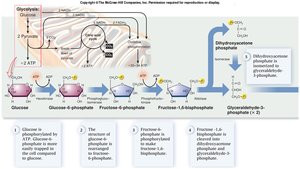
The breakdown of glucose involves multiple steps, each catalyzed by specific enzymes. - Glycolysis: Glucose is split into two 3-carbon pyruvate molecules, yielding 2 ATP and 2 NADH. - Location: Cytosol - Key intermediates: Glucose-6-phosphate, fructose-1,6-bisphosphate, glyceraldehyde-3-phosphate (not required to memorize intermediates for exams). 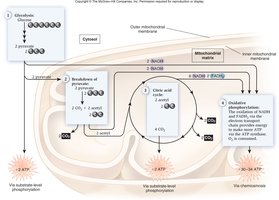
Formation of Acetyl CoA
Pyruvate produced in glycolysis is transported into the mitochondria, where it is converted to acetyl CoA. - Process: Pyruvate loses CO2, combines with Coenzyme A, and produces NADH. - Location: Mitochondrial matrix - ATP yield: No ATP produced in this step.
Citric Acid Cycle (Krebs Cycle)
Acetyl CoA enters the citric acid cycle, where it is oxidized to CO2 and high-energy electron carriers are produced. - Products per glucose: 2 ATP, 6 NADH, 2 FADH2, 4 CO2 - Cycle: Oxaloacetate is regenerated, allowing the cycle to continue. 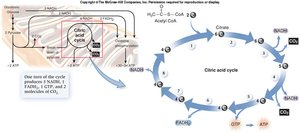
Electron Transport Chain and Chemiosmosis
NADH and FADH2 donate electrons to the electron transport chain, which powers the pumping of H+ ions across the inner mitochondrial membrane. - Electron transport chain: Series of protein complexes that transfer electrons and pump protons. - Chemiosmosis: H+ gradient drives ATP synthesis via ATP synthase. - ATP yield: 32–34 ATP per glucose molecule. 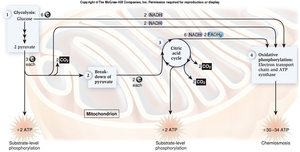
ATP Synthase: The Molecular Machine
ATP synthase is a complex enzyme that synthesizes ATP as protons flow through its channel. - Structure: Multiple subunits, rotation mechanism, and conformational changes. - Function: Converts ADP and inorganic phosphate (Pi) to ATP. 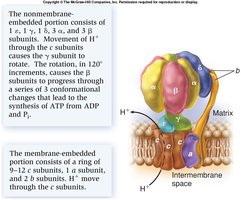
Metabolism of Other Substances
Alternative Energy Sources
Cells can metabolize fats and proteins for energy, entering the pathway at different points. - Fats: Broken down to glycerol and fatty acids, which enter glycolysis and the citric acid cycle. - Proteins: Amino acids are deaminated and enter glycolysis or the citric acid cycle. - Nucleic acids: Not typically used for energy production. 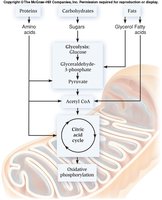
ATP Yield Summary
Most ATP is produced via oxidative phosphorylation, with substrate-level phosphorylation contributing a smaller portion. 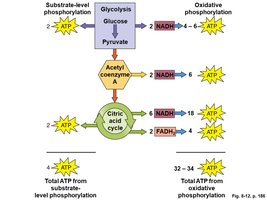
Anaerobic Respiration and Fermentation
When Oxygen Is Limited
In the absence of oxygen, cells utilize alternative pathways to regenerate NAD+ and produce ATP. - Anaerobic respiration: Some bacteria use compounds like nitrate (NO3-) as the final electron acceptor. - Fermentation: Occurs in eukaryotic cells and some bacteria; produces lactic acid or ethanol. 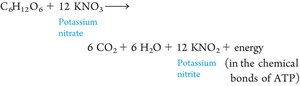
Fermentation Pathways
- Lactic acid fermentation: Pyruvate is reduced to lactic acid, regenerating NAD+. - Alcoholic fermentation: Pyruvate is converted to ethanol and CO2, regenerating NAD+. - ATP yield: Only 2 ATP per glucose (from glycolysis). 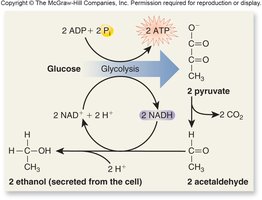
Comparative Table: Aerobic Respiration, Anaerobic Respiration, and Fermentation
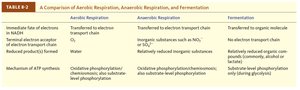
The following table compares the main features of these three metabolic pathways.
Aerobic Respiration | Anaerobic Respiration | Fermentation | |
|---|---|---|---|
Electron fate | Transferred to O2 | Transferred to transport chain; terminal acceptor is inorganic (e.g., NO3-) | Transferred to organic molecule |
Reduced product | Water | Relatively reduced inorganic substances | Relatively reduced organic substances (e.g., lactic acid, ethanol) |
ATP synthesis | Oxidative phosphorylation/chemiosmosis, substrate-level phosphorylation | Oxidative phosphorylation/chemiosmosis, substrate-level phosphorylation | Substrate-level phosphorylation only |
Primary Metabolism
Essential Metabolic Reactions
Primary metabolism includes all reactions necessary for life, such as the synthesis and breakdown of lipids, proteins, and carbohydrates. These pathways are conserved across all life forms and are fundamental to cellular function. Additional info: The notes above provide a comprehensive overview of cellular respiration, including aerobic and anaerobic pathways, regulation, and comparative metabolism. The included images directly reinforce the explanations and are essential for visualizing complex processes such as glycolysis, the citric acid cycle, electron transport, and fermentation.
