 Indietro
Chemical Control of the Animal Body: The Endocrine System
Guida di studio - Note intelligenti
 Appunti personalizzati basati sui tuoi materiali, ampliati con definizioni chiave, esempi e contesto.
Chemical Control of the Animal Body: The Endocrine System
Communication Between Animal Cells
Animal cells communicate to coordinate the functions of the organism. Communication occurs over varying distances and involves different mechanisms, each suited to specific physiological needs.
Direct Communication: Cells exchange signals through gap junctions, allowing ions and small molecules to pass directly between adjacent cells.
Synaptic Communication: Nerve cells transmit electrical signals rapidly, releasing neurotransmitters across synapses to stimulate target cells. The response duration varies depending on the target cell.
Paracrine Communication: Local hormones act on nearby cells, with effects limited by rapid degradation or uptake. Examples include histamine, cytokines, and nitric oxide.
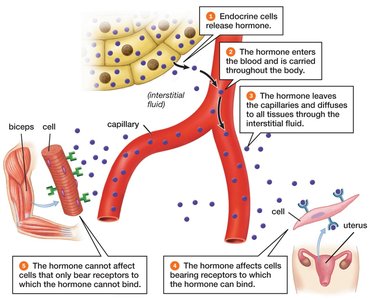
Endocrine Communication: Hormones are secreted by endocrine glands and travel through the bloodstream to distant target cells.
Hormones and Receptors
Hormones are chemical messengers that affect only cells with specific receptors. The presence of a receptor defines a target cell, and different cell types may respond differently to the same hormone.
Hormone: A molecule secreted by a cell and carried by interstitial fluid or blood to other cells.
Receptor: Specialized protein on or inside a cell that binds a hormone, triggering a response.
Cells without the correct receptor do not respond to the hormone.
Endocrine Communication Process
Endocrine glands release hormones into the bloodstream, which are distributed throughout the body. Only cells with matching receptors respond to the hormone.
Classes of Vertebrate Endocrine Hormones
Vertebrate endocrine hormones are classified by their chemical structure and mode of action:
Steroid Hormones: Synthesized from cholesterol; lipid-soluble and diffuse through cell membranes to bind intracellular receptors.
Peptide Hormones: Chains of amino acids; bind to receptors on the cell surface.
Amino Acid Derived Hormones: Composed of one or two modified amino acids; may act like peptide or steroid hormones.
Hormone-Receptor Binding and Cellular Effects
Hormone binding to its receptor triggers two main effects:
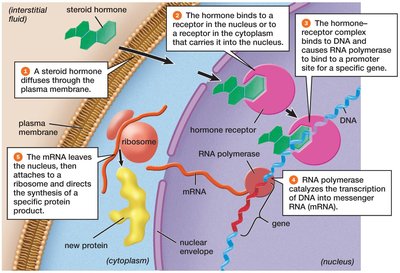
Regulation of gene transcription, altering protein synthesis.
Stimulation of metabolic changes, often by activating or inhibiting enzymes.
Steroid Hormone Action
Steroid hormones diffuse through the plasma membrane and bind to intracellular receptors, which then regulate gene transcription.
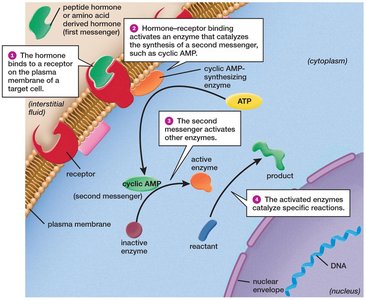
Peptide and Amino Acid Derived Hormone Action
These hormones bind to cell surface receptors, activating second messenger systems (such as cyclic AMP) that trigger enzyme activity and cellular responses.
Regulation of Hormone Release
Hormone release is controlled by feedback mechanisms:
Negative Feedback: The response to a change counteracts the change, maintaining homeostasis. Example: ADH release regulates water balance.
Positive Feedback: The response enhances the change, but is self-limiting. Example: Oxytocin release during childbirth.
The Mammalian Endocrine System: Structures and Functions
Major Endocrine Glands and Organs
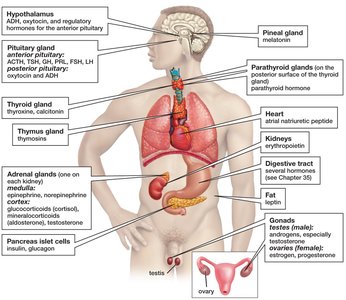
The mammalian endocrine system consists of several glands and organs that secrete hormones to regulate diverse physiological processes.
Hypothalamus–Pituitary Complex
Thyroid Gland
Pancreas
Sex Organs (Testes and Ovaries)
Adrenal Glands
Other organs: Pineal gland, thymus, heart, kidneys, digestive tract, fat cells
Hormones of the Hypothalamus and Pituitary Gland
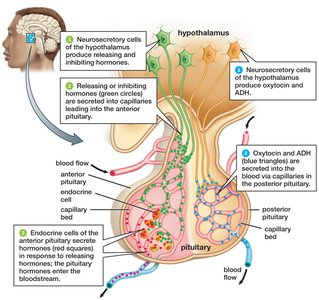
The hypothalamus contains neurosecretory cells that produce releasing and inhibiting hormones, which regulate the anterior pituitary. The posterior pituitary releases hormones produced by the hypothalamus.
Thyroid Gland and Hypothyroidism
The thyroid gland produces thyroxine, which regulates metabolism. Iodine deficiency can cause hypothyroidism and goiter, an enlargement of the thyroid gland.

Pancreas: Digestive and Endocrine Functions
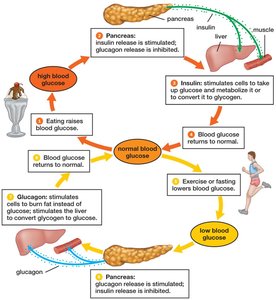
The pancreas has both digestive and endocrine roles. Its islet cells produce insulin and glucagon, which regulate blood glucose levels.
Diabetes Mellitus
Type 1 Diabetes: Autoimmune destruction of insulin-secreting cells.
Type 2 Diabetes: Insulin resistance in target cells.
Sex Hormones and Puberty
Puberty is initiated by increased secretion of releasing hormones from the hypothalamus, stimulating the anterior pituitary to release LH and FSH. These hormones promote the production of sex hormones in the testes and ovaries.
Testosterone: Stimulates male secondary sexual characteristics and sperm production.
Estrogen: Stimulates female secondary sexual characteristics and egg maturation.
Progesterone: Prepares the reproductive tract for pregnancy.
Summary Table: The Mammalian Endocrine System
The following table summarizes the major endocrine glands, their hormones, chemical types, and principal functions.
Endocrine Gland | Hormone | Type of Chemical | Principal Function |
|---|---|---|---|
Hypothalamus | Releasing/Inhibiting Hormones | Peptide | Regulate anterior pituitary hormone release |
Anterior Pituitary | FSH, LH, TSH, ACTH, PRL, GH | Peptide | Stimulate growth, ovulation, milk synthesis, thyroid/adrenal function |
Posterior Pituitary | ADH, Oxytocin | Peptide | Water reabsorption, uterine contraction, milk ejection |
Thyroid | Thyroxine, Calcitonin | Amino acid derivative, Peptide | Increase metabolic rate, regulate calcium |
Parathyroid | Parathyroid Hormone | Peptide | Increase blood calcium |
Pancreas | Insulin, Glucagon | Peptide | Regulate blood glucose |
Testes | Testosterone | Steroid | Male sexual development, sperm production |
Ovaries | Estrogen, Progesterone | Steroid | Female sexual development, egg maturation, uterine lining |
Adrenal Cortex | Glucocorticoids, Mineralocorticoids, Testosterone | Steroid | Regulate metabolism, salt balance, masculinization |
Adrenal Medulla | Epinephrine, Norepinephrine | Amino acid derivatives | Increase metabolic rate, heart rate, blood sugar |
Pineal Gland | Melatonin | Amino acid derivative | Regulate sleep-wake cycles |
Thymus | Thymosin | Peptide | Stimulate T cell maturation |
Kidney | Erythropoietin | Peptide | Stimulate red blood cell synthesis |
Digestive Tract | Secretin, Gastrin, Ghrelin, Cholecystokinin | Peptide | Regulate digestion, appetite |
Fat Cells | Leptin | Peptide | Regulate appetite, immune function |
Heart | Atrial Natriuretic Peptide | Peptide | Lower blood pressure |
Additional info: Table entries were logically grouped and expanded for completeness and clarity.
