 Indietro
bio 2 ch 26 pt 1
Guida di studio - Note intelligenti
 Appunti personalizzati basati sui tuoi materiali, ampliati con definizioni chiave, esempi e contesto.
Colonization of Land
Greening of Earth
The colonization of land by plants and fungi marked a pivotal event in Earth's history, transforming terrestrial environments and enabling the development of complex ecosystems. For the first two billion years, Earth's land surface was lifeless, but cyanobacteria and protists likely existed on land about 1.2 billion years ago. Within the last 500 million years, plants, fungi, and animals began to move onto land, with the first forests forming approximately 385 million years ago.
Plants colonized land > 470 million years ago
Plants are eukaryotic, multicellular, photosynthetic autotrophs
Cell walls made of cellulose
Chloroplasts with chlorophyll a and b
Plant traits shared only with charophytes (a group of green algae): rings of cellulose-synthesizing protein complexes, structurally similar flagellated sperm (if present)
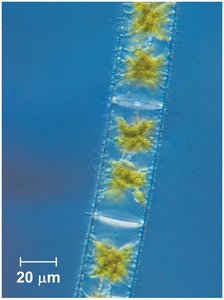
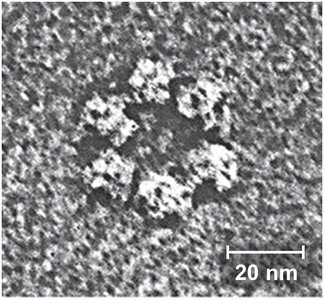
Adaptations for Land
Plants evolved several adaptations to thrive on land, taking advantage of unfiltered sunlight, plentiful CO2, and nutrient-rich soil. However, they faced challenges such as desiccation (drying out) and lack of structural support against gravity.
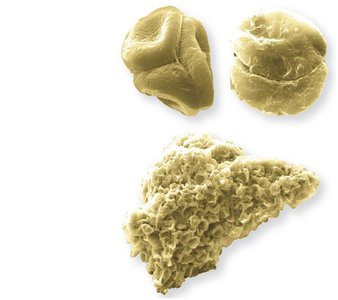
Sporopollenin: Protective polymer surrounding charophyte zygotes and plant spores, preventing desiccation
Cuticle: Waxy coating that prevents water loss and microbial attack
Stomata: Specialized pores for gas exchange
Structural support: Development of tissues and organs to withstand gravity
Derived Traits of Land Plants
Key traits that distinguish land plants from their aquatic ancestors (charophytes) include:
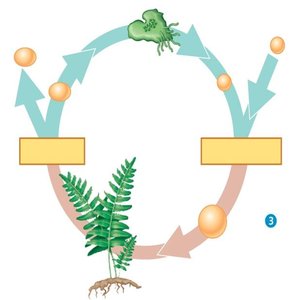
Alternation of generations: Life cycle alternates between multicellular haploid (gametophyte) and diploid (sporophyte) stages
Multicellular, dependent embryos: Embryos are retained within tissues of the female gametophyte and nourished via placental transfer cells
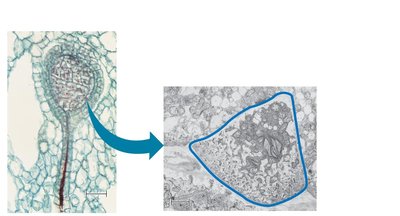
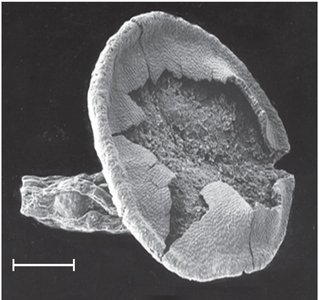
Walled spores produced in sporangia: Spores are resistant to harsh environments and produced in multicellular organs called sporangia
Apical meristems: Localized regions of cell division at the tips of roots and shoots, enabling growth and adaptation to terrestrial environments
Alternation of Generations
Land plants exhibit a life cycle known as alternation of generations, which involves both haploid and diploid multicellular stages:
The sporophyte (2n) produces haploid spores by meiosis
These spores develop into the gametophyte (n), which produces gametes by mitosis
Fertilization of gametes forms a diploid zygote, which grows into a new sporophyte
Equation:
Multicellular, Dependent Embryos
Embryos are retained within the female gametophyte and nourished by placental transfer cells, which facilitate nutrient transfer from maternal tissue.
Walled Spores Produced in Sporangia
Spores are produced in multicellular organs called sporangia, which protect them from harsh environmental conditions.
Apical Meristems
Apical meristems are regions of active cell division at the tips of roots and shoots, allowing plants to grow and explore new environments.
Early Plants and Fossil Evidence
Fossil evidence indicates that plants colonized land around 470 million years ago, with large plant structures such as sporangia appearing by 425 million years ago. By 400 million years ago, a diverse assemblage of land plants had evolved specialized tissues for water transport, cuticles, stomata, and branched sporophytes.
Fungi Played a Key Role in the Colonization of Land
Fungal Adaptations for Life on Land
Fungi are not closely related to plants but played a crucial role in the colonization of land by forming symbiotic relationships with early plants. Fungi are heterotrophs that absorb nutrients from their environment, and their morphology enhances their ability to absorb nutrients efficiently.
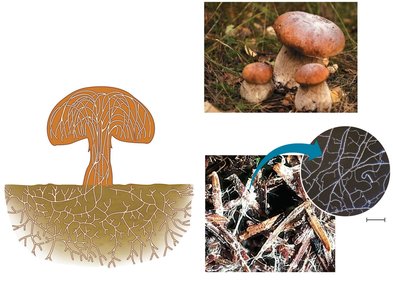
Hyphae: Branched filaments adapted for absorption
Mycelium: Interwoven mass of hyphae maximizing surface-to-volume ratio
Cell walls composed of chitin: Prevents cells from bursting due to osmotic pressure
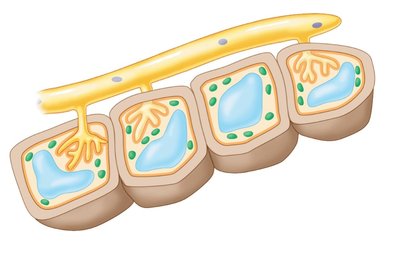
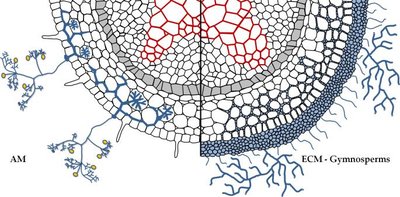
Mycorrhizae: Symbiotic association between fungi and plant roots, improving nutrient and water uptake
Mycorrhizal Fungi
Mycorrhizal fungi are specialized for exchanging nutrients with plant roots. There are two main types:
Arbuscular mycorrhizae (endomycorrhiza): Hyphae penetrate root cell walls and branch into invaginations of the root plasma membrane
Ectomycorrhizae: Sheaths of hyphae cover the root and grow into root cortex extracellular spaces
Origin and Diversification of Fungi
Fungi are more closely related to nucleariids than to animals, and multicellularity likely evolved independently in fungi and animals. Terrestrial fungi fossils date to at least 460 million years ago, and there are about 100,000 known species, with estimates as high as 1.5 million.
Chytrids: Flagellated spores, early diverging group
Zygomycetes: Rapidly growing molds, decomposers, parasites, and symbionts
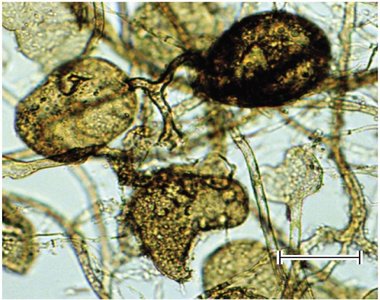
Glomeromycetes: Form arbuscular mycorrhizae with plant roots
Ascomycetes: Sac fungi, diverse group, important decomposers and symbionts
Basidiomycetes: Club fungi, mushrooms, important decomposers and symbionts
Fungal Life Cycle
Fungi exhibit both sexual and asexual reproduction, with complex life cycles involving haploid, heterokaryotic, and diploid stages.
Plasmogamy: Fusion of cytoplasm from two parent mycelia
Karyogamy: Fusion of nuclei, forming a diploid zygote
Meiosis: Produces haploid spores
Asexual reproduction: Spores produced by mitosis
Equation:
Fungal Diversity and Classification
Fungi are classified into five main groups based on genetic and structural similarities:
Group | Key Features |
|---|---|
Chytridiomycota | Flagellated cells, decomposers, parasites |
Zygomycota | Coenocytic hyphae, decomposers, symbionts |
Glomeromycota | Arbuscular mycorrhizae, symbionts |
Ascomycota | Sac fungi, diverse, decomposers, symbionts |
Basidiomycota | Club fungi, mushrooms, decomposers, symbionts |
Ecological Importance of Fungi
Fungi are essential decomposers, recycling nutrients by digesting cellulose and lignin. They decompose animal carcasses, feces, branches, logs, and leaves, playing a vital role in ecosystem nutrient cycling.
Symbiotic Associations
Fungi form symbiotic relationships with animals, insects, plant roots (mycorrhizae), and other photoautotrophs (lichens), influencing many aspects of life.
Economic, Biological, and Medical Impact of Fungi
Fungi have numerous positive and negative influences, including:
Beverages & Food: Edible fungi (basidiomycetes, ascomycetes), fermentation, flavoring
Modern Biology and Medicine: Study of molecular genetics, production of useful drugs and chemicals
Bioremediation & Biological Pest Control: Decomposition and recycling of pollutants
Fungal Disease: Pathogens affecting plants, animals, and humans
Example: Fungi are used to ferment bread and alcohol, produce antibiotics, and decompose organic matter in ecosystems.
Additional info: Some content was inferred and expanded for completeness and clarity, including definitions, examples, and context for fungal groups and plant adaptations.
