 Indietro
Defenses Against Disease: The Immune System
Guida di studio - Note intelligenti
 Appunti personalizzati basati sui tuoi materiali, ampliati con definizioni chiave, esempi e contesto.
Defenses Against Disease
Introduction to Disease and Pathogens
Diseases are caused by pathogens, which are agents that produce disease in their hosts. Pathogens can be living (such as bacteria, protists, and fungi) or non-living (such as viruses). They reproduce, spread, and harm their hosts, leading to various diseases including staph infections, cholera, measles, tetanus, chicken pox, HIV, Ebola, Zika, swine flu, and COVID-19.
The Body’s Defenses Against Disease
Levels of Defense
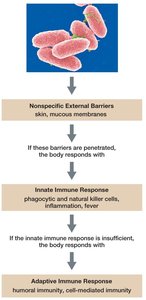
The vertebrate immune system is organized into three major lines of defense:
Nonspecific External Barriers: Physical and chemical barriers such as skin and mucous membranes.
Innate Immune Response: Immediate, nonspecific responses including phagocytic cells, natural killer cells, inflammation, and fever.
Adaptive Immune Response: Specific responses involving humoral and cell-mediated immunity, which provide long-term protection and memory.
Nonspecific External Barriers
These are the first line of defense and include:
Skin: Composed of dead cells and proteins, with secretions that inhibit microbial growth.
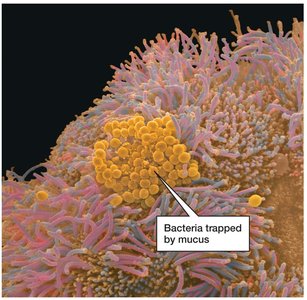
Mucous Membranes: Secrete mucus containing antibacterial proteins like lysozyme, trapping and removing microbes.
Other Barriers: Stomach acid, digestive enzymes, tears, saliva, urine, and vaginal acidity help eliminate or inhibit pathogens.
Innate Immune Response
If pathogens breach external barriers, the innate immune system responds rapidly and nonspecifically. Key components include:
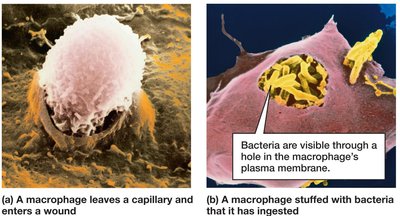
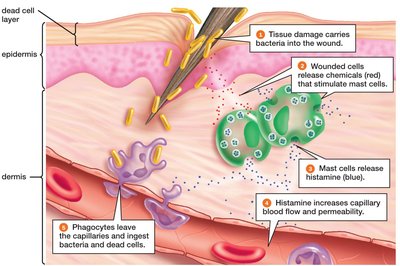
Phagocytes: Neutrophils, dendritic cells, and macrophages engulf and digest invaders by phagocytosis.
Natural Killer Cells: Destroy infected or cancerous cells by recognizing changes in MHC proteins.
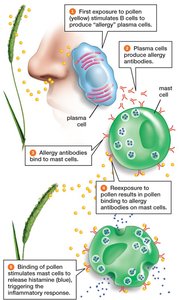
Mast Cells: Release histamine, triggering inflammation.
Inflammation: Increases blood flow and recruits immune cells to sites of injury or infection.
Fever: Pyrogens raise body temperature, slowing microbial growth and enhancing immune responses.
Specific Internal Defenses (Adaptive Immunity)
Overview of Adaptive Immunity
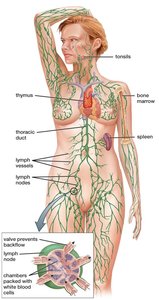
The adaptive immune response is specific to particular pathogens and involves interactions among macrophages, dendritic cells, and lymphocytes (B cells and T cells). It is characterized by specificity, memory, and the ability to distinguish self from non-self.
Key Proteins and Cells
Cytokines: Stimulate lymphocyte division and inflammatory responses.
Antibodies: Produced by B cells, they recognize and help destroy invaders.
Complement Proteins: Circulate in blood plasma and assist in destroying microbes.
Steps of the Adaptive Immune Response
Lymphocytes recognize an invading microbe (antigen).
They launch an attack (humoral or cell-mediated).
They retain a memory of the invader for future protection.
Antigens and Antibody Structure
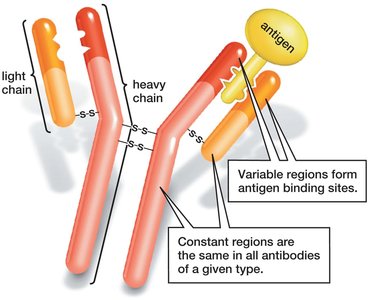
Antigens are large, complex molecules (proteins, polysaccharides, glycoproteins) that trigger adaptive immune responses. Antibodies are Y-shaped proteins with variable regions that bind specific antigens and constant regions that determine their role in the immune response.
Types and Functions of Antibodies
IgM, IgD: Surface of B cells, trigger B cell multiplication.
IgG: Circulates in blood, crosses placenta, provides long-term immunity.
IgA: Secreted in digestive/respiratory tracts, saliva, breast milk.
IgE: Drives allergic reactions.
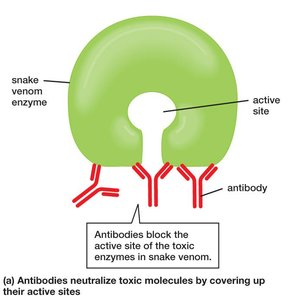
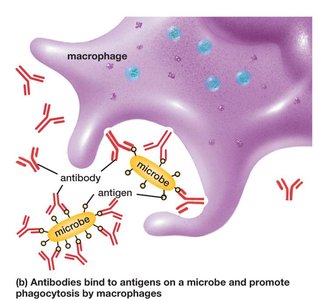
Antibodies recognize antigens and help destroy invaders by neutralizing toxins, promoting phagocytosis, and activating complement proteins.
B Cells and Clonal Selection
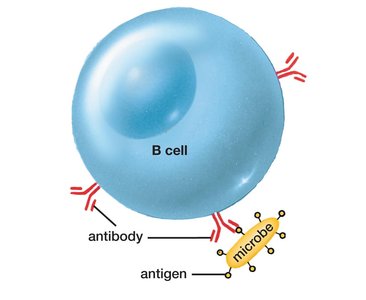
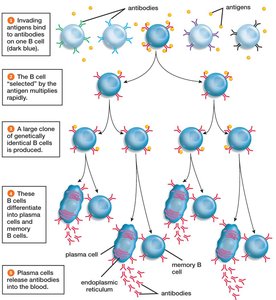
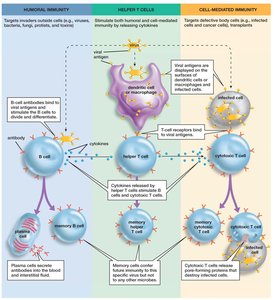
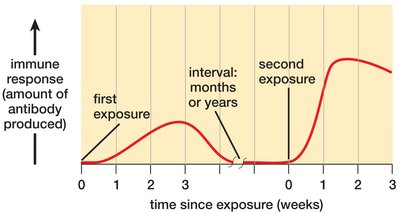
Each B cell produces a unique antibody. When an antigen binds to a B cell's antibody, the cell multiplies and differentiates into plasma cells (which secrete antibodies) and memory B cells (which provide future immunity).
Antibody Actions
Neutralization: Antibodies block active sites of toxins.
Opsonization: Antibodies tag microbes for phagocytosis.
Complement Activation: Antibodies trigger complement proteins to destroy microbes.
Cell-Mediated Immunity
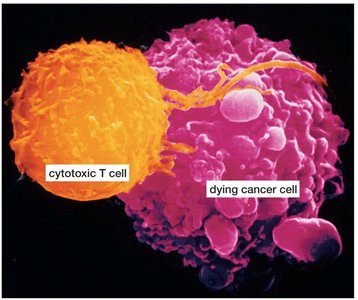
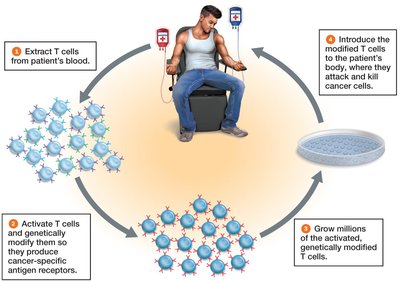
Cytotoxic T cells attack virus-infected and cancerous cells. Helper T cells stimulate both B cells and cytotoxic T cells. Regulatory T cells suppress immune responses to prevent autoimmunity.
Immunological Memory
Some activated B and T cells become long-lived memory cells. Upon re-exposure to the same antigen, these cells rapidly mount a strong immune response, often preventing disease symptoms.
Medical Support for the Immune System
Antimicrobial Drugs and Vaccines
Antibiotics: Treat bacterial infections but not viral infections. Overuse can lead to resistance.
Antiviral Drugs: Block steps in viral replication.
Vaccines: Expose the immune system to antigens, building memory without causing disease. Some vaccines prevent virus-related cancers (e.g., HPV, hepatitis B).
Immune System Malfunctions
Allergies
Allergies are misdirected immune responses to harmless substances (allergens) such as pollen, mold, or certain foods. They involve the production of allergy antibodies (IgE), which bind to mast cells and trigger inflammation upon re-exposure to the allergen.
Autoimmune Diseases
Autoimmune diseases occur when the immune system attacks the body's own molecules, producing "anti-self" antibodies. Examples include type 1 diabetes, multiple sclerosis, rheumatoid arthritis, and lupus. Treatments may suppress the immune system but can increase infection risk.
Immunodeficiency
Immunodeficiency weakens protection against infection. It can be inherited or acquired (e.g., AIDS caused by HIV, which destroys helper T cells). Treatments include bone marrow transplants, gene therapy, and antiretroviral drugs.
The Immune System and Cancer
Immune Surveillance and Cancer
Cancer is uncontrolled cell replication. Some cancer cells display abnormal proteins that can be recognized and destroyed by natural killer cells and cytotoxic T cells. However, some cancer cells evade detection.
Cancer Treatments and Immunotherapy
Surgery: Removes tumors.
Radiation and Chemotherapy: Damage or kill dividing cells, but may also harm healthy tissues.
Vaccines: HPV and hepatitis B vaccines reduce risk of virus-related cancers.
Immunotherapy: Uses engineered T cells, checkpoint inhibitors, or viruses that target cancer cells to enhance immune attack on tumors.
Immune Response | Specificity | Speed (First Exposure) | Memory (Second Exposure) | Distribution |
|---|---|---|---|---|
Innate | Nonspecific | Immediate | Identical to first response | Invertebrates & Vertebrates |
Adaptive | Specific for particular microbes | Delayed (days to weeks) | Enhanced, often no symptoms | Vertebrates only |
Cell Type | Function |
|---|---|
Neutrophils | Engulf invading microbes |
Dendritic cells | Engulf microbes, present antigens to lymphocytes |
Macrophages | Engulf microbes, present antigens to lymphocytes |
Natural killer cells | Destroy infected or cancerous cells |
Mast cells | Release histamine, trigger inflammation |
B cells | Produce antibodies |
Memory B cells | Provide future immunity |
Plasma cells | Secrete antibodies |
T cells | Regulate immune response or kill infected/cancerous cells |
Cytotoxic T cells | Destroy infected/cancerous cells |
Helper T cells | Stimulate B and cytotoxic T cells |
Memory T cells | Provide future immunity |
Regulatory T cells | Suppress immune attack against self |
